


Blog
High-Gloss Kitchens: Pros, Cons & Best Use Cases

Jun
High-gloss kitchen cabinets remain a popular choice in Canadian homes thanks to their sleek appearance and ability to reflect light, making spaces feel brighter and larger. However, they are not the perfect solution for every kitchen.
The long-term success of a high-gloss finish depends on the room layout, lighting conditions, and your household’s daily lifestyle. This guide explores the key advantages, drawbacks, and ideal applications of high-gloss cabinetry to help you decide whether it’s the right fit for your kitchen renovation.
What Counts as a High-Gloss Finish?
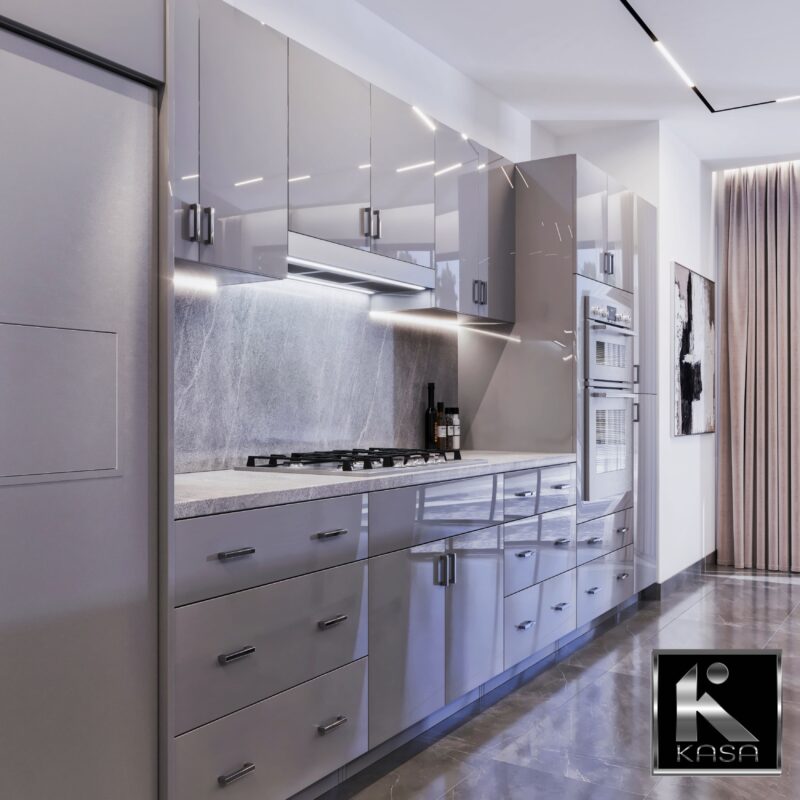
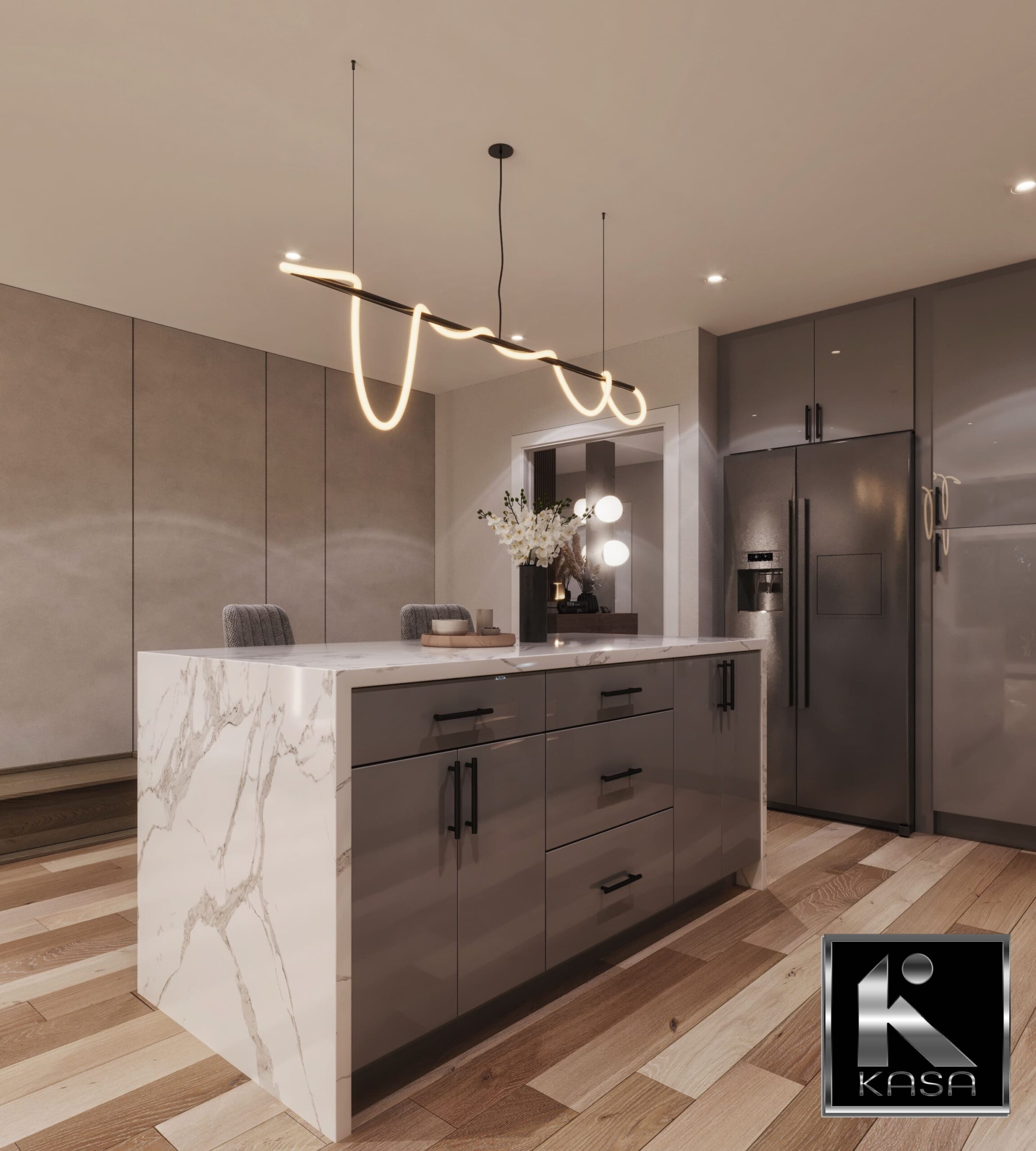
A high-gloss kitchen door is built to reflect, not absorb, light. The look is typically achieved through one of three constructions, each with a different cost and durability profile.
- Acrylic (often called high-gloss acrylic or super-matte’s shinier cousin): an acrylic sheet is pressed onto an MDF substrate, producing a deep, almost glass-like shine. This is generally the most durable and UV-stable option, and it is the category KASA Kitchens stocks in its White High Gloss collection.
- Lacquer or polyester paint: sprayed and polished directly onto MDF doors. It delivers a similarly rich shine and a wider colour range, but the finish is more sensitive to chips at the edges if the substrate is knocked.
- High-gloss laminate or foil wrap: a thin glossy film heat-pressed over MDF. This is the most budget-friendly route into the gloss look, though it has the least long-term resilience against heat and edge-peeling.
Knowing which construction sits behind the shine matters more than the colour itself, since it is the deciding factor in how the cabinets will age inside a Canadian home.
Pros of High-Gloss Kitchens
- Makes small and low-light spaces feel larger. Gloss surfaces bounce both natural and artificial light around a room. This is especially valuable in the kind of compact, single-window condo kitchens common across the GTA and Metro Vancouver, where a matte finish would absorb what little daylight reaches the cabinetry.
- A distinctly modern, upscale look. Few finishes signal a contemporary renovation as quickly as a clean gloss slab door. It pairs naturally with handle-less hardware, waterfall countertops, and the two-tone cabinet schemes that have become one of the more requested looks in Canadian kitchens this year.
- Non-porous surface resists staining. Because gloss acrylic and lacquer surfaces are sealed and largely non-absorbent, everyday spills such as oil, sauce, or coffee sit on top of the surface rather than soaking into it, so they wipe away cleanly if caught promptly.
- Fast, simple day-to-day cleaning. A soft microfibre cloth and warm water is usually enough to restore the shine, with no need for the deeper, more frequent scrubbing that porous matte surfaces can require once grease has had time to settle in.
- Wide design flexibility. Premium acrylic and lacquer lines are now available in dozens of colours and several sheen levels, which means a gloss kitchen no longer has to mean stark white. Charcoal, navy, and deep green high-gloss islands are increasingly common feature pieces in custom Canadian kitchens.
Cons of High-Gloss Kitchens
- Fingerprints, smudges, and water spots show immediately. The same reflective quality that brightens a room also draws attention to every touch point, particularly around handles and the edges of a kitchen island. Households with young children or multiple cooks will notice this daily.
- Higher maintenance expectations. Keeping a gloss kitchen looking showroom-fresh generally means wiping it down more often than a matte equivalent, and using only soft cloths and non-abrasive cleaners. Scouring pads or harsh sprays will permanently dull or scratch the surface.
- Imperfections are harder to hide. A glossy surface reflects light evenly, which means any unevenness in the cabinet boxes, wall, or installation becomes more visible than it would under a matte finish. Precise installation matters more with gloss than with almost any other finish.
- Cost premium over standard finishes. High-gloss acrylic and lacquer doors typically cost more than painted MDF or thermofoil equivalents, both in material and in the additional care required during fabrication and shipping to avoid scuffing the surface.
- Risk with lower-quality laminate gloss. Budget laminate gloss wraps can peel or dull at the edges over time, especially near a stove or dishwasher where heat and moisture are concentrated. This is the finish tier where checking the warranty and substrate quality before buying matters most.
Best Use Cases for High-Gloss Kitchens in Canada
Gloss is not a one-size-fits-all finish. It performs best in specific layouts and lifestyles, and Canadian housing stock offers plenty of good matches for it.
- Condos and smaller urban kitchens. In Toronto, Vancouver, and Calgary condos where kitchen footprints are tight and natural light is often limited to a single exposure, a light-coloured gloss finish does real work in making the space feel open rather than closed in.
- North-facing or basement kitchens. Secondary or basement kitchens, which are an increasingly common renovation project across Canada, rarely get strong daylight. A gloss finish on at least the upper cabinets helps offset that with reflected artificial light.
- Contemporary new-build and resale-focused renovations. Buyers shopping in competitive markets such as the GTA and Metro Vancouver respond well to a polished, current look. A gloss kitchen photographs well and tends to read as a recent, higher-end renovation in listing photos.
- Feature elements rather than the whole kitchen. One of the clearer 2026 trends is using gloss strategically, on an island or a single bank of upper cabinets, rather than across every door front. This captures the visual impact of gloss while limiting the surface area that needs frequent wiping.
- Low-traffic, design-forward households. A couple or smaller household that uses the kitchen primarily for cooking and entertaining, rather than as a high-traffic family hub, will get the aesthetic upside of gloss with fewer of its maintenance downsides.
Where gloss tends to be a poorer fit: busy family kitchens with young children, homes with multiple pets, and any kitchen where the homeowner wants a low-maintenance, forgiving surface. In those situations, a matte or satin finish in plywood-box construction is usually the more practical choice.
See More White High Gloss (PGW)
What High-Gloss Kitchens Cost in Canada
Pricing depends heavily on construction type and finish tier. As a general guide for Canadian homeowners in 2026, semi-custom cabinetry with a quality acrylic high-gloss finish typically lands in the $12,000 to $22,000 range installed for a standard kitchen, while a fully custom high-gloss lacquer kitchen can run from $25,000 upward depending on size, hardware, and island scope. Budget laminate-gloss RTA options exist at lower price points, but it is worth confirming the substrate and edge-banding quality before committing, since this is where cheaper gloss products are most likely to fail early.
Caring for a High-Gloss Kitchen
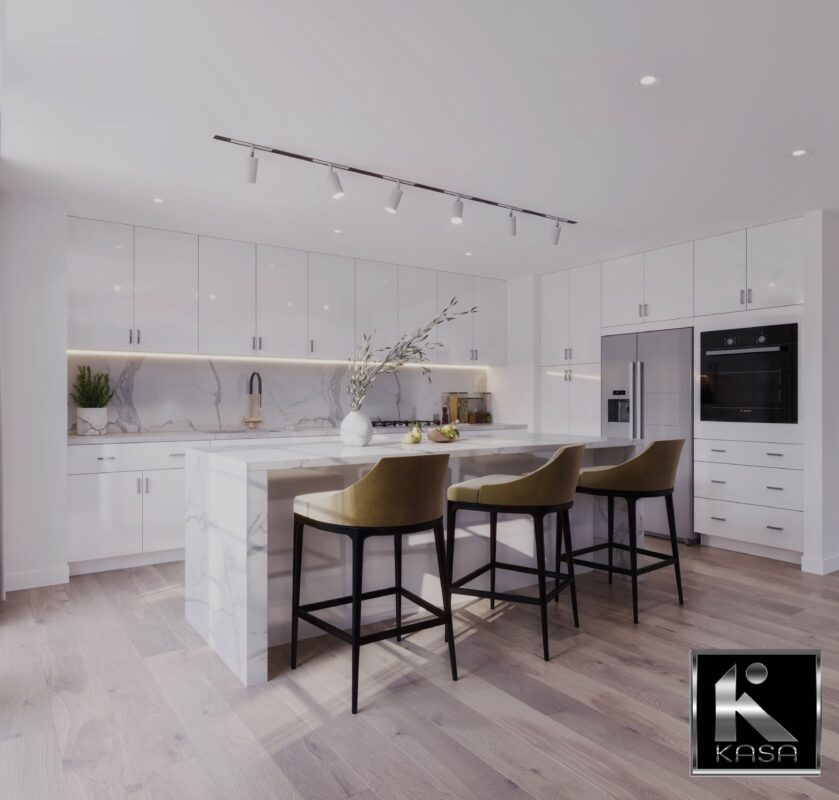
Daily care for a gloss kitchen is simple, but it does need to be consistent to keep the surface looking its best year after year.
- Wipe up spills as soon as they happen, using a soft microfibre cloth rather than paper towel or anything abrasive.
- Clean with warm water and a mild, pH-neutral dish soap; avoid ammonia-based or scouring products entirely.
- Wipe in straight, consistent strokes rather than circular motions to prevent faint swirl marks from showing under light.
- Keep gloss surfaces away from direct heat sources where possible, since sustained heat exposure is the most common cause of edge lifting on laminate-wrap doors.
- Ask your supplier about the warranty on finish and edge-banding before purchase, since this varies significantly between acrylic, lacquer, and laminate product lines.
See More: Top 99+ Most Beautiful and Modern Kitchen Cabinet Designs
Is a High-Gloss Kitchen Right for Your Home?
A high-gloss kitchen is a strong choice for homeowners who want a bright, contemporary look, particularly in smaller or light-starved Canadian kitchens, and who are comfortable with a slightly higher maintenance routine in exchange for that polished result. It is a less natural fit for busy households that prioritize low upkeep over showroom shine. The good news is that gloss does not have to be an all-or-nothing decision. Many of the best-performing kitchens we see use it selectively, on an island, a feature wall of uppers, or a two-tone pairing, while leaning on more forgiving finishes elsewhere.
| Considering a High-Gloss Kitchen?
KASA Kitchens designs and supplies premium high-gloss cabinetry, including our White High Gloss collection, for homeowners across Canada. Our team can help you decide where gloss will work hardest in your kitchen, and where a different finish makes more sense. |
