


Blog
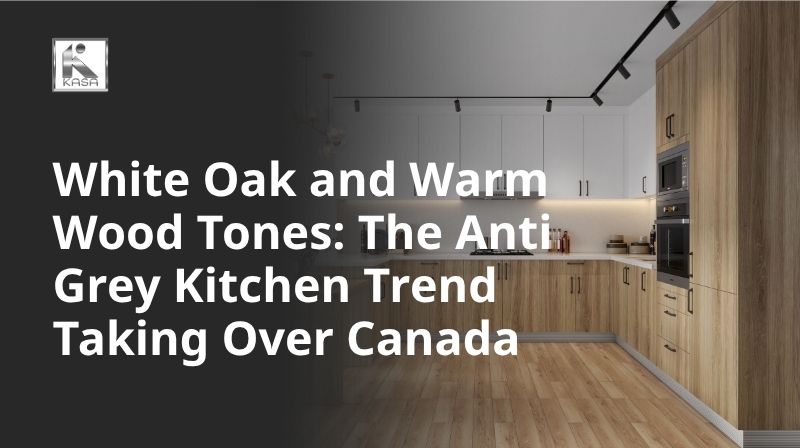
White Oak and Warm Wood Tones: The Anti Grey Kitchen Trend Taking Over Canada
Sep
For most of the last decade, grey ruled the Canadian kitchen. Cool undertones, greige walls, and matte grey cabinet fronts became the default look in new builds and renovations from Vancouver to the Greater Toronto Area. That period is ending. Across the design projects KASA Kitchens has completed for homeowners in Ontario, British Columbia, and Alberta over the past two years, one shift stands out clearly: clients are asking for warmth. White oak cabinetry, honey toned wood islands, and natural wood accents are replacing the cool grey palette that once felt inevitable.
This is not a passing fad picked up from a single design show. It reflects a broader move in North American interior design toward materials that feel grounded, tactile, and connected to nature, often called organic modern or new traditional design. This guide explains why the anti grey movement is gaining so much traction in Canada, what makes white oak the centerpiece of the trend, and how homeowners can plan a renovation that embraces warm wood tones without it feeling dated in five years.
Why Grey Dominated Canadian Kitchens for So Long
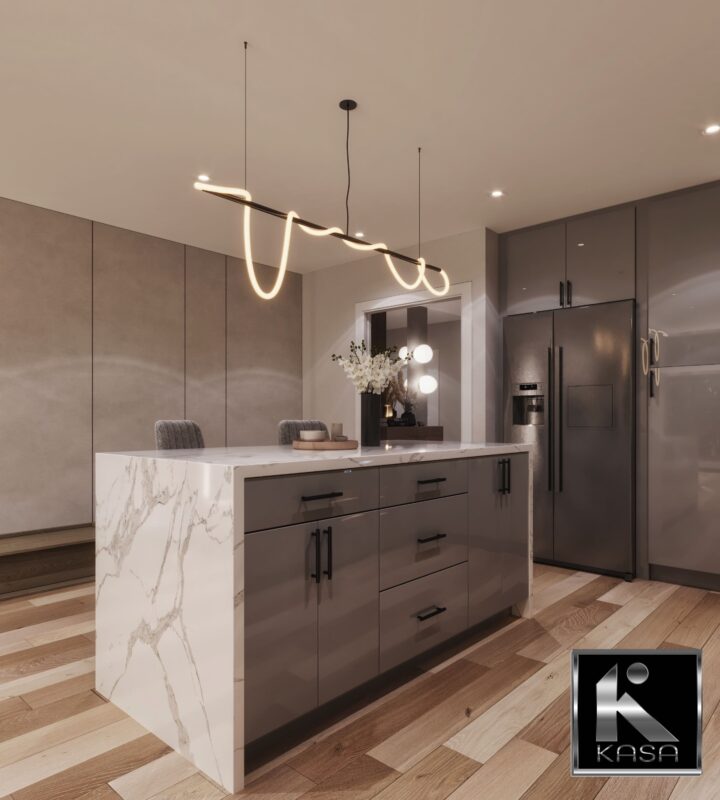
Grey cabinetry rose to prominence in Canada around the mid 2010s, driven largely by open concept renovations and a wave of builder grade finishes that favored cool, neutral palettes. Grey paired easily with quartz countertops, stainless steel appliances, and the industrial loft aesthetic that was popular in condo developments across Toronto and Vancouver. It photographed well for real estate listings and felt safe for resale value, which made it the go to recommendation for years.
The problem homeowners are now running into is that grey has become the new beige. It is everywhere, it can read as cold or clinical in certain lighting, and many of the original grey kitchens installed a decade ago are starting to look tired rather than timeless. That fatigue is a major driver behind the current shift toward wood — a shift you can already see reflected in the top-selling cabinet colors in the GTA this year.
What Is Actually Driving the Anti Grey Movement
Several forces are converging to push Canadian kitchen design away from grey and toward warmth.
Biophilic design principles, which prioritize natural materials and textures, have moved from commercial architecture into residential renovation trends. Homeowners spent more time at home during and after the pandemic years and began prioritizing comfort and warmth over showroom perfection. Scandinavian and Japandi influenced design, both of which favor light natural wood, have had a sustained presence in Canadian interior design media. Resale conversations have shifted. Realtors and designers increasingly note that an all grey kitchen no longer reads as a premium upgrade the way it did in 2015.
On the KASA Kitchens side, this shows up directly in client consultations. Homeowners now regularly bring in reference photos of white oak islands, oak veneer upper cabinets paired with painted lowers, and natural wood open shelving, requests that were rare just three or four years ago. For a fuller picture of where cabinet design is heading this year, see our guide to kitchen cabinet trends and design ideas for modern Canadian homes.
White Oak: The Star of the New Wood Movement
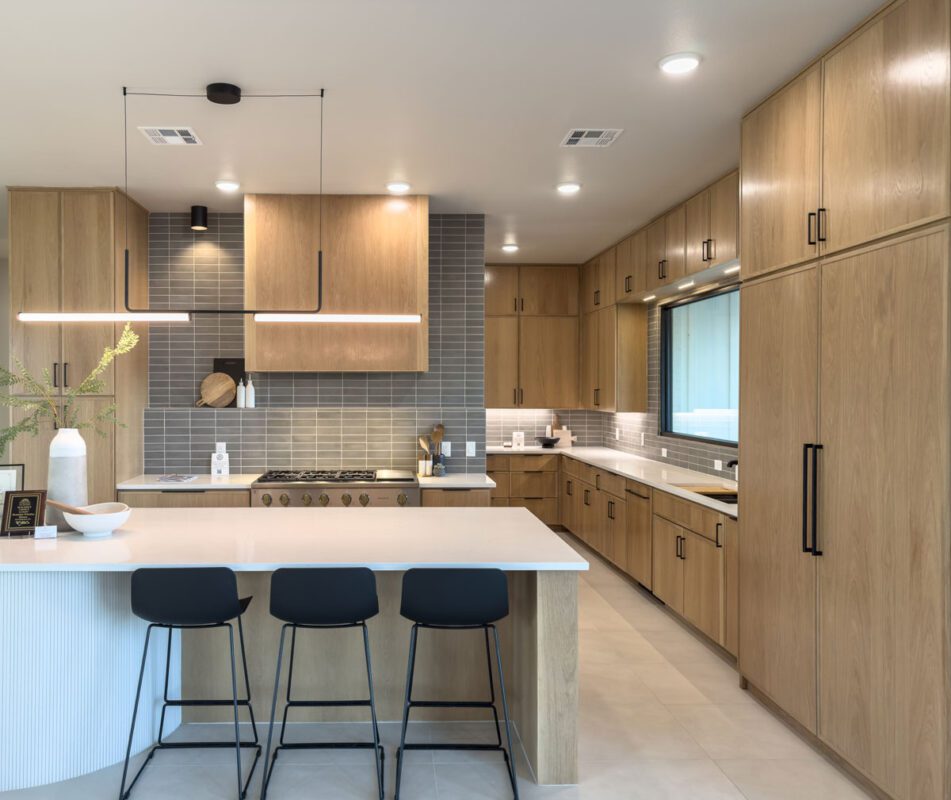
White oak has become the default choice for homeowners moving away from grey, and for good reason. It offers a lighter, more neutral tone than traditional honey oak or cherry, which means it avoids the dated 1990s association many Canadians still connect with oak cabinetry. At the same time, its visible grain and warm undertone give a kitchen texture and depth that flat painted cabinets cannot match.
White oak works particularly well in Canadian homes because it pairs cleanly with both warm and cool architectural elements. It sits comfortably next to black steel window frames, brass or matte gold hardware, white oak flooring, and stone countertops in white, cream, or soft green tones. This flexibility is a major reason designers expect the trend to have staying power rather than fading quickly the way some cabinet colors have.
At KASA Kitchens, white oak cabinetry is most commonly specified in one of three ways: as a full cabinet finish across both upper and lower cabinets, as an accent on a kitchen island against painted perimeter cabinets, or as open shelving and floating shelves layered into an otherwise painted kitchen.
Other Warm Wood Tones Gaining Ground
White oak leads the trend, but it is not the only wood tone Canadian homeowners are requesting. Several related finishes are showing up consistently in renovation projects across the country.
Rift cut white oak, which produces a straighter, more linear grain pattern for a slightly more contemporary look. Warm walnut tones, often used on a single island or a bank of lower cabinets as a contrast element. Natural maple and ash finishes with a clear or lightly tinted stain that preserves the wood’s original tone. Wire brushed or textured oak finishes, which add a tactile, slightly rustic quality favored in farmhouse and transitional kitchens. For homeowners who like the depth of wood grain but want something a shade darker, our smoked oak finish is another warm alternative worth a look.
Each of these reads as warm rather than cool, which is the defining quality separating this trend from the grey dominated look it is replacing.
How to Bring White Oak and Warm Wood Into Your Kitchen
Full Cabinet Commitment
For homeowners doing a complete kitchen renovation, a full white oak cabinet package, both upper and lower cabinets, delivers the strongest version of the trend. This approach works best in kitchens with good natural light, since wood tones can read heavier in rooms with limited windows.
Two Tone Kitchens
A more common and often more budget friendly approach pairs white oak with a painted color, typically on the lower cabinets or the island. Popular combinations include white oak uppers with a deep navy or forest green island, or a painted perimeter in soft white with a white oak island as the visual anchor of the room. If you want a deeper breakdown of how to combine tones without the kitchen looking busy, see our guide on mixing two-tone kitchen cabinet colors.
Wood as an Accent
For homeowners not ready to commit to a full wood kitchen, or those working within a smaller renovation budget, wood accents offer a lower cost entry point. Open shelving in white oak, a wood hood surround, or a wood topped island can introduce the trend without replacing every cabinet in the kitchen.
Pairing Warm Wood With Countertops and Hardware
Countertop and hardware choices make a significant difference in how a warm wood kitchen ultimately reads. Cool white quartz with heavy grey veining, the default pairing from the grey era, can undercut the warmth of white oak cabinetry. Homeowners moving toward wood tones are generally shifting toward countertops with warmer undertones, including cream and beige toned quartz, honed marble look surfaces, and natural stone with subtle gold or brown veining. For a closer look at how to pair tones across the whole kitchen, our guide on matching cabinet colors with flooring and countertops walks through the process in more detail.
Hardware follows a similar logic. Matte black, once the default pairing for grey kitchens, is giving way to brushed brass, warm gold, and aged bronze finishes that complement rather than compete with the wood grain. Many KASA Kitchens clients are also opting for minimal or handleless cabinet fronts on the wood elements specifically, letting the grain itself serve as the visual detail. See our full breakdown of cabinet hardware trends and the best pulls for each cabinet color for more pairing guidance.
What It Costs in Canada
Cost is one of the first questions homeowners raise once they see a white oak kitchen they like, and pricing varies meaningfully by region, cabinet construction method, and whether the finish is solid wood or a high quality veneer.
Ontario and the Greater Toronto Area
In the GTA, a mid size kitchen using semi custom white oak cabinetry with a two tone layout typically ranges from about CAD 28,000 to CAD 45,000 including installation, while a full custom white oak kitchen with premium hardware and stone countertops can run from CAD 50,000 to CAD 80,000 or more. RTA, ready to assemble, cabinetry with a white oak finish offers a more accessible entry point, often in the CAD 14,000 to CAD 24,000 range for cabinetry alone.
British Columbia
Vancouver and the broader Lower Mainland tend to run five to fifteen percent above GTA pricing for comparable custom cabinetry, largely due to labor and material transport costs, placing a full custom white oak kitchen in the CAD 55,000 to CAD 90,000 range.
Alberta
Calgary and Edmonton pricing generally lands closer to national averages, with semi custom white oak kitchens in the CAD 25,000 to CAD 42,000 range and full custom projects reaching CAD 48,000 to CAD 75,000.
These figures are general planning ranges rather than fixed quotes. Actual pricing depends on kitchen size, layout complexity, cabinet construction, and finish selections, and can shift with material costs over time. If you are weighing where to spend and where to save on your renovation budget, our guide on spending smart vs. saving more on a kitchen renovation can help you prioritize.
Is the Anti Grey Trend Here to Stay
Design trends inevitably cycle, and it is fair for homeowners to ask whether white oak will feel dated in ten years the way honey oak did after the 1990s. The consensus among designers, and the pattern KASA Kitchens has observed across its own project history, is that this trend has more staying power than the original oak era for two reasons.
First, today’s white oak finishes are lighter, flatter grained, and more neutral than the heavily grained, orange toned oak popular in the 1990s, which reduces the risk of a strong dated association. Second, natural wood as a material category has a long track record in design history compared to any single paint color. Grey, as a color trend, had a defined rise and fall. Wood, as a material, has been a constant in kitchen design for generations, which suggests the current preference for lighter, warmer wood tones is a correction back toward that baseline rather than a trend likely to reverse quickly.
That said, homeowners who want the longest possible lifespan from their renovation should lean toward classic wood tones and simple door profiles rather than heavily textured or unusually dark stains, which are more likely to feel trend specific.
Planning Your White Oak Kitchen
The shift from grey to warm wood is one of the more significant changes in Canadian kitchen design in the past several years, and it shows every sign of continuing through 2026 and beyond. Whether a homeowner is planning a full white oak renovation, a two tone kitchen, or a smaller update using wood accents, the key is choosing finishes, countertops, and hardware that work together rather than following the trend in isolation.
Ready to Plan Your White Oak Kitchen
KASA Kitchens designs and builds custom and semi custom kitchens across the Greater Toronto Area, combining warm wood finishes with durable construction and a design process built around your home. Book a consultation to start your renovation.
Visit kasakitchens.com to book a free consultation.
