


Blog
Why Are My Kitchen Cabinets Yellowing (And How to Fix It Without Replacing Them)
Aug
If your once-bright white or cream cabinets have developed a yellow or amber tint, you’re not alone. Yellowing is common in older kitchens and usually doesn’t mean the cabinets are damaged.
This guide explains why cabinets turn yellow, how to identify the cause, which solutions work, and when refinishing, refacing, or replacing is the better option.
What Causes Kitchen Cabinets to Yellow
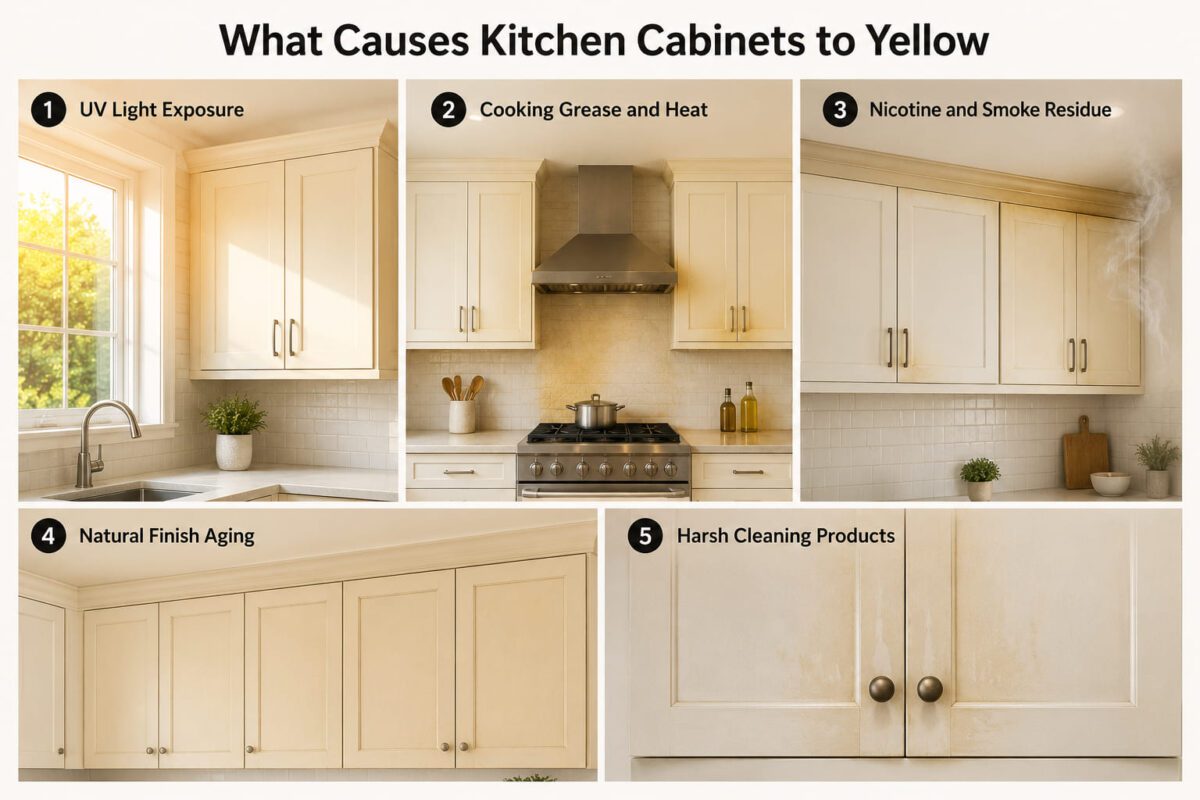
Yellowing is almost always a finish problem, not a material problem. The wood, MDF, or thermofoil underneath is typically fine. What changes color is the clear coat, paint, or laminate layer on top. There are five common causes.
1. UV Light Exposure
Sunlight breaks down the chemical structure of varnishes, lacquers, and some paints through a process called photo oxidation. Cabinets near a window or on a south facing wall often yellow faster and more unevenly than cabinets in shaded corners, which is a strong clue that sunlight is the culprit.
2. Cooking Grease and Heat
Cabinets directly above or beside the stove are exposed to a steady mist of airborne grease and heat every time you cook. Over months and years, that residue bonds to the finish and yellows it, especially on the underside of upper cabinets near the range.
3. Nicotine and Smoke Residue
Cigarette smoke, candles, and wood burning fireplaces release tar and resin particles into the air that settle on cabinet surfaces. This type of yellowing tends to be uniform across the whole kitchen rather than concentrated near one appliance.
4. Natural Finish Aging (Ambering)
Many clear coats, particularly oil based polyurethane and older lacquer formulas, amber naturally as they cure and age, even with zero sun exposure and no cooking nearby. This is a chemical property of the finish itself and is the most common cause on cabinets that are simply old rather than heavily used.
5. Harsh Cleaning Products
Ammonia based cleaners, bleach, and some all purpose sprays react with certain paints and clear coats over repeated use, leaving a cloudy yellow film. If yellowing appeared shortly after switching cleaning products, this is worth investigating first.
How to Tell If Yellowing Can Be Fixed
Before choosing a fix, do a quick assessment. A small, inconspicuous test tells you far more than guessing.
- Wipe a hidden section, such as inside a cabinet door, with a degreaser. If color lifts, you are dealing with surface residue that cleaning can resolve.
- Check for cracking, bubbling, or peeling finish. If the coating itself is failing rather than just discolored, cleaning will not fix it and refinishing is the next step.
- Press firmly on the door and drawer fronts. If the substrate feels soft, swollen, or delaminated, especially near a sink or dishwasher, water damage rather than yellowing is the real issue and may require replacement of that piece.
- Compare a shaded cabinet to one in direct light. Uneven yellowing that follows sun exposure points to UV damage, which responds well to refinishing but will recur without added protection.
DIY Fixes for Mild to Moderate Yellowing
For light residue based yellowing, these methods are worth trying before calling in a professional. Always test on a small hidden area first.
Baking Soda Paste
Mix baking soda with a small amount of water into a thick paste. Apply with a soft cloth in gentle circular motions, let sit for a few minutes, then wipe clean with a damp cloth. This works well on grease film without scratching most painted finishes.
Vinegar and Warm Water
A solution of equal parts white vinegar and warm water cuts through grease and light nicotine residue. Wipe on, let sit briefly, then rinse with a clean damp cloth so no acidic residue is left sitting on the finish.
Magic Eraser, Used Sparingly
Melamine foam erasers can lift stubborn residue but are mildly abrasive. Use light pressure only, avoid glossy or lacquered finishes where it can dull the sheen, and always test first.
Dedicated Degreaser
A degreaser formulated for kitchens, applied with a soft cloth and rinsed thoroughly, handles heavier buildup near the range better than household all purpose cleaners.
If none of these restore the original color, the discoloration is in the finish itself rather than sitting on top of it, and cleaning alone will not solve the problem.
When Cleaning Is Not Enough: Refinishing and Repainting
If the yellowing is baked into an aged clear coat or a failing paint layer, restoration means removing or covering that layer rather than scrubbing it. Homeowners generally choose between two approaches.
Sanding and Refinishing
A professional sands down the existing finish and applies a new clear coat or stain. This works best on solid wood cabinets in good structural condition and preserves the original wood grain and cabinet style.
Repainting
For painted cabinets or homeowners who want a color change along with the fix, repainting involves sanding, priming, and applying a durable cabinet grade paint, usually with a catalyzed or waterborne finish that resists yellowing far better than older oil based products.
Both approaches typically cost a fraction of full replacement and can be completed in days rather than the weeks a full renovation requires.
Refacing vs Replacing: What Actually Makes Sense
When cabinet boxes are structurally sound but doors, drawer fronts, and finishes are worn or outdated, refacing is usually the better investment. Refacing replaces door and drawer fronts with new materials while keeping the existing cabinet boxes in place, which cuts both cost and installation time significantly compared to a full replacement.
Full replacement makes more sense when cabinet boxes show water damage, structural warping, or when a kitchen layout change is part of the plan. It is also worth considering if cabinets are decades old and paired with outdated storage configurations that no longer suit how the kitchen is used today.
Typical Canadian Pricing for Cabinet Restoration
Costs vary by region, cabinet material, and the extent of the work. The ranges below reflect typical professional pricing across three major Canadian markets as of 2026.
| Service | Ontario / GTA | British Columbia | Alberta |
| Deep clean and reseal | 200 to 450 CAD | 220 to 480 CAD | 180 to 420 CAD |
| Professional cabinet repaint | 2,800 to 6,500 CAD | 3,000 to 7,000 CAD | 2,600 to 6,000 CAD |
| Cabinet refacing | 4,500 to 9,000 CAD | 4,800 to 9,500 CAD | 4,200 to 8,500 CAD |
| Full cabinet replacement | 9,000 to 25,000 plus CAD | 9,500 to 26,000 plus CAD | 8,500 to 23,000 plus CAD |
Note: pricing depends on kitchen size, cabinet material, and finish selection. A detailed, itemized quote from a local kitchen professional will always be more accurate than general estimates.
How to Prevent Yellowing From Coming Back
- Install a range hood with strong ventilation and use it every time you cook, especially when frying or searing.
- Use UV protective window film or blinds on windows near cabinetry that gets direct sun.
- Clean cabinets monthly with a mild, pH neutral cleaner rather than ammonia based sprays or bleach.
- Choose a waterborne or catalyzed finish over oil based polyurethane if you are refinishing, since modern waterborne topcoats resist ambering far better.
- Wipe up grease splatters near the stove the same day rather than letting them sit for weeks.
Frequently Asked Questions
Why are my white cabinets turning yellow if I never use bleach near them
White cabinets are the most noticeable case because any tint shows clearly against a bright base color. Even without bleach, oil based clear coats amber naturally over time, and this is the single most common cause on white cabinets specifically.
Can yellowed cabinets be fixed without repainting the whole kitchen
Yes, in many cases. If yellowing is limited to a few doors near the stove or a sun exposed section, those pieces alone can often be cleaned, refinished, or refaced without touching the rest of the kitchen.
Is yellowing a sign my cabinets need to be replaced
Not usually. Yellowing on its own is a cosmetic finish issue. Replacement only becomes necessary when it is combined with structural problems such as water damage, warping, or delamination.
How long does professional cabinet refinishing take
Most refinishing or repainting projects for an average kitchen take between three and seven days, compared to several weeks for a full cabinet replacement and installation.
The Bottom Line
Yellowing cabinets are common, explainable, and in most cases fixable without the cost and disruption of a full renovation. Identifying the cause, whether it is sun exposure, cooking residue, an aging finish, or harsh cleaning products, is the first step toward choosing the right fix. For many Canadian homeowners, a professional deep clean, refinish, or refacing project restores the kitchen for a fraction of the cost of replacement.
| Ready to Stop Staring at Yellowed Cabinets
KASA Kitchens helps homeowners across the Greater Toronto Area decide between refacing, repainting, and full replacement, then handles the project from design to installation. Book a free in home consultation and get an honest recommendation along with a clear, itemized quote. |
