


Blog
How to Match Cabinet Colors with Flooring and Countertops

Jul
Choosing new cabinets is rarely just about the cabinets. The real challenge for most Canadian homeowners is making sure those cabinets work in harmony with the flooring underfoot and the countertop on top. Get the combination right and a kitchen feels intentional, timeless, and well designed. Get it wrong and even expensive materials can look mismatched or dated within a few years. This guide breaks down the design principles, undertone theory, and real world combinations that professional designers use, along with current Canadian pricing benchmarks, so you can plan a renovation with confidence.
Why Color Coordination Matters More Than Any Single Material
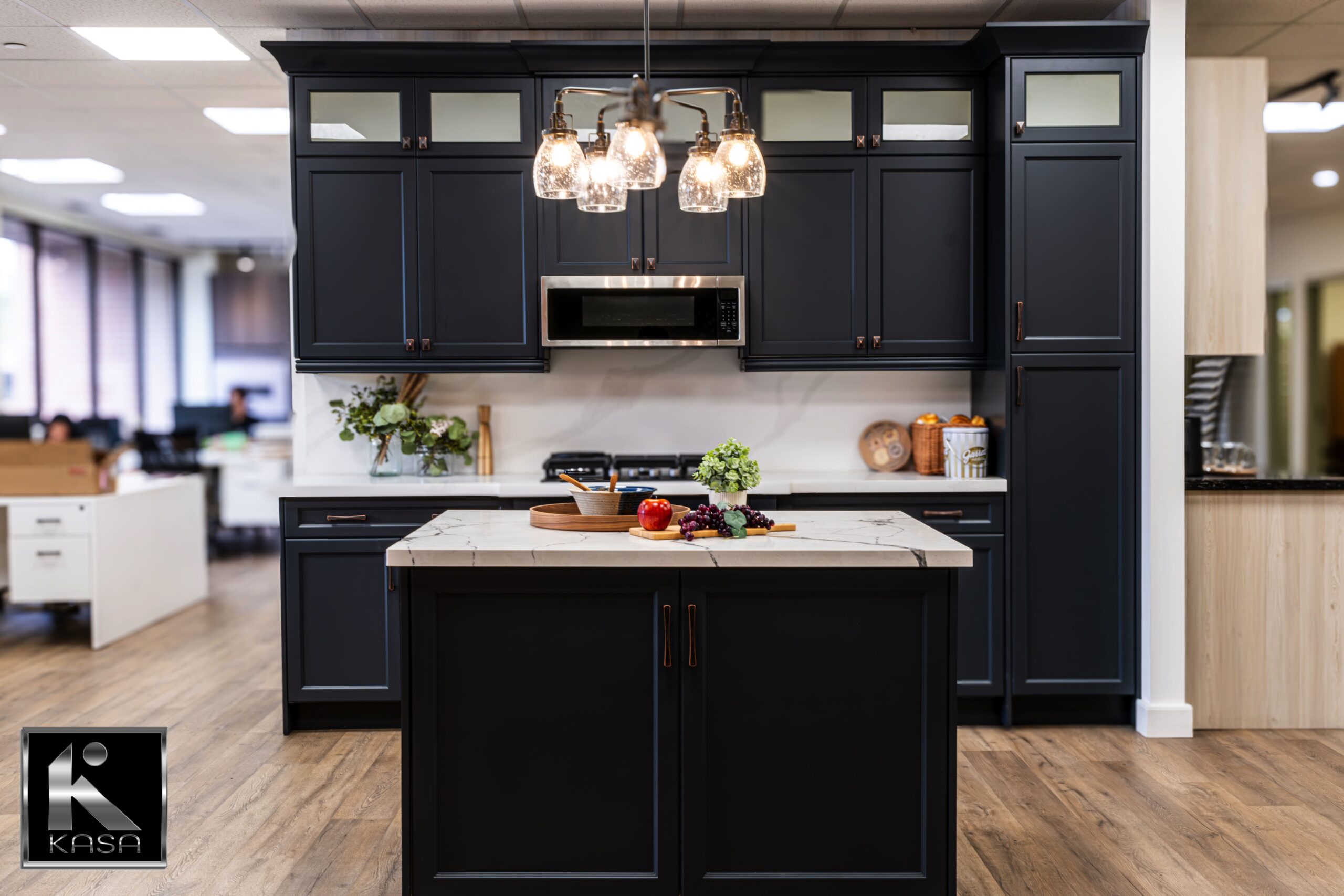
A kitchen typically has three dominant material surfaces: cabinetry, flooring, and countertops. Because these three elements cover the largest visual area in the room, their relationship sets the tone for everything else, including wall color, hardware, backsplash, and lighting. When these three surfaces share a coordinated undertone and contrast level, the eye reads the space as cohesive. When they clash, the kitchen can feel busy or unfinished no matter how much money was spent on individual pieces.
This is also a practical, long term decision. Flooring and cabinetry are among the most expensive and least frequently replaced elements in a home. Homeowners in Ontario, British Columbia, and Alberta are increasingly choosing neutral, undertone balanced palettes precisely because they photograph well for resale and remain adaptable as trends shift.
Start with Undertones, Not Colors
The single most important concept in matching cabinets, flooring, and countertops is undertone. Undertone is the subtle secondary color hiding beneath the main color of a material. A white cabinet might look simply white on a paint chip, but under natural light it can lean warm (cream, yellow, beige) or cool (blue, grey). The same applies to wood flooring, which can lean warm (red, orange, gold) or cool (grey, ash), and to stone or quartz countertops, which can carry warm veining or cool grey and blue veining.
The rule professional designers follow is simple: warm undertones pair with warm undertones, and cool undertones pair with cool undertones. Mixing a warm honey oak floor with a stark cool white cabinet and a blue grey countertop is one of the most common causes of a kitchen that feels visually disconnected.
How to Identify Undertone in Your Own Materials
- Hold a flooring or countertop sample next to a plain white sheet of paper in natural daylight to reveal hidden warm or cool tones.
- Look at the veining in stone. Grey, blue, or black veining signals a cool undertone. Gold, beige, or rust veining signals a warm undertone.
- Compare wood species. Oak, walnut, and hickory tend to run warm, while ash, maple, and white washed finishes tend to run cool or neutral.
- View samples at different times of day, since Canadian daylight shifts significantly between morning, afternoon, and evening, especially in winter months.
| Designer Insight
A five dollar sample board saves thousands of dollars in regret. Before ordering full quantities of flooring or countertop material, always place a physical sample of each finish side by side in the actual kitchen for at least 48 hours. |
See more:
Matte White vs High Gloss White Cabinets: Which Should You Choose
Proven Cabinet, Flooring, and Countertop Combinations
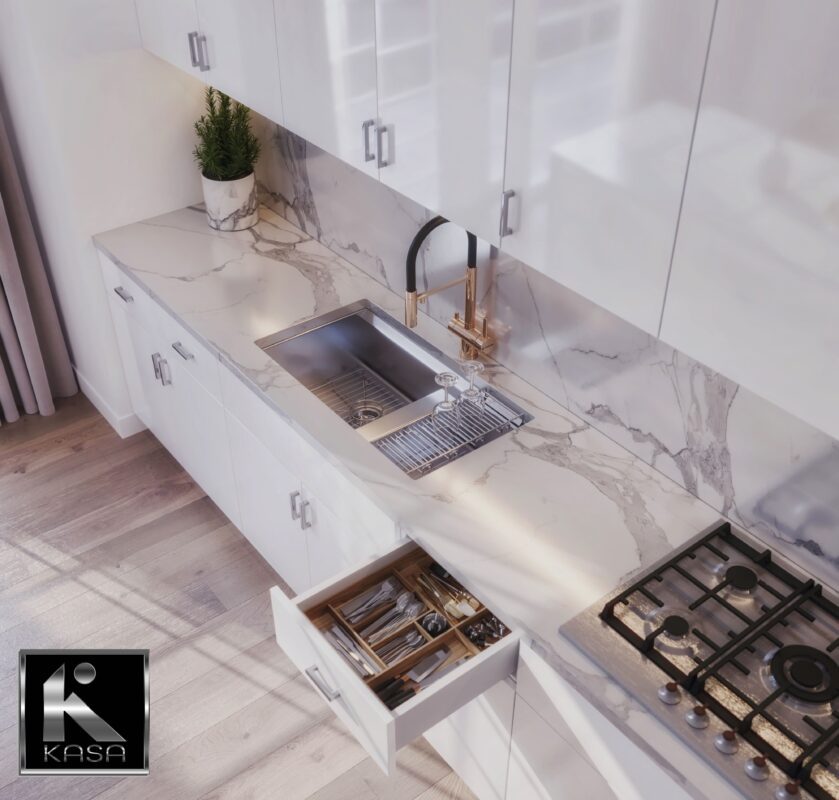
The table below outlines combinations that consistently work well together, based on current Canadian design trends and undertone theory. These pairings are a reliable starting point for homeowners who want a cohesive look without hiring a full design consultant, though a consultation is always recommended for custom projects.
| Cabinet Color | Flooring | Countertop | Style |
| White or Off White | Warm Oak, Medium Brown | White Quartz with Grey Veining | Modern Transitional |
| Navy or Dark Green | Light Grey Oak | White or Light Grey Quartz | Contemporary |
| Warm Grey (Greige) | Medium Walnut | Beige or Taupe Quartzite | Warm Contemporary |
| Two Tone (Navy Lower, White Upper) | Wide Plank Oak | Waterfall Quartz Island | Modern Luxury |
| Natural Wood Tone | Matching or Lighter Wood Tone | Solid White or Cream Quartz | Scandinavian |
| Charcoal or Black | Light Ash or Whitewashed Oak | White Marble Look Quartz | Bold Contemporary |
The 60 30 10 Rule for Kitchen Palettes
Interior designers frequently apply the 60 30 10 rule to kitchens: 60 percent of the visible palette should be a dominant neutral, typically cabinetry or flooring, 30 percent should be a secondary supporting tone, often the countertop or an accent cabinet color, and 10 percent should be a bold accent, such as hardware, a light fixture, or a painted island. Applying this ratio keeps a kitchen from feeling flat while preventing any single material choice from overwhelming the space.
Matching by Kitchen Style
Modern and Contemporary Kitchens
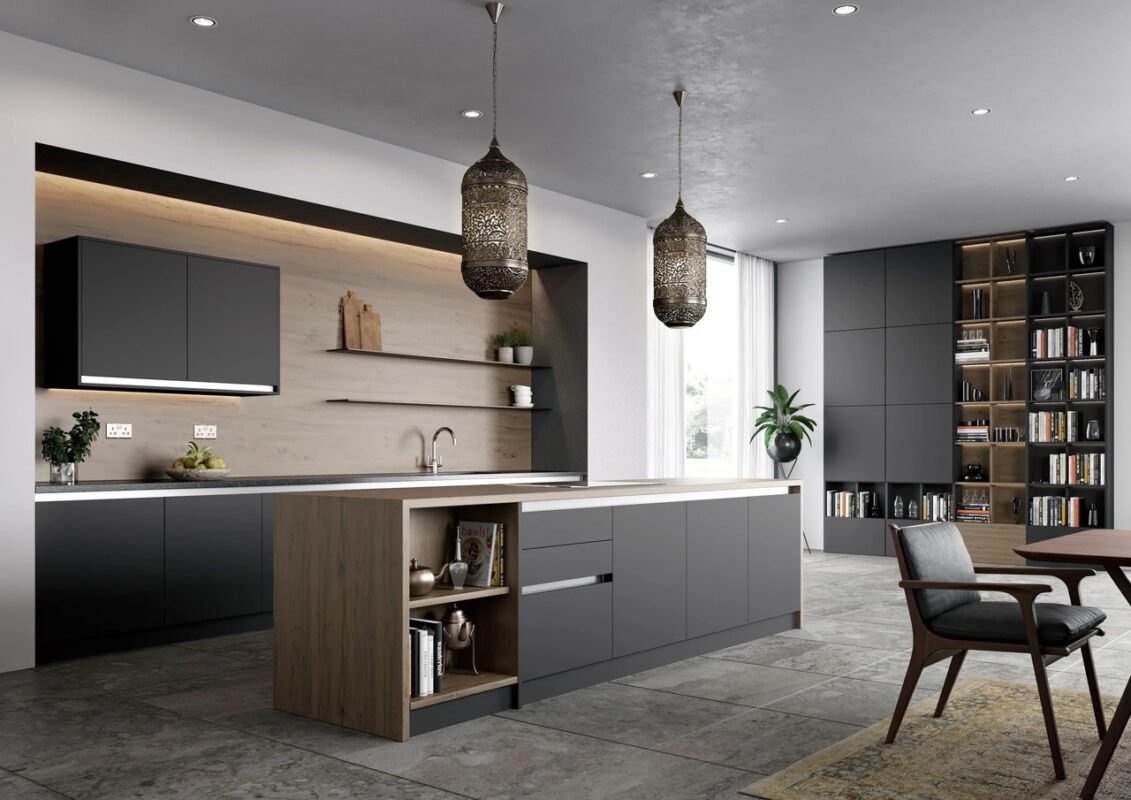
Modern Canadian kitchens tend to favor high contrast pairings, such as dark navy or charcoal cabinetry against light oak or light grey flooring, topped with a bright white or light grey quartz countertop. This contrast driven approach photographs well and suits open concept homes common across the GTA.
Transitional Kitchens
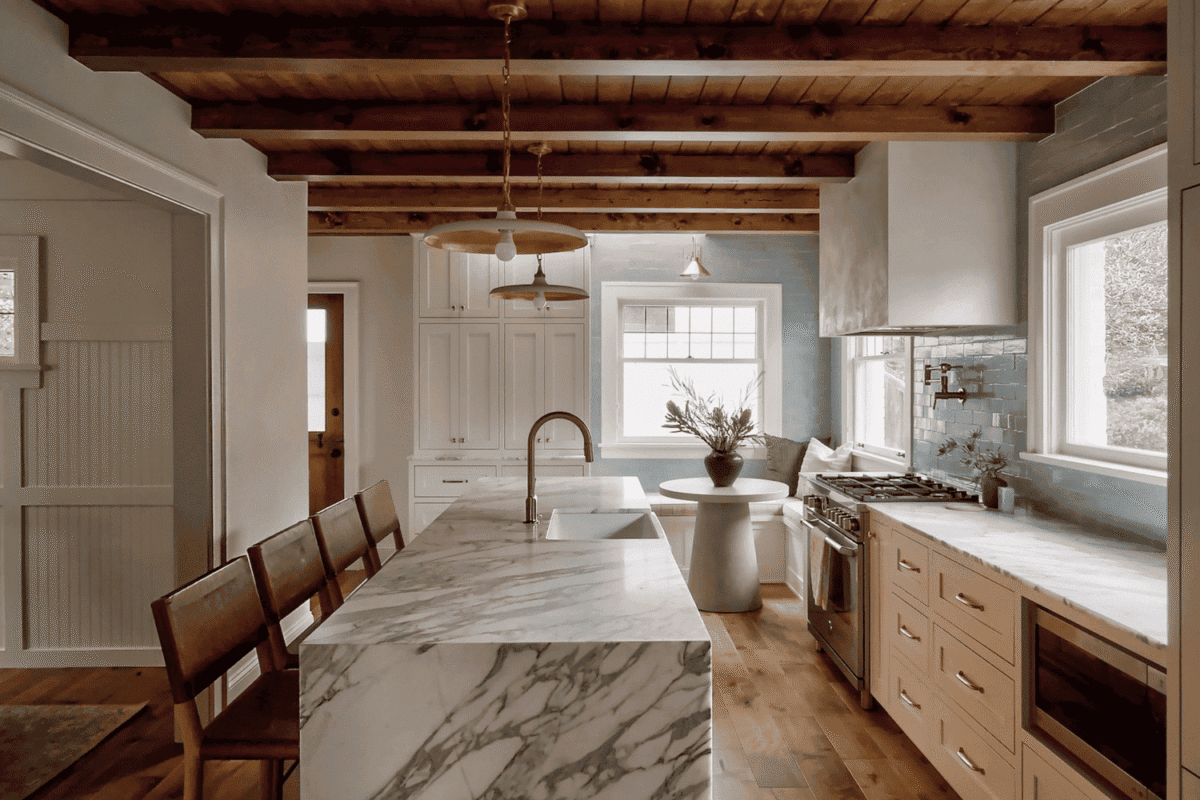
Transitional kitchens blend traditional cabinet profiles with simpler, modern finishes. White or warm grey shaker cabinets paired with medium toned engineered hardwood and a quartz countertop featuring soft veining remain the most requested combination among KASA Kitchens clients in Ontario.
Regional Trends Across Canada
Cabinet and flooring preferences vary somewhat by region, shaped by local architecture, climate, and resale expectations.
- Ontario: White and warm grey cabinetry with wide plank engineered oak flooring remains the top seller across the GTA, largely driven by condo and townhome renovations and resale considerations.
- British Columbia: Coastal influenced palettes favor lighter, cooler tones, including whitewashed or light oak flooring paired with soft grey or sage cabinetry.
- Alberta: Warmer, richer tones are more common, including walnut and dark oak flooring paired with two tone cabinetry combining navy or black with natural wood accents.
Common Mistakes Homeowners Make
- Choosing flooring and cabinets from different undertone families without testing samples together in the actual room.
- Selecting a heavily veined countertop alongside a heavily patterned floor, which competes for visual attention instead of complementing it.
- Matching wood tones too closely, which can flatten a space rather than add depth. A slight contrast between cabinet wood and floor wood generally reads better than an exact match.
- Ignoring lighting conditions. A north facing kitchen with cooler natural light will show colors differently than a south facing kitchen with warmer light.
- Finalizing a countertop before confirming the cabinet finish, which limits options since cabinetry is easier and less costly to adjust than natural stone.
| Designer Insight
When in doubt, choose your flooring first, then cabinetry, then countertop last. Flooring is the hardest and most expensive element to change later, while countertops offer the widest range of colors and patterns to complement whatever comes before them. |
Canadian Pricing Benchmarks for 2026
Renovation budgets vary by province and by material quality. The table below reflects average installed pricing across Ontario, British Columbia, and Alberta for mid range residential projects, based on current market conditions.
| Material | Ontario (CAD) | British Columbia (CAD) | Alberta (CAD) |
| Custom Cabinetry (per linear ft) | $450 – $900 | $500 – $950 | $400 – $850 |
| Engineered Hardwood Flooring (per sq ft, installed) | $8 – $14 | $9 – $15 | $7 – $13 |
| Quartz Countertop (per sq ft, installed) | $70 – $120 | $75 – $125 | $65 – $110 |
| Granite Countertop (per sq ft, installed) | $55 – $95 | $60 – $100 | $50 – $90 |
Pricing depends on cabinet construction quality, hardware, edge profiles, and the complexity of the kitchen layout. A full custom cabinetry and countertop package for an average GTA kitchen typically ranges from 25,000 to 55,000 CAD, while wholesale RTA cabinetry offers a lower cost alternative for homeowners managing their own installation.
See more:
How Much Does a Kitchen Renovation Cost? Accurate Price Calculation per Linear Meter (2026 Guide)
Frequently Asked Questions
Should cabinets be lighter or darker than the floor?
There is no fixed rule, but a common and reliable approach is choosing cabinetry that is either noticeably lighter or noticeably darker than the flooring rather than matching it too closely, which creates definition between the two surfaces.
Do countertops need to match the cabinets exactly?
No. Countertops should complement, not match, cabinetry. A slight contrast in tone, combined with a shared undertone, generally produces the most balanced result.
What is the safest combination for resale value?
White or warm grey cabinetry paired with medium toned engineered hardwood and a white or light grey quartz countertop remains the most consistently popular combination among Canadian buyers and appraisers.
Can dark cabinets work in a small kitchen?
Yes, provided the flooring and countertop remain light to maintain brightness and the kitchen has adequate natural or layered artificial lighting.
How many samples should I compare before deciding?
Most designers recommend narrowing the decision to two or three full combinations, then viewing large format samples together in the actual kitchen under both daytime and evening lighting before finalizing an order.
| Bring Your Vision to Life with KASA Kitchens
Choosing the right cabinet, flooring, and countertop combination is easier with expert guidance. KASA Kitchens designs and builds custom cabinetry for homeowners across the Greater Toronto Area, pairing every project with in house design consultation, precise manufacturing, and professional installation. Book a free design consultation at kasakitchens.ca and let our team help you create a cohesive, on trend kitchen that fits your home and your budget. |


