


Blog
Kitchen Cabinet Fillers, Panels and Crown Moulding: What to Order
Nov
Cabinets get most of the attention in a kitchen plan, but the small pieces decide whether the room looks finished or unfinished. Fillers close gaps. Panels hide exposed cabinet sides. Crown moulding ties the top of the cabinet run to the ceiling. Leave any of them off your order and the installer is left with gaps, bare cabinet boxes and a job that stalls for days while a part is shipped.
This guide explains what each piece does, how to measure for it, what it costs in Canada and how to build an order that arrives complete. It is written for homeowners, renovators and contractors planning a kitchen anywhere from Ontario to British Columbia and Alberta.
About this guide. Written by the KASA Kitchens content team. KASA Kitchens supplies ready to assemble cabinets and matching finishing components to homeowners and contractors in the Greater Toronto Area. Product names and price ranges were checked against the KASA Kitchens website in November 2026. Always confirm sizes and finishes with a KASA design specialist before you place an order.
What Are Cabinet Fillers, Panels and Crown Moulding
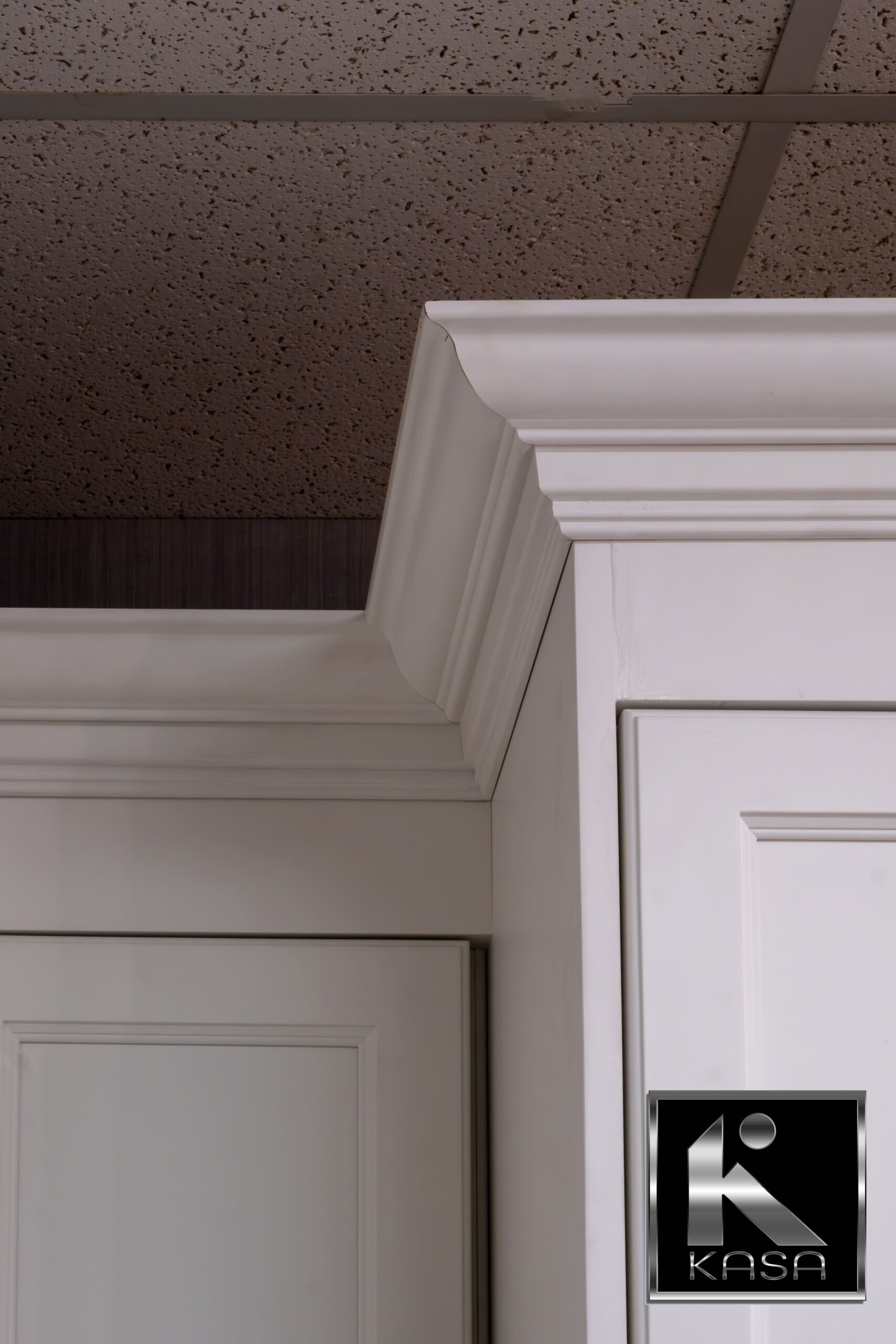
A filler is a narrow, flat strip that sits between two cabinets, or between a cabinet and a wall, to close a gap that a standard cabinet width cannot cover. Standard cabinets come in three inch width steps, and rooms rarely measure in three inch steps. The difference is taken up by a filler. A panel is a larger flat piece, usually matched to the door finish, that covers an exposed cabinet side, the end of an island or the space beside a refrigerator. Crown moulding is the decorative trim that runs along the top of wall cabinets and hides the joint between the cabinet and the ceiling.
Together these parts are called finishing components. They do not store anything, which is why first time buyers often skip them. They are also the parts that make a run of ready to assemble cabinets look like a custom kitchen. KASA Kitchens groups them in its cabinet fillers and panels collection and its crown moulding and valances collection, so you can order them in the same finish as your doors.
Why Finishing Pieces Matter in a Canadian Kitchen
Canadian homes bring a few conditions that make finishing pieces more important than they first appear. Older houses in Toronto, Ottawa and Montreal often have walls that are out of plumb by half an inch or more over a short run. Newer condos in Vancouver and Calgary have tight layouts where a single inch decides whether a dishwasher fits. Ceiling heights range from eight feet in many condos to nine or ten feet in newer detached homes. A filler or a scribe strip absorbs those differences so that doors swing freely and lines look straight.
There is also a practical reason. Doors and drawers need clearance. When a cabinet sits tight against a side wall, or two cabinets meet at a corner, handles collide and doors cannot open fully. A filler of one to three inches at the corner solves this. Kitchen planning guidelines from the National Kitchen and Bath Association stress working clearances and door swing, and fillers are one of the simplest tools for protecting both.
How to Measure Before You Order
Start with a scaled sketch of each wall and measure twice. Record the wall length at counter height and at the top of the wall cabinets, because walls are rarely the same width at both levels. Note the position of windows, doors, vents, pipes and the refrigerator opening. KASA Kitchens publishes measurement guidance that is worth reading before you finish your sketch. Then follow these steps.
- Subtract the width of your planned cabinets from the wall length. The remainder is the total filler width you need to spread across the run.
- Split large gaps. A single filler wider than three inches looks heavy. Two matched fillers, one at each end, usually look better.
- Check corners. At an inside corner, plan a filler of at least two inches so doors and drawers on both runs can open past the handles.
- Confirm appliance openings, including the refrigerator and the dishwasher, from the manufacturer specification sheet and not from the old appliance.
If you are working with a contractor, ask them to check your numbers. A second set of eyes on a measurement costs nothing, and a wrong order costs days.
Types of Cabinet Fillers and When to Use Them
Wall Fillers
Wall fillers are flat strips that match the height of wall cabinets. They close gaps beside a wall cabinet run, between a cabinet and a range hood, or at the end of a run against a side wall. KASA Kitchens lists its wall filler in a wide range of sizes, with prices that run from about CAD 16 to CAD 154 depending on dimension and finish.
Scribe Moulding
Scribe moulding is a thin strip used to hide small gaps between a cabinet and an uneven wall or ceiling. Unlike a filler, it is meant to be trimmed to follow the line of the wall. Installers in older Canadian houses use it on almost every job. You can see sizes and finishes for scribe moulding, listed from about CAD 23 to CAD 112.
Cabinet Panels Explained
Panels are the largest finishing pieces and usually the most visible, so the right choice matters for both looks and cost. These are the main types you will meet when you build an order.
- End panel. Covers the exposed side of a cabinet at the end of a run. The edge finished panel is made so the cut edge looks clean from the room. KASA lists it from about CAD 326 to CAD 741.
- Refrigerator and pantry panel. Gives the appliance a built in look. Heights of 84, 90 and 96 inches are offered. See the tall panel for refrigerator and pantry sides, listed from about CAD 180 to CAD 490.
- Island panel. Finishes the back and ends of an island so that cabinet boxes are not visible from the dining area. The island panel is listed from about CAD 260 to CAD 659, and many plans need two or three.
- Dishwasher return panel. Closes the gap beside a dishwasher and includes a three inch filler. The dishwasher return panel is listed from about CAD 80 to CAD 258.
One more tip. Panels are cut from sheet stock, so any wood grain runs in one direction. Check that the grain on panels runs the same way as the grain on your doors.
Crown Moulding and Trim Options for Kitchen Cabinets
Crown moulding is the top note of a kitchen design. It adds shadow lines, hides uneven ceilings and gives plain doors a traditional or transitional look. Modern slab and slim shaker kitchens often skip it and use a flat valance or a clean top line instead. Both choices are valid. What matters is that the decision is made at the planning stage and not on installation day.
- Crown moulding. The standard profile. Crown moulding is listed from about CAD 121 to CAD 207.
- Cove and decorative crown. A simple curved profile or a more detailed one. See cove crown moulding and decorative crown moulding, each listed under CAD 300.
- Light rail moulding. Runs along the underside of wall cabinets and hides under cabinet lighting. Light rail moulding is listed from about CAD 140 to CAD 227.
- Furniture base moulding. Gives islands and tall cabinets a furniture look. Furniture base moulding is listed from about CAD 206 to CAD 297.
Order crown by the total run length plus waste. Mitered corners use more material than most people expect, so add at least ten percent for cuts and mistakes.
Matching Finish, Door Style and Ceiling Height
Fillers, panels and moulding should be ordered in the same finish as your doors. Even a small difference in sheen or undertone shows next to the cabinet, especially in white. If you are still choosing a colour, read our guide to matching cabinet colors with flooring and countertops first. Then confirm finish names on the door style pages, such as white slim shaker or white high gloss.
Ceiling height changes the crown plan. With eight foot ceilings, a forty two inch wall cabinet reaches close to the ceiling, so a smaller crown or a flat valance works best. With nine foot ceilings, plan a taller cabinet or a riser with crown moulding to avoid an awkward gap. See also our overview of kitchen cabinet hardware trends.
Typical Costs in Canada
Finishing pieces are a small part of the budget, but they are not free, and prices vary widely with size and finish. The table below shows ranges listed on the KASA Kitchens website in November 2026. Use them as a planning guide only. Final pricing depends on the size, finish and quantity you select, and taxes, delivery and installation are extra.
| Item | Listed range in CAD |
| Wall filler | 16 to 154 |
| Scribe moulding | 23 to 112 |
| Dishwasher return panel with filler | 80 to 258 |
| Crown moulding | 121 to 207 |
| Tall panel for refrigerator or pantry sides | 180 to 490 |
| Island panel | 260 to 659 |
| Edge finished panel | 326 to 741 |
Regional costs in Canada differ mainly through delivery and labour. For a wider budget approach, see our guide on how to spend smart versus save more on a kitchen renovation.
Ordering Checklist
Use this list before you submit your cabinet order.
- Total filler width for each wall, split into at least two pieces for any gap over three inches.
- Filler at every inside corner and beside every tall cabinet.
- End panels for every exposed cabinet side, including the side next to a doorway.
- Refrigerator panels sized to the height and depth of the appliance.
- A dishwasher return panel if the dishwasher is not fully enclosed by cabinets.
- Crown moulding for the full run length plus ten percent, with outside corner pieces.
- A door sample to check that every finish matches before the full order ships.
Installation Notes and When to Hire a Professional
Fillers are fastened through the cabinet face frame or screwed from inside the neighbouring cabinet, and they are trimmed to fit. Crown moulding is cut at forty five degree angles at corners and nailed to a backer or to the cabinet top. Both tasks are within reach of a careful DIYer, but the cuts are unforgiving. When a wall is crooked, a ceiling is out of level or a corner is not square, a professional installer saves time and material. KASA Kitchens offers delivery and installation support, so ask the team about your options.
Frequently Asked Questions
How wide should a cabinet filler be?
Most fillers range from one to six inches. Keep individual fillers within about three inches where you can, and split larger gaps into two matched pieces.
Do I need crown moulding in every kitchen?
No. Many modern kitchens skip it. It is a style choice and not a requirement. Whatever you choose, plan the top of the cabinets so the finish looks deliberate.
Can I paint fillers and panels on site?
Finished components ordered with your cabinets will match best. Painting on site is possible, but matching a factory finish is difficult, so order matching pieces instead.
Is there a warranty on cabinet components?
KASA Kitchens states on its website that its products carry up to two years of warranty. Confirm the coverage for each finishing component with the team when you order.
Related Reading From KASA Kitchens
- 5 smart kitchen cabinet layouts that maximize space in Canadian condos
- How to match cabinet colors with flooring and countertops
- Kitchen cabinet hardware trends, best pulls for each color
- Best kitchen cabinet brands in Canada, top 10 compared
- Two tone kitchen cabinets, how to mix colors without it looking busy
Order Your Fillers, Panels and Crown Moulding With KASA Kitchens
KASA Kitchens supplies premium ready to assemble kitchen cabinets to homeowners and contractors across the Greater Toronto Area and beyond, together with matching fillers, panels and crown moulding. Send your measurements or floor plan and the team will help you build a complete order, so nothing is missing on installation day. Browse the full kitchen cabinets collection, then get a free quote from KASA Kitchens or call 416 568 5953.
