


Blog
How to Choose the Right Kitchen Cabinets for Canadian Kitchens

Jan
Choosing the right kitchen cabinets for Canadian kitchens is more than a design decision—it is a long-term investment influenced by climate conditions, lifestyle habits, building standards, and resale expectations. Canada’s diverse weather, from cold winters to humid summers, demands cabinetry that delivers durability, moisture resistance, and consistent performance year after year.
This comprehensive guide explains how to choose kitchen cabinets specifically for Canadian homes, helping homeowners, builders, and developers make informed decisions that balance style, function, and long-term value.
Understanding Canadian Kitchen Requirements
Before selecting cabinet styles or colors, it’s essential to understand what makes Canadian kitchens unique.
Climate Considerations
Canadian kitchens experience:
- Extreme seasonal temperature changes
- Dry indoor air during winter heating
- Increased humidity in summer months
Cabinet materials must resist expansion, contraction, warping, and moisture damage.
Lifestyle & Home Design
Canadian homes often feature:
- Open-concept kitchens
- Family-oriented cooking spaces
- High daily usage
- Emphasis on durability and resale value
Kitchen cabinets must support functionality, storage efficiency, and timeless design.
See More: Top 99+ Most Beautiful and Modern Kitchen Cabinet Designs
1. Choose Cabinet Box Materials Built for Canadian Climate
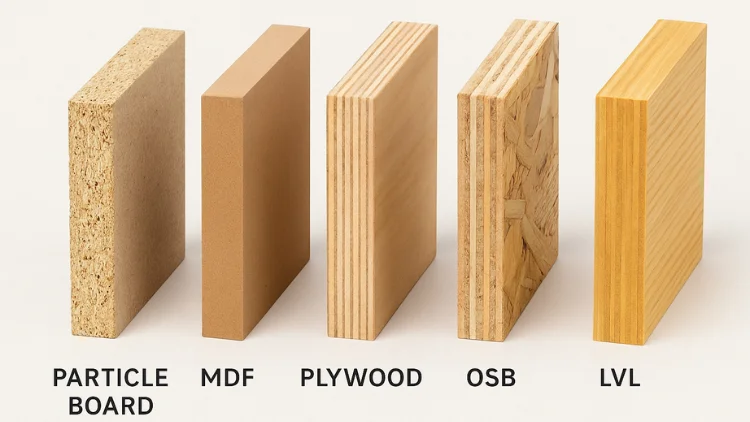
The cabinet box is the structural core of the entire kitchen cabinet system. In Canadian kitchens—where cabinets must endure dry winters, humid summers, and frequent temperature fluctuations—selecting the right cabinet box material is critical to long-term performance and durability.
Plywood Cabinet Boxes (Highly Recommended for Canada)
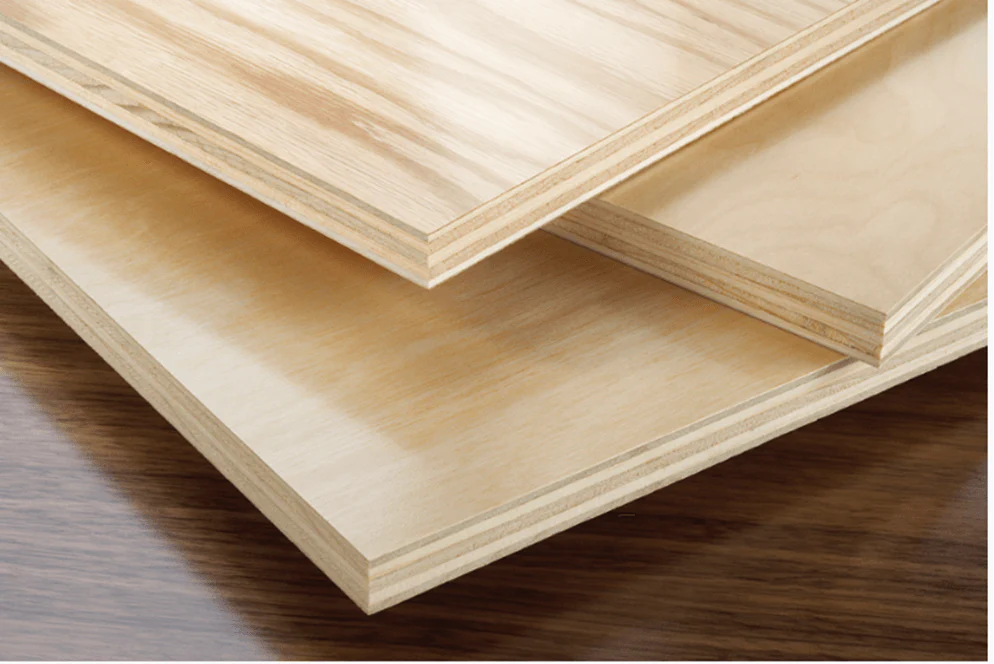
Plywood is widely regarded as the most reliable cabinet box material for Canadian homes, particularly in regions with extreme seasonal changes.
Why plywood performs exceptionally well in Canadian climates:
- Superior moisture resistance, reducing swelling and delamination
- Dimensional stability during temperature fluctuations caused by heating systems
- High load-bearing strength, ideal for heavy drawers and tall cabinets
- Long service life, often exceeding 20 years with proper installation
Plywood cabinet boxes are especially well-suited for:
- Condos with shared ventilation systems
- Homes using radiant floor heating or forced-air systems
- Kitchens with frequent steam exposure from cooking and dishwashers
For homeowners planning a long-term investment or resale, plywood cabinets provide both performance and peace of mind.
View Full Kitchen Cabinet Collection
Engineered Board Cabinet Boxes (With Proper Sealing & Quality Control)

Engineered boards—such as particle board or composite panels—can be a viable option for Canadian kitchens when manufactured to high standards.
Engineered board cabinets can perform well when:
- High-quality edge banding fully seals exposed surfaces
- Moisture-resistant cores are used
- Professional installation ensures proper leveling and ventilation
Advantages of engineered board cabinets:
- More affordable than plywood
- Consistent material density
- Suitable for modular and large-scale projects
However, performance varies significantly depending on:
- Manufacturing quality
- Core density
- Finish sealing techniques
Engineered board cabinets are commonly selected for budget-conscious projects, rental properties, or multi-unit developments, where cost efficiency is a key factor.
See More White Slim Shaker Kitchens
2. Select Cabinet Door Materials That Last
Cabinet doors define both the visual identity and daily user experience of a kitchen. In Canadian kitchens, door materials must handle humidity shifts, frequent use, and long-term exposure to light and heat.
Painted MDF / HDF Cabinet Doors

Painted MDF (Medium Density Fiberboard) and HDF (High Density Fiberboard) doors are among the most popular choices in modern Canadian kitchens.
Key performance benefits:
- Ultra-smooth surface for premium painted finishes
- Excellent resistance to cracking and joint separation
- Stable performance in fluctuating indoor humidity
- Compatible with matte, satin, and high-gloss coatings
Painted MDF/HDF doors are ideal for:
- Contemporary and minimalist kitchens
- Urban condos and modern homes
- Homeowners seeking long-term color consistency
When paired with advanced paint systems, these doors deliver both durability and refined aesthetics.
Wood Veneer Cabinet Doors

Wood veneer doors offer the natural beauty of real wood with enhanced stability—making them well-suited for Canadian environments.
Advantages of veneer cabinet doors:
- Authentic wood grain appearance
- Less expansion and contraction than solid wood
- Improved resistance to seasonal humidity changes
Wood veneer doors are especially popular in:
- Scandinavian and Japandi-style kitchens
- Modern organic and luxury interiors
- Homes seeking warmth without heavy traditional detailing
Modern finishing techniques further enhance durability while preserving natural texture.
Thermofoil Cabinet Doors
Thermofoil doors are created by bonding a vinyl layer over an engineered core, resulting in a low-maintenance and cost-effective cabinet solution.
Key benefits:
- Easy cleaning and moisture resistance
- Consistent color across large cabinet runs
- Budget-friendly option for modern kitchens
Best applications include:
- Condos and rental units
- High-traffic family kitchens
- Projects requiring quick turnaround and easy upkeep
While thermofoil cabinets may not offer the same premium feel as painted or veneer doors, they provide reliable performance when produced by reputable manufacturers.
3. Prioritize Moisture-Resistant Finishes for Canadian Kitchens
Canadian kitchens place higher demands on cabinet finishes due to seasonal humidity changes, indoor heating systems, and daily cooking activity. Choosing the right finish is essential to protect cabinets from moisture, heat, discoloration, and surface wear over time.
Recommended Finish Technologies for Canadian Homes
Modern kitchen cabinets designed for Canada typically use advanced coating systems engineered for durability and long-term appearance.
UV-Cured Lacquer Finishes
UV-cured lacquers harden instantly under ultraviolet light, creating a dense and durable surface.
- Excellent resistance to moisture and heat
- Long-lasting color stability
- Smooth, professional-grade finish
Scratch-Resistant Coatings
Scratch-resistant finishes help cabinets withstand daily use, especially in high-traffic family kitchens.
- Reduces visible wear on doors and drawer fronts
- Ideal for homes with children or pets
- Maintains a like-new appearance longer
Anti-Yellowing Paint Systems
Anti-yellowing technology is particularly important in Canadian kitchens with strong artificial lighting or limited natural light.
- Prevents color shift over time
- Keeps whites and light neutrals crisp and clean
- Essential for long-term aesthetic consistency
Finish Selection Tips Based on Canadian Lifestyles
Choosing the right finish depends on kitchen size, lighting, and usage patterns.
- Matte finishes reduce glare and hide fingerprints, making them ideal for busy households and open-concept homes.
- High-gloss finishes reflect light and visually expand smaller kitchens, especially in condos and townhomes.
- Textured or wood-grain finishes help conceal minor scratches and wear, making them a practical choice for long-term use.
Proper finish selection significantly reduces maintenance costs, repainting needs, and premature cabinet aging, making it a key factor in kitchen cabinet longevity.
See More Natural Wood Kitchens
4. Choose a Cabinet Style That Fits Canadian Homes
Cabinet style influences not only the look of a kitchen but also its functionality, maintenance requirements, and resale appeal. In Canada, homeowners favor styles that combine timeless design with modern efficiency.
Flat Panel (Slab) Kitchen Cabinets
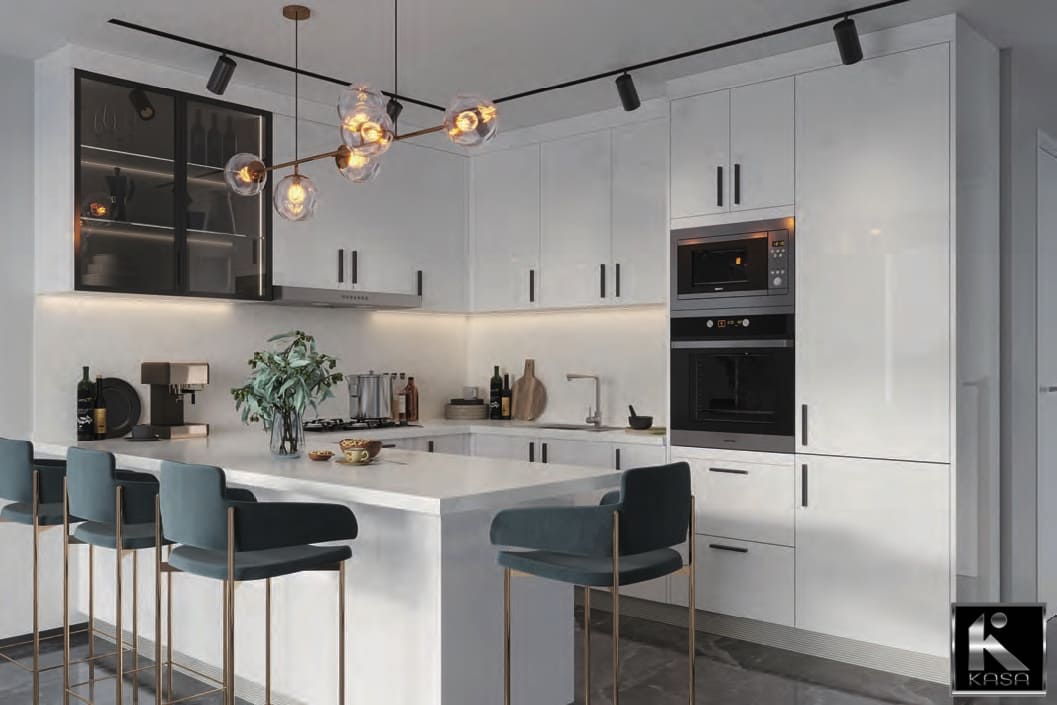
Flat panel cabinets are the most popular choice in Canadian urban homes, particularly in condos and townhouses.
Why flat panel cabinets work well in Canada:
- Clean, minimalist appearance that suits modern architecture
- Smooth surfaces that are easy to clean and maintain
- Excellent compatibility with moisture-resistant finishes
These cabinets are ideal for:
- Urban condos
- Modern townhomes
- Open-concept living spaces
Their simplicity ensures strong resale appeal in competitive Canadian real estate markets.
Modern Shaker Kitchen Cabinets
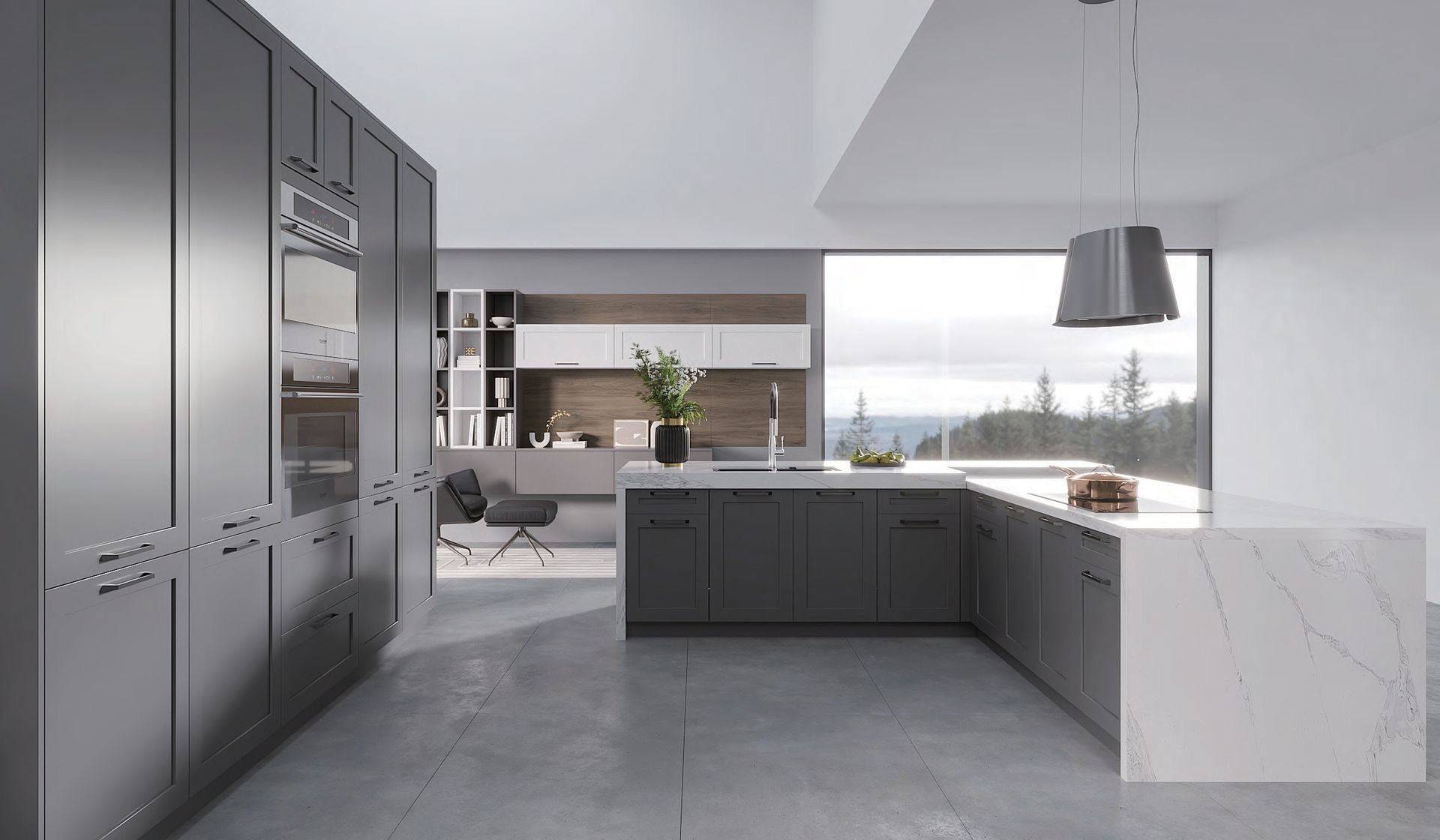
Modern shaker cabinets are a nationwide favorite across Canada due to their balance of tradition and modernity.
Key benefits:
- Timeless design that ages well
- Works seamlessly in both modern and transitional homes
- Strong resale value in suburban and urban markets
With slimmer frames and refined detailing, modern shaker cabinets deliver warmth without looking dated—making them a safe and stylish long-term choice.
European-Style Frameless Kitchen Cabinets
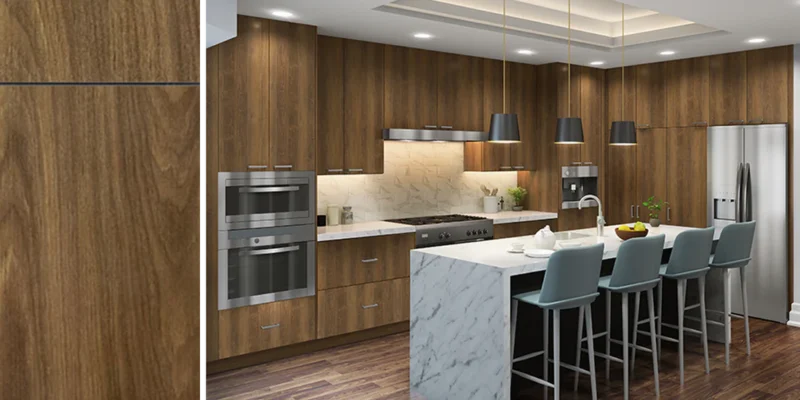
European-style frameless cabinets are increasingly popular in Canadian kitchens that prioritize storage efficiency and clean lines.
Advantages include:
- Maximum usable interior storage
- Perfect alignment and consistent reveals
- Ideal support for handleless and modular systems
Frameless cabinets are especially well-suited for:
- Open-concept layouts
- Modern Canadian homes
- Kitchens requiring efficient storage solutions
Matching Style with Canadian Home Value
The best kitchen cabinet style is one that:
- Fits the home’s architecture
- Performs well in Canadian climate conditions
- Maintains broad market appeal for future resale
Combining the right style with durable materials and finishes ensures a kitchen that remains beautiful, functional, and valuable for years to come.
5. Optimize Kitchen Layout for Daily Living in Canadian Homes
Kitchen layout has a greater impact on daily usability than any other design element. In Canadian homes—where kitchens often serve as cooking areas, family gathering spaces, and social hubs—a well-planned cabinet layout ensures efficiency, comfort, and long-term functionality.
L-Shaped Kitchen Layouts
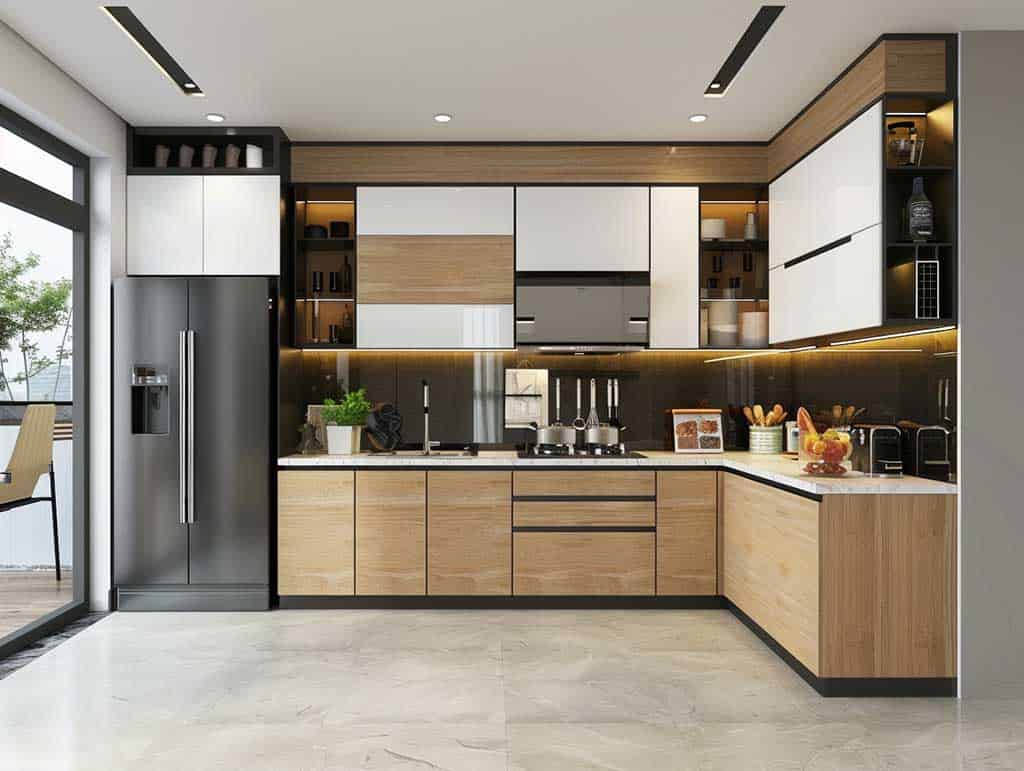
L-shaped kitchens are one of the most versatile layouts for Canadian homes, especially in open-concept designs.
Key advantages:
- Supports efficient workflow between sink, stove, and refrigerator
- Integrates seamlessly with kitchen islands or peninsula seating
- Creates a natural connection between kitchen, dining, and living areas
This layout is ideal for:
- Open-concept Canadian homes
- Medium-sized kitchens
- Families who value flexibility and social interaction
U-Shaped Kitchen Layouts
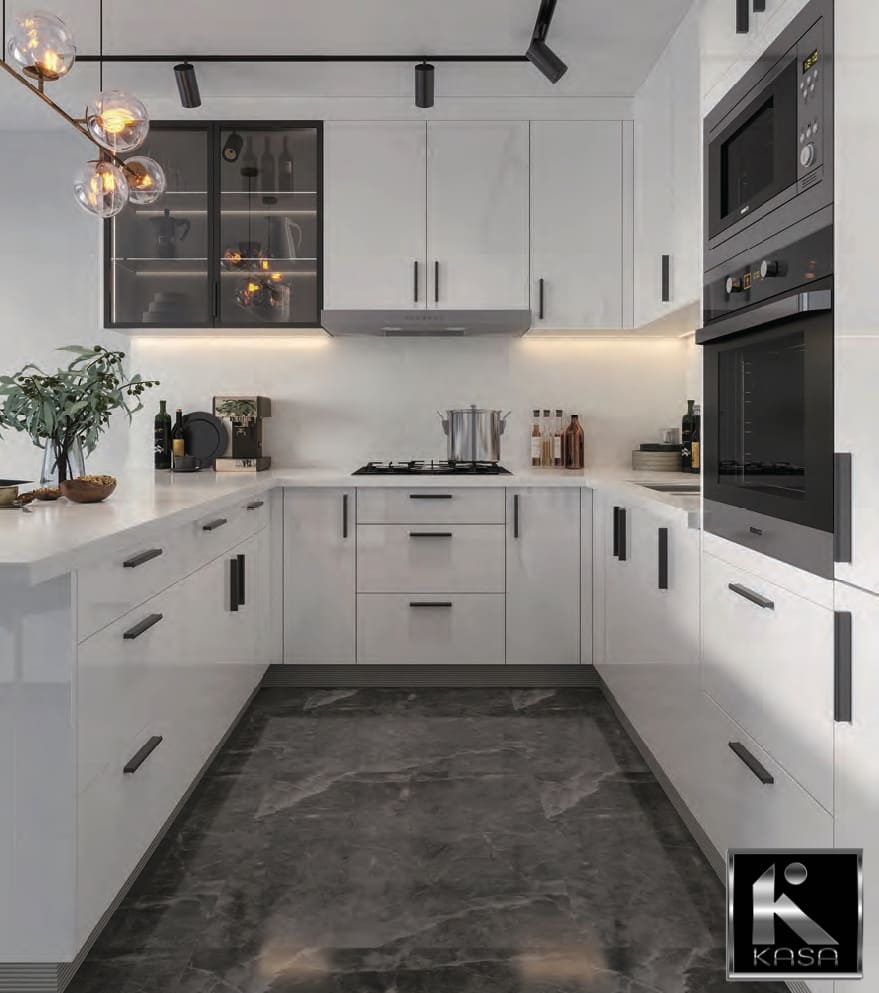
U-shaped kitchens are designed to maximize storage capacity and countertop space, making them an excellent choice for larger households and serious home cooks.
Benefits include:
- Abundant cabinetry on three sides
- Continuous countertop workspace
- Clear separation of prep, cooking, and cleaning zones
U-shaped layouts work best in:
- Spacious Canadian homes
- Closed or semi-closed kitchen designs
- Households that cook frequently and need ample storage
Island Kitchen Layouts
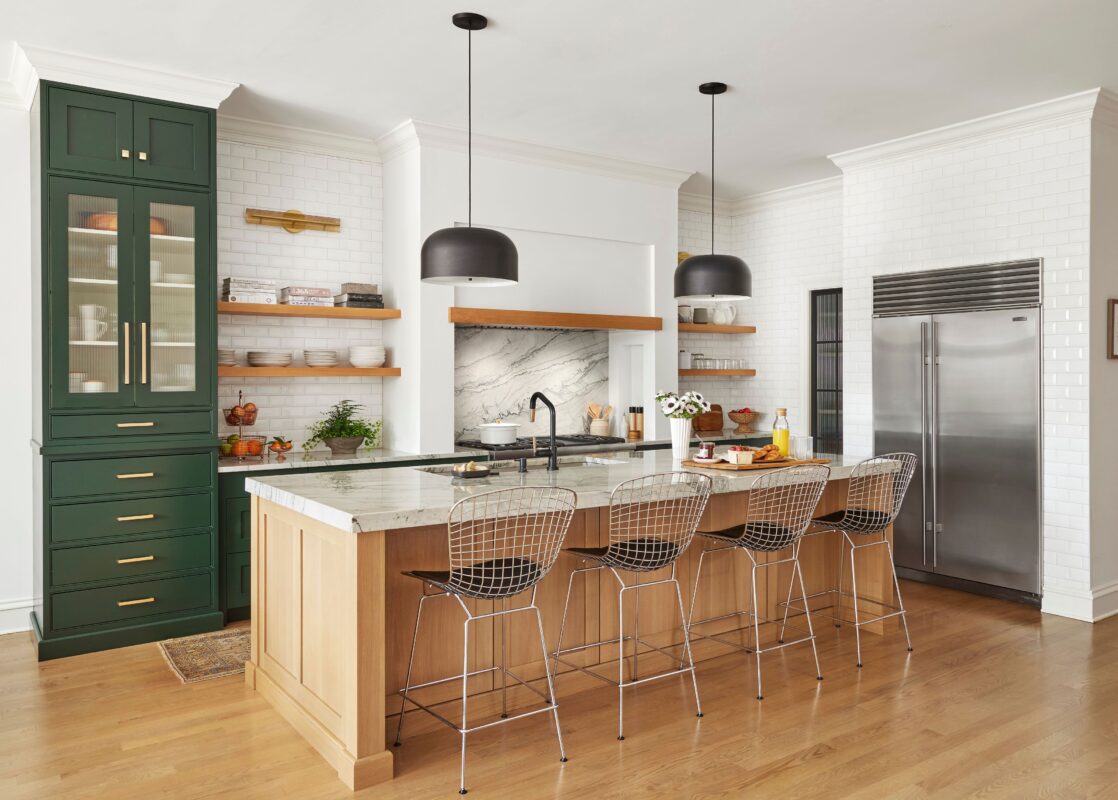
Kitchen islands have become a defining feature of modern Canadian kitchens, serving as both a functional workspace and a social centerpiece.
Why island kitchens are popular:
- Provides additional base cabinet storage
- Adds seating for family meals and casual gatherings
- Enhances workflow and multitasking
Islands are especially effective in:
- Open-concept homes
- Family-oriented kitchens
- Entertaining-focused spaces
Proper clearance and cabinet planning are essential to ensure comfort and safety.
Galley Kitchen Layouts
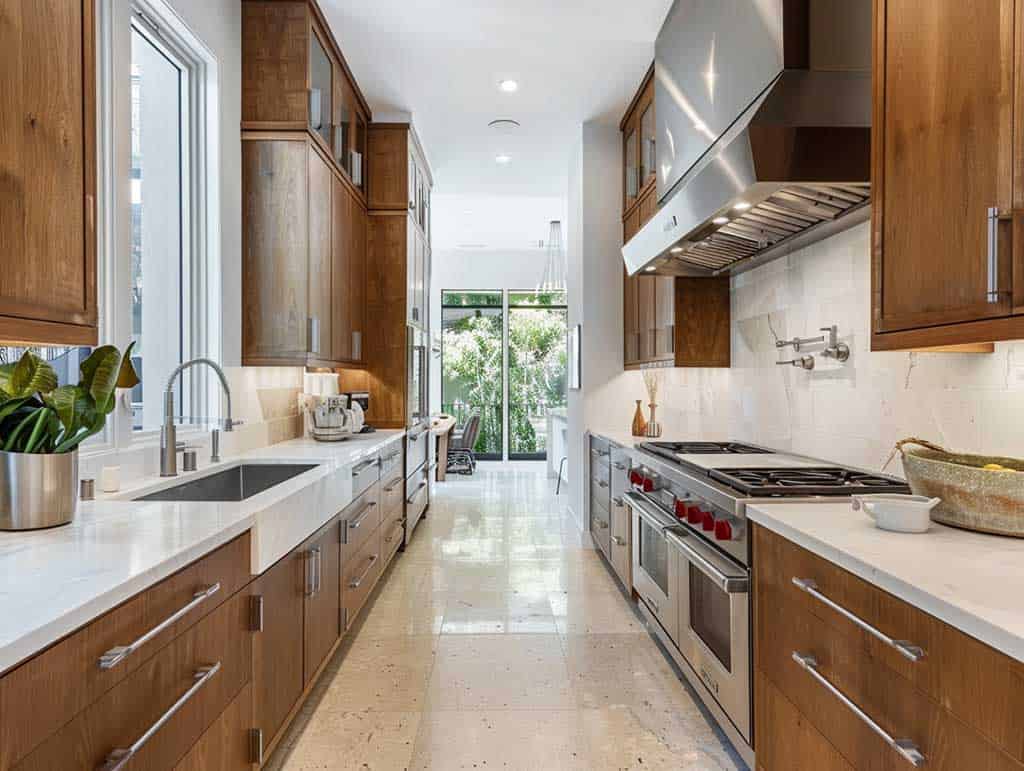
Galley kitchens are common in Canadian condos and urban apartments, where space efficiency is a priority.
Advantages of galley layouts:
- Streamlined workflow with minimal wasted space
- Cost-effective cabinet planning
- Excellent functionality when using full-height cabinets
With smart cabinet design, galley kitchens can deliver exceptional efficiency and storage capacity despite their compact footprint.
6. Smart Storage Solutions for Canadian Families
Canadian households prioritize practical, easy-to-use storage solutions that support busy daily routines and seasonal living.
Recommended Cabinet Storage Features
Modern kitchen cabinets designed for Canada often include:
- Full-extension drawers for easy access to cookware and pantry items
- Soft-close hinges and slides to reduce noise and wear
- Pull-out pantry systems that maximize vertical storage
- Corner storage solutions such as lazy Susans or swing-out units
- Integrated waste and recycling systems to support sustainable living
Smart storage solutions help:
- Improve kitchen organization
- Reduce clutter
- Enhance daily efficiency
Well-designed storage keeps kitchens functional and organized year-round, even during busy family life.
7. Hardware Quality Matters in Cold Canadian Climates
Hardware performance plays a critical role in cabinet longevity, especially in Canadian environments where seasonal temperature and humidity changes can affect alignment and movement.
Recommended Hardware Features for Canadian Kitchens
High-quality kitchen cabinet hardware should include:
- Soft-close hinges rated for heavy, daily use
- Undermount drawer slides with full extension
- Moisture-resistant finishes to prevent corrosion
- Adjustable systems that accommodate seasonal movement
Why hardware quality matters:
- Prevents door sagging and drawer misalignment
- Reduces noise and wear over time
- Ensures smooth operation throughout the year
Investing in premium hardware protects both cabinet structure and user experience.
8. Sustainability & Canadian Building Standards
Eco-conscious kitchen design is becoming increasingly important across Canada, driven by health awareness, energy efficiency, and evolving building standards.
Sustainable Cabinet Features for Canadian Homes
Modern eco-friendly kitchen cabinets often feature:
- Low-VOC paints and finishes to improve indoor air quality
- FSC-certified wood from responsibly managed forests
- Durable materials designed for long replacement cycles
- Reduced-waste manufacturing processes
Benefits of Sustainable Kitchen Cabinets
Eco-friendly cabinets offer:
- Healthier indoor environments
- Compliance with Canadian green building standards
- Increased home value and buyer appeal
Sustainable cabinetry is not only an environmental choice but also a smart long-term investment for Canadian homeowners.
See More White High Gloss (PGW)
9. Budget Planning for Canadian Kitchens
Planning a realistic budget is a critical step when choosing kitchen cabinets in Canada. Cabinet pricing can vary significantly depending on materials, construction quality, customization level, and installation requirements.
General Kitchen Cabinet Price Categories in Canada
Entry-Level Cabinets (Modular Systems)
Typically used for:
- Condos and rental properties
- Investment or short-term projects
Characteristics:
- Standard sizes and finishes
- Faster production and installation
- Lower upfront cost
While affordable, quality varies greatly, and proper sealing is essential for durability.
Mid-Range Cabinets (Most Popular Choice in Canada)
This category offers the best balance between cost, durability, and design flexibility.
Common features:
- Plywood cabinet boxes
- Painted MDF or HDF doors
- Soft-close hardware
- Semi-custom sizing options
Mid-range cabinets are ideal for:
- Primary residences
- Renovations focused on long-term use
- Homeowners seeking value and performance
High-End Cabinets (Fully Custom)
Designed for luxury homes and high-end renovations.
Features include:
- Fully custom dimensions
- Premium materials and finishes
- Advanced storage and hardware systems
These cabinets deliver maximum personalization but come with higher costs and longer lead times.
Why Investing in Quality Cabinets Pays Off
Higher-quality cabinets help reduce:
- Ongoing maintenance costs
- Premature replacement
- Resale risks during future home sales
In Canada’s competitive real estate market, quality cabinetry is viewed as a long-term investment rather than a short-term expense.
10. Professional Installation Is Essential in Canada
Even the best cabinets can underperform if installation is not done correctly. Canadian kitchens require precision installation to handle climate conditions and building standards.
Best Practices for Cabinet Installation
Professional installation should include:
- Accurate on-site measurements
- Proper leveling to prevent door and drawer misalignment
- Ventilation planning around appliances
- Allowances for seasonal expansion and contraction
Why installation quality matters:
- Prevents structural stress on cabinets
- Ensures smooth operation year-round
- Protects manufacturer warranties
In Canada, professional installation is not optional—it is essential for long-term performance.
11. Maintenance Tips for Canadian Kitchens
Proper maintenance significantly extends the lifespan of kitchen cabinets, especially in environments with fluctuating humidity and temperature.
Essential Cabinet Care Guidelines
To keep cabinets performing like new:
- Wipe up moisture immediately, especially near sinks and dishwashers
- Use mild, non-abrasive cleaners
- Avoid prolonged exposure to steam
- Inspect and adjust hinges and drawer slides annually
With proper care, well-built cabinets can last 15–25 years or longer, even in demanding Canadian conditions.
See More Gray Single Shaker (GSS)
12. Long-Term Value & Resale Considerations in Canada
Kitchen cabinets are one of the most influential factors in home resale value across Canada.
What Canadian Buyers Look For
Homebuyers consistently prioritize:
- Neutral and timeless cabinet styles
- Durable construction materials
- Modern storage solutions
- Clean, well-maintained finishes
Poor-quality or outdated cabinets often lead to:
- Price negotiations
- Renovation objections
- Longer time on the market
Well-chosen cabinets increase buyer confidence and make properties easier to sell.
13. Future-Proofing Your Kitchen Cabinets
Canadian kitchens continue to evolve as lifestyles, technology, and design expectations change.
Future-Ready Cabinet Features
To ensure long-term relevance, consider cabinets that offer:
- Modular adaptability for future layout changes
- Integrated LED lighting
- Touchless or handle-less hardware
- Smart storage systems optimized for efficiency
Why Future-Proofing Matters
Planning ahead helps:
- Reduce renovation costs later
- Extend the functional lifespan of your kitchen
- Adapt to changing household needs
Future-ready kitchen cabinets allow homeowners to evolve their spaces without starting from scratch.
See More Blue Single Shaker (BSS)
What cabinet material is best for Canadian climates?
For most Canadian climates, cabinet boxes in high‑quality plywood with doors in stable hardwood or HDF/HMR (moisture‑resistant fibreboard) perform best.
Key material recommendations
- Plywood (preferably furniture‑grade, 5–9 ply) is widely recommended for cabinet boxes because it is strong, holds screws well, and resists warping better than MDF in humidity and temperature swings common across Canada.
- Moisture‑resistant engineered boards like HDF‑HMR are considered one of the best options for areas exposed to water (sink bases, bathrooms) because they swell less and are more dimensionally stable than standard MDF.
- Solid wood (maple, oak, birch) is durable and popular in Canada, but it expands and contracts with humidity changes, so it needs good sealing, stable indoor humidity, and well‑built joinery to avoid cracking or warping.
Materials to use with care
- Standard MDF is smooth and great for painted finishes, but it is more vulnerable to moisture; prolonged exposure or leaks can cause swelling or crumbling, so it is better away from wet zones or only if very well sealed.
- Thermofoil and low‑end particleboard are budget options but tend to fail faster in extreme conditions, especially near dishwashers, sinks, or in homes with large humidity swings.
Finish and construction details
- A high‑quality finish (proper priming, multi‑coat lacquer or enamel, or durable laminates) and careful edge‑sealing are as important as the core material for dealing with Canadian dry winters and humid summers.
- For long‑term durability, many Canadian cabinet makers pair plywood boxes with solid wood or HDF/HMR doors and use soft‑close, corrosion‑resistant hardware rated for kitchen and bath environments.
Which cabinet style has the best resale value in Canada?
Shaker-style cabinets in light, neutral finishes generally offer the strongest, broadest resale appeal in Canada, with simple flat/slab fronts in neutrals coming second.
Styles that help resale most
- Shaker doors (clean frame with flat panel) are repeatedly described by Canadian kitchen brands and designers as timeless, versatile, and easy to pair with many decor styles, which makes them highly buyer-friendly.
- Simple transitional/modern styles (plain slab or very slim shaker with minimal detailing) also show up strongly in 2024–2025 design guides as “safe” for resale because they work with both modern and traditional tastes.
Colors and finishes buyers prefer
- Light, warm neutrals (white, off‑white, beige, greige) are highlighted as especially good for resale in Canadian markets because they feel bright, clean and move‑in‑ready to most buyers.
- Natural wood tones like white oak or light walnut are trending and considered long‑term friendly when used in simple door styles, especially combined with neutral uppers or islands.
Styles to be more cautious with
- Very ornate traditional profiles (heavy mouldings, raised panels) can narrow the buyer pool, especially in cities where modern and transitional styles dominate recent listings.
- Very bold or niche looks (strong colors on all cabinets, ultra‑minimal handle‑free systems) may appeal to some buyers but are more risky if maximizing broad resale appeal is the priority.
Are European-style cabinets good for Canadian homes?
European-style (frameless, flat-panel) cabinets are generally a good fit for Canadian homes and are already widely used there, especially in newer and urban builds.
Why they work in Canada
- European-style cabinets use a frameless box with full-overlay doors, which maximizes storage and suits the modern, open-plan kitchens common in many Canadian renovations.
- They are usually built from engineered materials like plywood, particleboard, or MDF with durable finishes (melamine, thermofoil, acrylic), which handle indoor humidity swings reasonably well when manufactured to Canadian quality standards.
Pros for resale and design
- The sleek, minimalist look aligns with current Canadian trends toward modern and transitional kitchens, which can help resale value in many markets.
- Full-overlay, handleless or low-profile hardware gives a clean appearance that pairs easily with popular quartz countertops and neutral color palettes used in Canadian listings.
Things to watch for
- Lower-cost European-style lines that use thin boxes or low-grade particleboard can be less durable, so checking box thickness, hinge quality, and moisture resistance is important in a Canadian climate.
- In more traditional neighborhoods or heritage homes, extremely high-gloss or ultra-minimal Euro looks may feel out of place; a softer, “Scandi” or simple Shaker-hybrid door can balance modern function with broader buyer appeal.
How long do kitchen cabinets last in Canada?
Most well-built kitchen cabinets in Canada last roughly 20–30 years before most homeowners consider a full replacement, though high‑quality installations can function 40–50 years or more with proper care.
Typical lifespan ranges
- New, good‑quality cabinets (modern materials, proper installation) are often quoted in the 25–30 year range, with many lasting longer if not abused.
- General building‑inspection life‑expectancy charts list kitchen cabinets around 50 years under normal residential use, showing that structure often outlasts style preferences.
Factors that shorten or extend life
- Cabinet longevity depends heavily on material (solid wood or quality plywood vs low‑grade particleboard), hardware quality, and how well humidity and moisture are controlled in the kitchen.
- Regular cleaning with mild products, promptly wiping spills, tightening hardware, and avoiding excess steam/heat under wall cabinets all help extend their usable life by many years.
See More White Single Shaker (WSS)
Are eco-friendly cabinets worth the cost?
Eco-friendly cabinets are usually worth the extra cost if health, durability, and long‑term value matter to you, especially in a space you use every day like a kitchen.
What “eco-friendly” cabinets actually give you
- They typically use sustainably sourced or certified wood (like FSC), low‑ or zero‑VOC glues and finishes, and sometimes rapidly renewable materials like bamboo, which reduces environmental impact compared with conventional products.
- Low‑VOC and formaldehyde‑free cores and finishes improve indoor air quality, which is a major reason many Canadian homeowners and pros recommend them for kitchens and bedrooms.
Cost vs long‑term value
- Upfront, eco‑focused lines can cost more than basic stock cabinets, but durability and better construction often mean a 20+ year lifespan and fewer replacements, which improves long‑term value.
- Some sustainable cabinets help projects meet green building standards (like LEED) and can support resale appeal for buyers who care about health and sustainability, especially in urban Canadian markets.
When they are “worth it”
- They are especially worthwhile if anyone in the home has asthma, chemical sensitivities, or if you plan to stay in the home long enough (10–15+ years) to benefit from the durability and air‑quality benefits.
- If budget is tight, you can still get much of the benefit by prioritizing low‑VOC/NAF cores and finishes first, then adding extras like FSC certification or bamboo only where it fits the budget.
What finish is easiest to maintain?
For most homes, a matte or low‑sheen laminate (especially matte melamine) is the easiest cabinet finish to keep looking clean.
Easiest everyday maintenance
- Matte laminate/melamine surfaces resist fingerprints and streaks better than high gloss, and usually just need a wipe with mild soap and water plus a microfiber cloth.
- Factory‑applied finishes with a thicker protective topcoat (on laminate or painted doors) are generally easier to wipe and more forgiving than delicate hand‑finished or oiled surfaces.
Paint, stain, and clear coats
- Satin or semi‑gloss painted cabinets are fairly easy to clean but can show chips and touch‑ups more than stained wood or laminate.
- Stained wood with a clear polyurethane or varnish topcoat is durable and simple to wipe, and small nicks are often easier to disguise with a stain marker than on painted surfaces.
Finishes that need more care
- High‑gloss doors highlight fingerprints, smears, and scratches, so they require more frequent polishing even though the surface itself wipes easily.
- Deep‑textured woods (like open‑grain oak) and detailed door profiles collect more dust and grease, making them slower to clean than smooth, flat fronts in a matte laminate or satin paint.
Should I choose custom or modular cabinets in Canada?
For most Canadian homeowners, modular (including good-quality prefab or semi-custom) cabinets make sense on a typical budget, while full custom is best when layout, quality, or resale expectations are high enough to justify the extra cost.
When modular is the better choice
- Modular cabinets are significantly cheaper upfront because they use standardized sizes and mass production, which helps keep a renovation on budget.
- They install faster and are easier to replace or add onto later, which works well for condos, rental units, and straightforward kitchen layouts.
When custom is worth it
- Custom cabinets are built to your exact space, solving awkward corners, bulkheads, or high ceilings and maximizing storage, something especially valuable in older Canadian homes with tricky layouts.
- They allow full control over materials, internal organization, and style, and typically deliver higher perceived quality and better fit and finish, which can support long‑term satisfaction and resale in mid‑ to high‑end markets.
Practical guideline
- Choose modular (or semi‑custom) if: budget and speed are priorities, your kitchen is fairly standard, and you are okay working within a catalog of fixed sizes and options.
- Choose custom if: you plan to stay long term, have a non‑standard layout, want specific storage features and materials, or see the kitchen as a key value driver in your home.
