


Blog
How Much Does a Kitchen Renovation Cost? Accurate Price Calculation per Linear Meter (2026 Guide)

Jan
Kitchen renovation is one of the most valuable home improvement investments, but it is also one of the most misunderstood when it comes to pricing. Many homeowners search online for answers such as “How much does a kitchen renovation cost?” or “What is the cost per linear meter of kitchen cabinets?”—yet few sources explain the numbers clearly, transparently, and realistically.
This comprehensive guide breaks down kitchen renovation costs per linear meter, explains what affects pricing, compares materials and finishes, and helps homeowners, builders, and investors calculate accurate budgets with confidence
1. Why Kitchen Renovation Costs Vary So Much
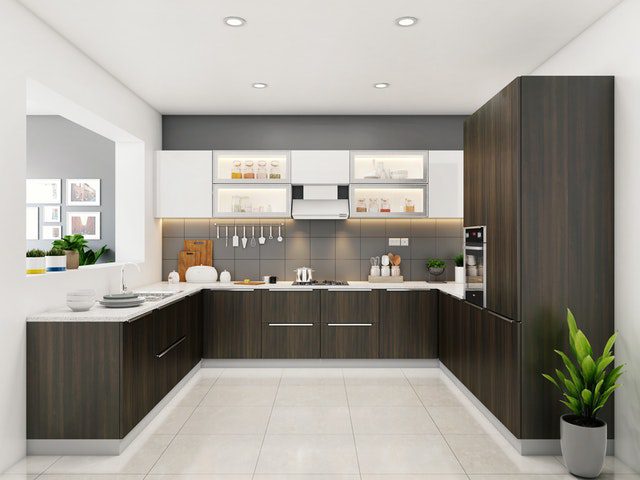
Kitchen renovation costs can range from $5,000 to over $50,000, depending on multiple factors. Unlike buying a fixed product, a kitchen renovation is a custom project involving design, materials, labor, appliances, and installation conditions.
Key reasons costs vary:
- Kitchen size and layout
- Cabinet material and finish
- Countertop type
- Hardware and accessories
- Labor and installation complexity
- Local market pricing
- Timeline and customization level
To bring clarity, professionals often calculate costs using price per linear meter (or linear foot)—a method that standardizes comparison and budgeting.
2. What Is “Cost per Linear Meter” in Kitchen Renovation?

A linear meter (LM) measures the length of cabinets along the wall, not depth or height.
Example:
- A kitchen wall with cabinets spanning 4 meters = 4 linear meters
- Both base cabinets and upper cabinets are included in linear pricing
This method allows:
- Faster budget estimation
- Easier comparison between suppliers
- Clear upgrade tracking (finish, material, hardware)
Important:
Cost per linear meter usually does NOT include appliances, plumbing relocation, or electrical upgrades, unless specified.
See More: How to Choose the Right Kitchen Cabinets for Canadian Kitchens
3. Average Kitchen Renovation Cost per Linear Meter (2025)
Kitchen renovation costs per linear meter vary significantly depending on cabinet quality, finish, and level of customization. The following ranges are based on North American market data for 2025.
3.1 Cabinet-Only Cost per Linear Meter
This category includes cabinet manufacturing and basic installation, excluding countertops and backsplash.
| Cabinet Type | Average Price per Linear Meter (USD) | Best For |
| Stock Cabinets | $800 – $1,200 | Rentals, budget renovations |
| Semi-Custom Cabinets | $1,200 – $2,000 | Most homeowners |
| Fully Custom Cabinets | $2,000 – $3,500+ | Luxury & unique layouts |
Professional Insight:
Semi-custom cabinets offer the best cost-to-performance ratio, allowing size adjustments, premium finishes, and upgraded hardware without the cost of full custom work.
3.2 Full Kitchen Renovation Cost per Linear Meter
This pricing includes:
- Cabinets
- Countertops
- Backsplash
- Standard installation
| Renovation Level | Cost per Linear Meter (USD) | Typical Features |
| Budget | $1,500 – $2,200 | Stock cabinets, laminate or entry quartz |
| Mid-Range | $2,200 – $3,500 | Plywood boxes, quartz, soft-close hardware |
| High-End | $3,500 – $6,000+ | Custom cabinets, premium slabs, integrated design |
Data sources:
National Kitchen & Bath Association (NKBA), Remodeling Magazine Cost vs. Value Report, Houzz Renovation Trends.
See More: Top 99+ Most Beautiful and Modern Kitchen Cabinet Designs
4. What’s Included in a Linear Meter Price?
A professional and transparent linear meter quote should clearly specify the following components.
Cabinet Components Included
- Base cabinets (sink base, drawer base, storage units)
- Wall cabinets (standard height or ceiling-height)
- Toe kicks
- Filler panels for spacing adjustments
- End panels for exposed cabinet sides
These components ensure a finished, seamless appearance rather than a basic box installation.
Standard Features (Should Be Included)
High-quality kitchen quotes typically include:
- Soft-close hinges (tested for 80,000–100,000 cycles)
- Soft-close drawer slides
- Adjustable interior shelving
- Factory-applied paint or laminate finish (not on-site painting)
These features significantly improve durability, daily comfort, and resale value.
Installation Services Included
- Professional cabinet installation
- Precise leveling and alignment
- Secure anchoring to wall studs
- Basic trim and finishing work
Proper installation is critical—poor installation can shorten cabinet lifespan even if materials are premium.
Exclusions (Common Additional Costs)
Most linear meter quotes do not include:
- Appliances
- Sink and faucet
- Plumbing relocation or new drain lines
- Electrical relocation, new outlets, or lighting
- Structural changes (wall removal, ceiling modification)
Always request a detailed scope of work and exclusions list before signing a contract to avoid unexpected costs.
Expert Recommendation
Before approving any quote, confirm:
- What is included per linear meter
- Material specifications (box, door, hardware)
- Warranty terms
- Installation responsibility
A clear linear meter breakdown protects both budget and project timeline.
5. Material Choices and Their Impact on Kitchen Renovation Cost

Material selection is one of the most critical cost drivers in a kitchen renovation. The same kitchen layout can vary in price by 30%–60% depending solely on cabinet construction, door finish, and countertop material.
Understanding these materials allows homeowners to control costs strategically—spending more where it matters and saving where it doesn’t compromise performance.
5.1 Cabinet Box Construction (The Foundation of Your Kitchen)
The cabinet box (also called the carcass) is the structural core of your kitchen. While often hidden, it determines strength, moisture resistance, lifespan, and load capacity.
Common Cabinet Box Materials Compared
| Material | Cost Impact | Performance & Notes |
| Particle Board | Lowest | Affordable but vulnerable to moisture and swelling |
| Plywood (5/8″–3/4″) | Medium | Strong, lightweight, moisture-resistant |
| Full Birch Plywood | High | Superior stability and long-term durability |
Detailed Performance Breakdown
Particle Board
- Low upfront cost
- Performs poorly in humid environments
- Shorter lifespan (8–12 years typical)
- Best suited for rental units or temporary renovations
Standard Plywood (5/8″–3/4″)
- Excellent strength-to-weight ratio
- Resistant to warping and moisture
- Holds screws and hardware securely
- Industry standard for mid-range to high-end kitchens
Full Birch Plywood
- Multi-layer hardwood construction
- Minimal expansion or contraction
- Ideal for heavy drawers and pull-outs
- Often used in luxury or commercial-grade kitchens
Professional Recommendation
3/4″ plywood cabinet boxes provide the best balance between cost, durability, and long-term value.
They outperform particle board significantly while remaining far more cost-effective than full birch plywood.
5.2 Cabinet Door Materials & Finishes
Cabinet doors are the most visible component of a kitchen and heavily influence both aesthetic impact and price per linear meter.
Door Material & Finish Comparison
| Finish Type | Price Level | Durability | Best Use Case |
| Thermofoil | Low | Medium | Budget kitchens, rentals |
| Painted MDF / HDF | Medium | High | Modern & transitional kitchens |
| Wood Veneer | Medium–High | High | Warm, natural aesthetics |
| Solid Wood | High | Very High | Classic & luxury homes |
| High Gloss Acrylic | Medium–High | High | Contemporary, minimalist designs |
Key Technical Insights
Painted MDF / HDF
- Smooth, flawless paint finish
- Resistant to cracking and warping
- More stable than solid wood in climate changes
- Best choice for modern kitchens with controlled budgets
Solid Wood
- Premium look and tactile quality
- Susceptible to expansion and contraction
- Requires higher maintenance
- Higher long-term cost
High Gloss Acrylic & Lacquer
- Mirror-like finish
- Requires factory-grade spraying and polishing
- Higher production cost
- Creates a high-end, contemporary appearance
Cost vs. Visual Impact Tip
High-gloss or painted MDF doors often deliver 90% of the visual impact of solid wood at 60%–70% of the cost, making them a smart investment.
See More White Slim Shaker Kitchens
6. Countertop Costs per Linear Meter
Countertops can represent 25%–40% of the total kitchen renovation cost, especially in slab-based designs.
Average Countertop Cost per Linear Meter (Installed)
| Material | Cost per Linear Meter (USD) | Performance Summary |
| Laminate | $300 – $600 | Budget-friendly, low heat resistance |
| Quartz | $800 – $1,500 | Durable, consistent, low maintenance |
| Granite | $700 – $1,400 | Natural stone, variable patterns |
| Porcelain Slab | $1,200 – $2,000 | Heat-resistant, ultra-thin profile |
| Marble | $1,500 – $3,000 | Luxury look, high maintenance |
Why Quartz Dominates the Market
Quartz is currently the most specified countertop material because it:
- Resists stains, scratches, and bacteria
- Requires no sealing
- Offers consistent color and veining
- Performs well in both residential and commercial kitchens
For most homeowners, quartz offers the best lifecycle cost.
7. Labor & Installation Cost Breakdown
Labor typically accounts for 20%–35% of the total renovation budget and is highly dependent on project complexity.
Labor Included in Standard Quotes
- Cabinet installation and alignment
- Countertop templating and installation
- Backsplash installation
- Job-site cleanup
Additional Labor Costs (Often Overlooked)
| Service | Typical Cost Range |
| Demolition | $500 – $1,500 |
| Plumbing relocation | $800 – $3,000 |
| Electrical upgrades | $1,000 – $4,000 |
Professional Tip
Avoid moving plumbing whenever possible.
Relocating water and drainage lines increases cost, inspection requirements, and project risk.
View Full Kitchen Cabinet Collection
8. Sample Cost Calculations (Realistic Scenarios)
Example 1: Condo Kitchen – 4 Linear Meters (Mid-Range)
- Semi-custom cabinets: $2,000 × 4 = $8,000
- Quartz countertops: $1,200 × 4 = $4,800
- Installation & backsplash: $3,200
Estimated Total: ~$16,000
Example 2: Detached Home – 6 Linear Meters (High-End)
- Custom cabinets: $3,200 × 6 = $19,200
- Premium quartz slabs: $1,600 × 6 = $9,600
- Labor & upgrades: $8,000
Estimated Total: ~$36,800
See More Natural Wood Kitchens
9. Hidden Costs Homeowners Often Miss
Hidden costs can add 10%–20% to the final budget if not identified early.
Common overlooked items include:
- Custom fillers and extended panels
- Crown molding and light valance
- Tall pantry cabinets
- Interior organizers and pull-out systems
- Appliance paneling
- Permit and inspection fees
A professional quote should itemize every component clearly.
10. Is Kitchen Renovation Worth the Investment?
According to industry reports:
- Average return on investment (ROI): 70%–80%
- Kitchens influence resale value more than bathrooms
- Modern kitchens reduce listing time significantly
(Source: Remodeling Magazine, National Association of Realtors)
11. How to Reduce Kitchen Renovation Costs Without Sacrificing Quality
Smart planning can reduce total cost by 15%–30% without compromising performance or aesthetics.
Cost-Saving Strategies That Work
- Maintain existing plumbing and electrical layout
- Choose painted MDF doors instead of solid wood
- Use quartz instead of marble
- Opt for full slab backsplash over small tile
- Work with factory-direct cabinet suppliers
How accurate is linear meter pricing?
Linear meter pricing, common in industries like flooring and materials, is mathematically accurate for calculating material costs when the roll width is consistent and known. However, it can lead to inaccuracies in total project costs for non-ideal room shapes due to cutting waste and installation patterns. Quick estimates by converting to square meters often understate the real expense, as shown in a 4m x 3m room example where 12m² suggests $325 but actual linear meters needed push it to $396.
Key Limitations
Pricing per linear meter assumes full use of the material width, ignoring waste from trimming or pattern matching, which reduces effective accuracy in irregular spaces. Without specifying roll width (e.g., 3.66m for carpet or 2m for vinyl), comparisons across quotes become misleading.
Conversion Method
To check equivalence, divide linear meter price by roll width for per m² (e.g., $91.50 LM / 3.66m = $25 m²), or multiply m² by width for LM. This ensures apples-to-apples accuracy but doesn’t account for real-world waste.
Does linear meter pricing include upper cabinets?
No, linear meter pricing (or per linear foot) for kitchen cabinets does not automatically include both upper and base cabinets together. Quotes typically separate them because upper cabinets (wall cabinets) have different dimensions, construction needs, and often lower costs per linear meter than base cabinets.
Pricing Breakdown
Base cabinets usually cost more per linear meter (e.g., $700/ft bases vs. $350/ft walls in some estimates) due to greater depth and features like drawers. Total kitchen quotes add linear meters from bases, uppers, and islands separately, then apply tiered pricing (stock: $230–$290/LF; semi-custom: $400–$650/LF; custom: $500+/LF).
Measurement Practices
Measure upper and base runs independently, subtracting obstructions like windows for uppers or appliances for bases, to get accurate linear totals. Height and depth affect the price per linear meter but not the linear measurement itself. Always clarify with suppliers if a quote bundles uppers or specifies separately to avoid confusion.
Is plywood better than MDF?
Neither plywood nor MDF is universally better—the choice depends on project needs like strength, moisture exposure, and finish quality. Plywood excels in structural applications due to its layered construction, while MDF offers a smoother surface for painting but weaker performance overall.
Strength and Durability
Plywood provides superior strength and rigidity from cross-laminated veneers, resisting warping and sagging under load better than MDF. MDF, made from compressed wood fibers, is denser but prone to damage, bending, or cracking without reinforcement.
Moisture Resistance
Plywood handles humidity far better, especially marine-grade types, making it ideal for kitchens or bathrooms. MDF swells and degrades with moisture unless sealed, limiting it to dry indoor uses.
Cost and Workability
MDF costs less, especially in thicker sheets, and machines smoothly for intricate shapes or paint finishes. Plywood is pricier but holds screws tighter and suits load-bearing furniture or cabinets. Use plywood for cabinets (ties to prior linear meter context); MDF for non-structural panels.
How long does a kitchen renovation take?
Kitchen renovations typically take 3 to 6 months for full remodels, including planning, but construction alone often spans 6 to 12 weeks. Timelines vary widely by scope, from 1-4 weeks for minor cosmetic updates to over 6 months for major structural changes.
Timeline Phases
Planning and design require 1-3 months for selections, permits, and ordering materials like cabinets. Demolition, rough-ins (plumbing/electrical), and installations follow over 4-8 weeks, with final finishes and inspections adding 1-4 weeks.
Key Factors
Larger kitchens or layout changes extend time by weeks due to added complexity. Custom materials cause delays from lead times, while unexpected issues like wiring problems add more. In Vietnam (your HCMC location), local contractor availability and imports may push averages toward the longer end.
What is the most durable countertop material?
Quartz is widely regarded as the most durable countertop material overall, excelling in scratch, stain, heat, and impact resistance without needing sealing.
Top Contenders
Granite ranks close behind for natural stone, handling heat and scratches exceptionally well but requiring periodic sealing. Quartzite offers granite-like toughness with even greater hardness, though it can chip on edges.
Key Considerations
No material is indestructible—avoid cutting directly on quartz or granite to prevent dulling blades, and use trivets for hot pans on all surfaces. For kitchens (per your prior queries on cabinets and renos in HCMC), quartz suits high-use areas best due to its nonporous nature and low maintenance.
Are custom kitchens always better?
No, custom kitchens are not always better—they excel in personalization and fit but often at higher costs and longer timelines compared to semi-custom or prefab options.
Key Advantages
Custom kitchens offer perfect sizing for awkward spaces, premium materials like plywood over MDF, and unique features tailored to needs, boosting long-term value and aesthetics. They align well with durable choices like quartz countertops from your prior questions.
Major Drawbacks
Higher prices (often 2-3x prefab), extended lead times (weeks to months for design/build), and more planning demands make them impractical for tight budgets or quick renos. In HCMC, import delays could worsen timelines.
Best Alternatives
Semi-custom cabinets strike a balance with good quality and faster installs, suiting most renovations without full custom premiums. Choose based on your scope: custom for unique layouts, prefab for speed and savings.
See More Blue Single Shaker (BSS)
Should I renovate before selling my home?
No, renovating before selling is not always advisable—it often depends on your home’s condition, local market, budget, and timeline, with kitchen upgrades offering moderate ROI but potential risks.
ROI Insights
Minor kitchen remodels recoup 70-85% of costs in added home value, while major ones yield 30-60%, per industry reports like Remodeling Magazine. In HCMC (your location), buyer preferences for modern kitchens with quartz counters and custom cabinets (from prior queries) could boost appeal, but over-investing rarely pays off fully.
Key Risks
Full renovations like your discussed kitchen project (3-6 months) delay selling and tie up capital, with no guarantee of buyer taste alignment. Staging dated kitchens or minor fixes often nets faster sales at lower cost.
When to Renovate
Opt for it if the kitchen is severely outdated and competes poorly in Vietnam’s urban market; otherwise, sell as-is or do cosmetic updates like painting cabinets for quicker ROI. Consult local realtors for HCMC-specific comps.
