


Blog
Modern Slab Doors vs Shaker Cabinets: Which Fits Your Home?
Apr
When it comes to kitchen cabinetry, two styles dominate contemporary home design: the sleek, minimalist modern slab door and the beloved, detail-rich shaker cabinet. Choosing between them is one of the most important decisions you’ll make during a kitchen renovation — and it goes far beyond aesthetics.
The cabinet style you select sets the tone for your entire kitchen. It influences the overall feel of your home, impacts your daily cleaning routine, affects resale value, and ultimately reflects your personal lifestyle. At KASA Kitchens, our design consultants have helped thousands of homeowners navigate exactly this choice — and we’ve compiled our expertise into this comprehensive guide.
Whether you’re building a new home, remodeling an existing kitchen, or simply exploring your options, this article will walk you through every important factor: style, cost, durability, maintenance, functionality, and how each cabinet type performs in real homes. By the end, you’ll know exactly which option belongs in your kitchen.
See More: Top 99+ Most Beautiful and Modern Kitchen Cabinet Designs
1. Understanding the Basics: What Are Slab Doors and Shaker Cabinets?
What Is a Slab Door Cabinet?
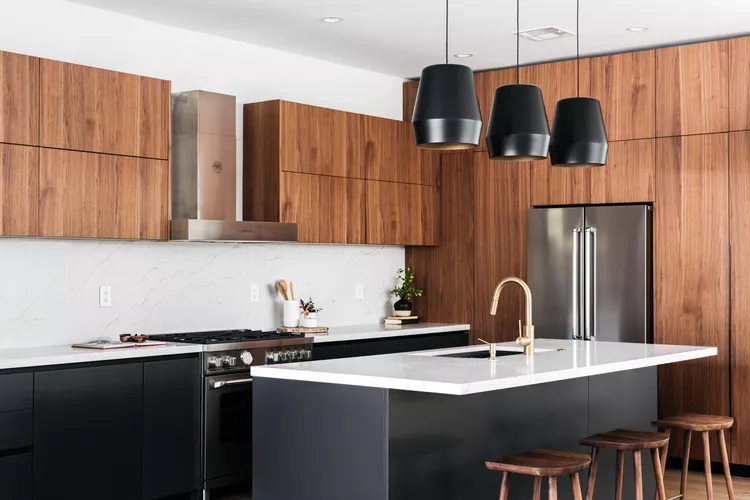
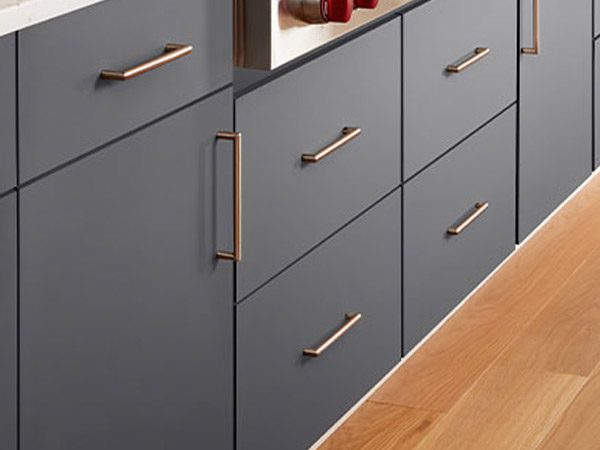
A slab door — also called a flat-panel door — is characterized by a completely smooth, uninterrupted surface with no raised or recessed detailing. The door consists of a single flat piece of material, which can be solid wood, MDF (medium-density fiberboard), plywood, or even acrylic or laminate.
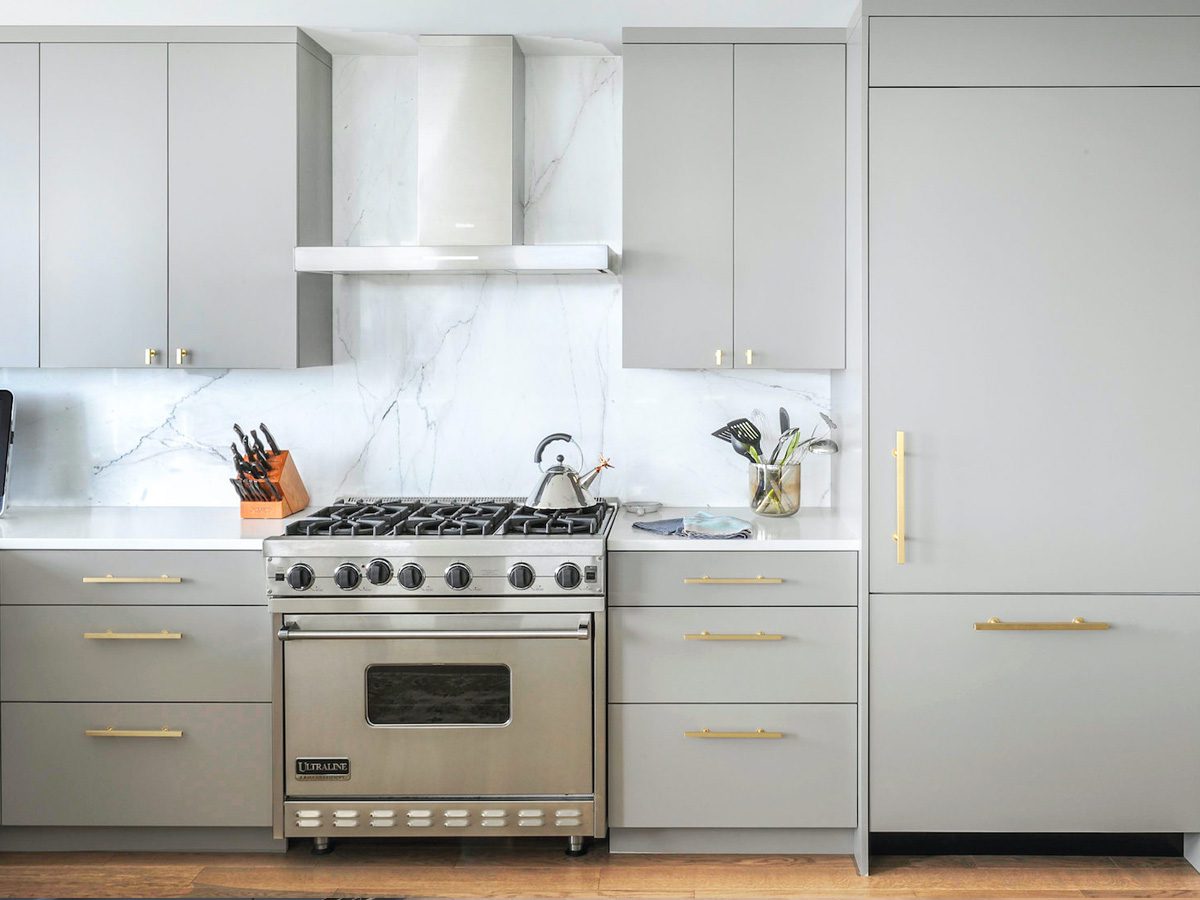
Slab doors are the hallmark of modern and contemporary kitchen design. Their clean lines and absence of ornamentation create a streamlined, gallery-like aesthetic that feels both sophisticated and uncluttered. They often pair beautifully with handleless designs, push-to-open mechanisms, or minimalist bar pulls.
Popular slab door materials include:
- High-gloss acrylic — reflective finish that amplifies light and creates a luxurious feel
- Matte lacquer — a refined, low-sheen option that hides fingerprints well
- Natural wood veneer — adds warmth and organic texture to modern spaces
- Thermofoil / PVC wrap — budget-friendly option with consistent color and texture
- Painted MDF — versatile, paintable in virtually any custom color
What Is a Shaker Cabinet?
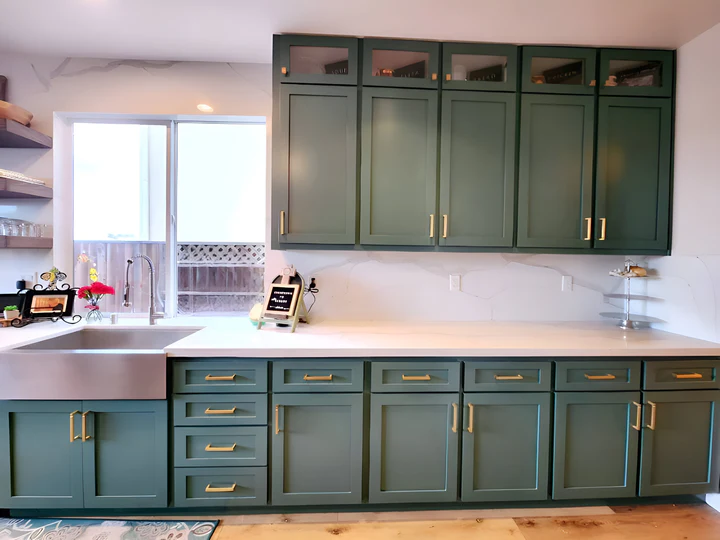
The shaker cabinet is arguably the most popular cabinet style in American homes — and has been for decades. Originating from the Shaker religious movement of the 18th century, this style is defined by its five-piece door construction: a flat center panel surrounded by a four-piece frame with a distinct recessed or inset profile.
Shaker cabinets sit at the intersection of traditional craftsmanship and practical design. They’re valued for their versatility — they look equally at home in a farmhouse kitchen, a transitional space, or even a semi-contemporary setting. The subtle detail of the frame and panel adds visual interest without being ornate.
Shaker cabinets are typically constructed from:
- Solid hardwood (maple, oak, cherry, hickory) — premium durability and natural beauty
- Painted MDF with hardwood frames — cost-effective with a clean painted finish
- Plywood box construction with hardwood doors — excellent long-term durability
See More White Slim Shaker Kitchens
See More Gray Single Shaker (GSS)
See More Blue Single Shaker (BSS)
See More White Single Shaker (WSS)
2. Style & Aesthetic: Which Look Is Right for Your Home?
The most obvious distinction between slab doors and shaker cabinets is visual — but the right choice depends heavily on the architecture of your home, your existing design language, and the atmosphere you want to create.
Modern Slab Doors: The Contemporary Aesthetic
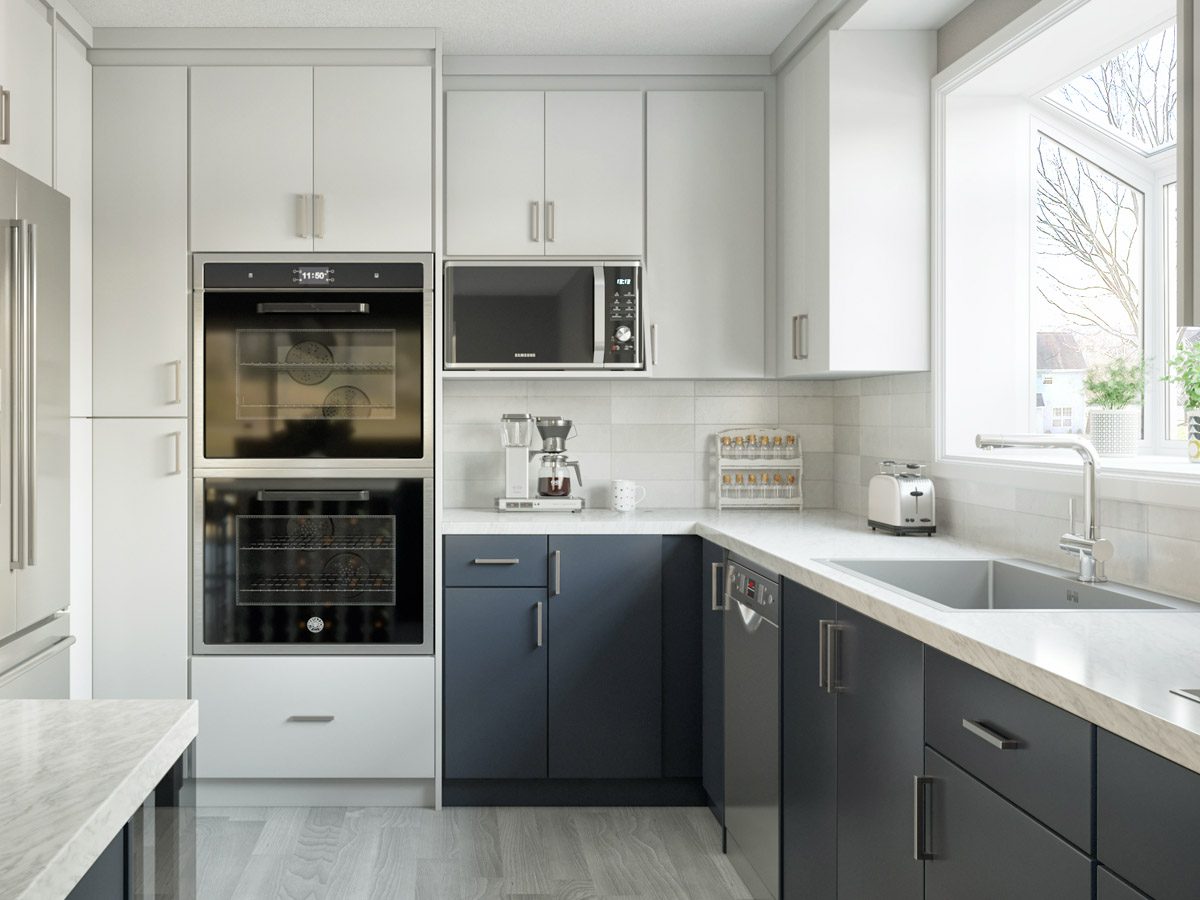
Slab doors are designed for homeowners who lean toward clean, uncluttered spaces. If your home features open-plan layouts, large format tiles, minimalist furnishings, concrete or terrazzo surfaces, or floor-to-ceiling windows, slab door cabinets will feel like a natural extension of your design language.
High-gloss slab doors in white, deep charcoal, navy, or forest green create dramatic statements. Matte slab doors in warm neutrals — taupe, greige, sage — bring a refined softness to contemporary kitchens. The absence of frame detailing makes slab doors visually “quiet,” allowing other design elements to take center stage.
Slab doors work exceptionally well when combined with:
- Waterfall countertops in quartz or marble
- Integrated appliances for a seamless look
- Handleless kitchen systems with push-to-open hardware
- Large-format porcelain or stone flooring
- Industrial or architectural lighting fixtures
View Full Kitchen Cabinet Collection
Shaker Cabinets: The Timeless Classic
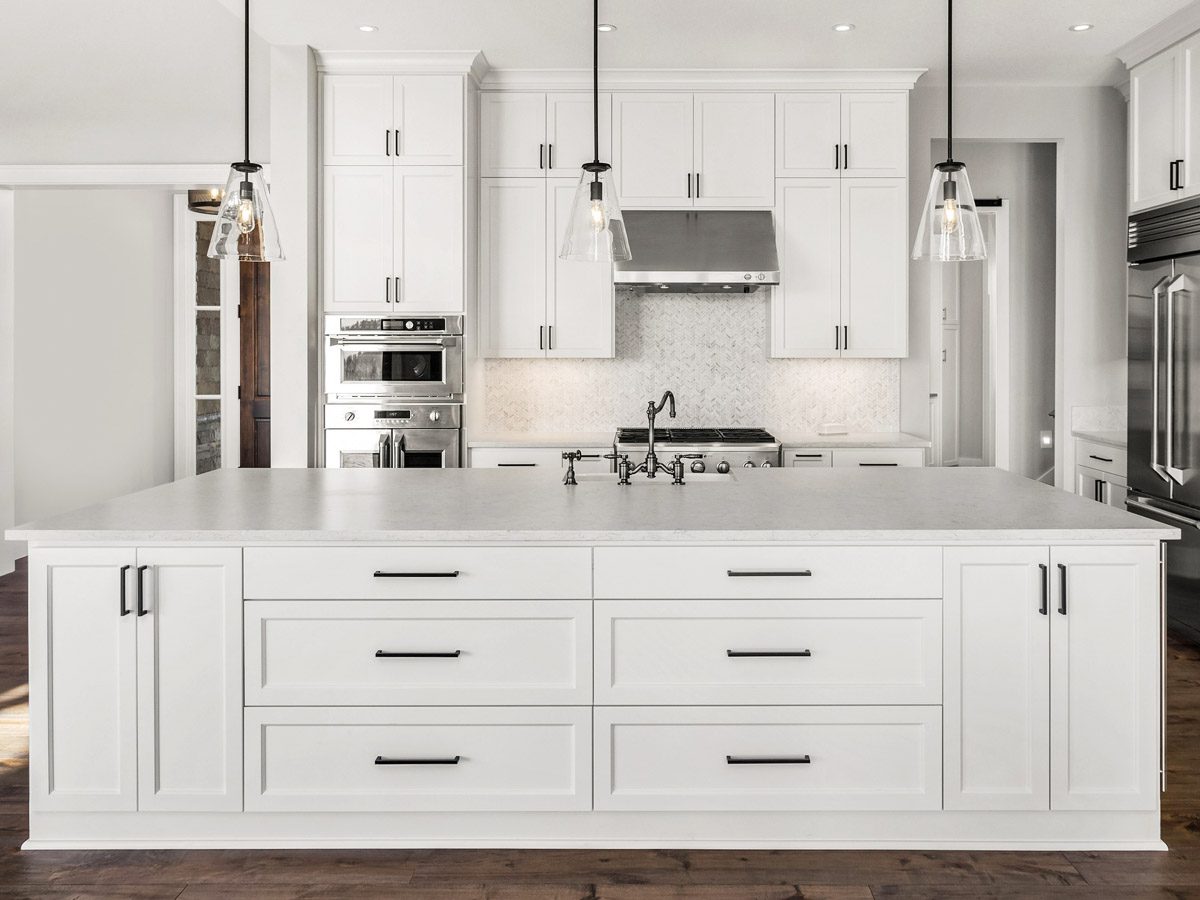
Shaker cabinets have endured for over two centuries because they occupy a rare design sweet spot — they’re neither too traditional nor too modern. The frame-and-panel detail provides enough visual interest to feel crafted and intentional, while remaining simple enough to adapt to a wide range of design directions.
In traditional and farmhouse kitchens, shaker cabinets shine when paired with subway tile backsplashes, apron-front sinks, unlacquered brass hardware, and warm wood accents. In transitional homes, white or soft gray shaker cabinets create a neutral backdrop that accommodates changing decor styles over time.
Shaker cabinets pair beautifully with:
- Marble or butcher block countertops
- Traditional pulls, cup handles, or vintage knobs
- Subway tile, zellige, or handmade tile backsplashes
- Beadboard panels and crown molding
- Furniture-style kitchen islands
See More: How to Choose the Right Kitchen Cabinets for Canadian Kitchens
3. Cost Comparison: What Does Each Style Really Cost?
Budget is often the deciding factor in cabinetry selection, and understanding the true cost of each option — including installation, hardware, and long-term maintenance — is essential before making a commitment.
Slab Door Pricing
Slab door cabinets span a wide price range depending on material. High-gloss acrylic or lacquered slab doors sit at the premium end of the market. Natural wood veneer options also command a premium. Entry-level slab options in thermofoil or painted MDF can be quite affordable, though the look may not match higher-end versions.
Average slab door cabinet pricing (materials + basic installation):
- Budget slab (thermofoil/PVC): $150–$350 per linear foot
- Mid-range slab (painted MDF, lacquer): $350–$600 per linear foot
- Premium slab (acrylic, veneer, custom): $600–$1,200+ per linear foot
Shaker Cabinet Pricing
Shaker cabinets are widely available at nearly every price point, which is one reason they remain the most popular cabinet style in the United States. Stock shaker cabinets from big-box retailers offer an affordable entry point, while semi-custom and fully custom options provide higher quality and more design flexibility.
Average shaker cabinet pricing (materials + basic installation):
- Stock shaker (big-box, RTA): $100–$250 per linear foot
- Semi-custom shaker (painted or stained): $250–$500 per linear foot
- Custom shaker (solid hardwood, inset): $500–$1,000+ per linear foot
Hidden Costs to Consider
Beyond the cabinet price itself, be sure to factor in:
- Hardware costs — high-quality pulls and knobs for a full kitchen can range from $200 to $1,500+
- Specialty finishes — two-tone cabinetry or custom color matching adds cost
- Push-to-open mechanisms for handleless slab designs ($30–$80 per door)
- Professional installation — typically $50–$100 per cabinet box
- Long-term refinishing — shaker cabinets may need repainting sooner due to grooves wearing faster
4. Side-by-Side Comparison: Slab Doors vs Shaker Cabinets
| Feature | Slab Doors | Shaker Cabinets |
| Style | Modern / Minimalist | Transitional / Classic |
| Maintenance | Easy — flat surfaces | Moderate — grooves collect dust |
| Cost | Mid to High | Mid-range |
| Durability | Very High (solid panels) | High (frame construction) |
| Customization | High (colors, materials) | High (paint, hardware) |
| Best For | Contemporary homes | Traditional & transitional homes |
| Resale Appeal | Modern buyers | Broad buyer appeal |
| Hardware | Often handle-free | Traditional pulls & knobs |
| Kitchen Size Fit | Best in large, open kitchens | Versatile in any size |
5. Durability & Longevity: Which Will Last Longer?
Both slab doors and shaker cabinets can deliver decades of service — but their vulnerabilities differ, and understanding these distinctions will help you make a more informed choice based on your household’s specific demands.
Slab Door Durability
High-quality slab doors — especially those constructed with solid wood cores, HDF, or premium MDF wrapped in durable lacquer or acrylic — are remarkably resilient. Because there are no joints, grooves, or frame intersections, there are fewer weak points in the construction.
However, slab doors do have notable vulnerabilities. High-gloss acrylic, while stunning, is prone to visible scratches. Thermofoil wraps can peel at the edges when exposed to consistent heat or moisture — a concern near ovens, dishwashers, and sinks. Engineered materials like MDF are susceptible to swelling if water infiltrates at edges or drill points.
Durability tips for slab doors:
- Opt for MDF cores with PVC edge banding for superior moisture resistance
- Choose matte or satin finishes over high-gloss for high-use kitchens
- Ensure proper ventilation near appliance heat sources to prevent delamination
Shaker Cabinet Durability
Shaker cabinets, particularly those crafted from solid hardwood or quality plywood, are time-tested workhorses. The frame-and-panel construction is inherently stable — the floating center panel allows for natural wood movement without splitting or warping.
The primary durability concern with shaker cabinets is the recessed profile. The inner groove where the frame meets the panel can collect moisture and grime over time, potentially causing paint failure at those joints in painted versions. In humid climates, the exposed wood grain at these intersections may also absorb moisture and swell slightly.
Durability tips for shaker cabinets:
- Specify inset or beaded-inset shaker doors for highest-quality construction
- Apply a catalyzed lacquer finish for painted shakers — more durable than latex paint
- Consider solid hardwood frames over MDF for long-term moisture resistance
6. Maintenance & Cleaning: Which Is Easier to Keep Clean?
Day-to-day maintenance is one of the most practical considerations in cabinetry selection — and it’s an area where slab doors and shaker cabinets differ significantly.
Cleaning Slab Doors
Slab doors are widely regarded as the easier option to clean. Their flat, uninterrupted surfaces can be wiped down quickly and thoroughly with a damp cloth or mild all-purpose cleaner. There are no grooves or crevices where grease, crumbs, or moisture can accumulate.
This makes slab doors an excellent choice for busy families, households with young children, or homeowners who prioritize low-maintenance living. High-gloss slab doors will show fingerprints prominently but clean easily — a trade-off many homeowners accept for the aesthetic reward.
Cleaning Shaker Cabinets
Shaker cabinets require a bit more attention during cleaning. The recessed profile and inner groove of the five-piece door construction can trap cooking grease, dust, and food particles — especially in kitchens with heavy daily cooking. Over time, these accumulations can lead to discoloration or paint staining in those recesses.
Effective cleaning requires a narrow brush, toothbrush, or groove-cleaning tool to reach inside the panel recess. For painted shaker cabinets, it’s important to avoid excessive water in these grooves, as standing moisture can cause paint to bubble or wood to swell.
7. Pros & Cons: An Honest Assessment
| Modern Slab Doors — Pros & Cons | |
| ✅ Pros
• Extremely easy to clean and maintain • Sleek, modern aesthetic that photographs beautifully • Wide variety of materials, colors & finishes • Works seamlessly with handleless designs • Timeless in contemporary/modern home styles |
❌ Cons
• Can feel cold or sterile without warmth accents • High-gloss versions show fingerprints easily • Thermofoil options may delaminate near heat • Less forgiving of installation imperfections • May date faster in ultra-trend-led designs |
| Shaker Cabinets — Pros & Cons | |
| ✅ Pros
• Timeless appeal — rarely goes out of style • Extremely versatile across many home styles • Broad market appeal improves resale value • Available at every price point • Pairs beautifully with a wide range of hardware |
❌ Cons
• Grooves require more effort to clean thoroughly • Frame joints may show wear or paint cracking over time • Can feel dated in ultra-modern settings • Fewer material options than slab doors • High-humidity kitchens may see groove swelling |
8. Which Style Fits Which Home? A Room-by-Room Guide
Open-Plan Contemporary Homes
For open-plan homes with modern architecture, large windows, and minimalist furnishings, slab door cabinets are the clear choice. Their clean lines complement the visual openness of the space and create a cohesive, gallery-like atmosphere. Opt for a two-tone palette — such as matte white upper cabinets and deep charcoal or sage lowers — for maximum visual impact.
Traditional & Colonial Homes
Traditional homes with architectural detail, crown moldings, and classic proportions are natural fits for shaker cabinets. The crafted detailing of the five-piece door echoes the architectural language of the home. Classic white or soft cream painted shakers with oil-rubbed bronze or unlacquered brass hardware create a cohesive, timeless result.
Farmhouse & Cottage Kitchens
Nothing says farmhouse kitchen quite like shaker cabinets. Paired with an apron-front sink, open shelving, and reclaimed wood accents, shaker cabinetry forms the foundation of the beloved farmhouse aesthetic. Two-tone treatments — navy or forest green lower cabinets with white uppers — add personality and depth.
Transitional Spaces
If your home sits between traditional and contemporary — what designers call “transitional” — you have excellent options with both styles. Shaker cabinets remain the safest choice for transitional spaces given their adaptability. However, a streamlined slab door in a soft, warm color like putty or greige can bridge the gap beautifully when paired with natural wood accents and warmly-toned hardware.
Small Kitchens
In smaller kitchen spaces, slab doors tend to have a slight edge. Their flat, uninterrupted surfaces recede visually, making the space feel larger and more open. High-gloss slab options in light colors can also reflect light, amplifying the sense of space. That said, shaker cabinets in white or light colors work beautifully in small kitchens when paired with light countertops and good task lighting.
Luxury & High-End Kitchens
Both styles compete equally at the premium level. Slab doors in natural stone-effect lacquers, bookmatched wood veneers, or custom fluted panels represent some of the most coveted kitchen cabinetry in the world. Premium shaker cabinets in handpainted finishes, with unlacquered brass hardware and marble countertops, are equally prized. The choice at the luxury level comes down entirely to aesthetic preference.
9. Hardware Pairing Guide: Completing the Look
Cabinet hardware is the jewelry of your kitchen — the finishing detail that can make or break the overall design. Choosing hardware that complements your door style is essential.
Hardware for Slab Doors
Slab doors are the most hardware-flexible option in kitchen design. Their blank canvas accepts virtually any hardware style, from ultra-minimalist to bold statement pieces.
- Handle-free / push-to-open: The ultimate modern choice — completely seamless facades
- Long bar pulls in brushed nickel or matte black: Clean, architectural, and contemporary
- Thin J-pulls in brass or chrome: Elegant and minimal
- Recessed finger pulls: Subtle and sophisticated
- Oversized edge pulls: Bold design statement for island cabinetry
Hardware for Shaker Cabinets
Shaker cabinets have a rich hardware tradition. The detailing of the frame-and-panel door calls for hardware with a bit of substance and character.
- Cup pulls (bridge pulls): A classic shaker companion — especially in oil-rubbed bronze or brass
- Round knobs in ceramic, brass, or nickel: Traditional and charming
- Bin pulls or bin cup pulls: Period-appropriate for traditional and farmhouse kitchens
- Long bar pulls in matte black: Bridge shaker into a semi-contemporary territory
- Antique or unlacquered brass: Adds warmth and a patinated, lived-in quality
10. Resale Value & Market Appeal
For homeowners thinking ahead to eventual resale, cabinet style is a significant consideration. The right cabinetry can increase buyer appeal and support a higher sale price; the wrong choice can limit your buyer pool.
Shaker cabinets consistently rank as one of the highest-appeal kitchen features in real estate surveys. Their broad demographic appeal — from young buyers to downsizers — makes them the safest choice for resale-focused renovations. National Association of Realtors data consistently shows kitchen renovations deliver strong returns, with neutral shaker cabinetry among the top cited features that attract buyers.
Slab door cabinets, particularly in bold colors or high-gloss finishes, may appeal strongly to design-forward buyers but can feel polarizing to more conservative purchasers. In premium urban markets and luxury segments, sleek slab door kitchens can be a significant selling point. In suburban family markets, shaker cabinets typically outperform on broad appeal.
The exception is high-quality, neutral-toned slab doors in greige, white, or soft gray — these perform well across most buyer demographics and have become increasingly mainstream in the market.
See More: What Are Plywood Kitchen Cabinets? Are They Worth It?
11. Environmental Considerations & Sustainability
As sustainability becomes an increasingly important factor in home renovation decisions, understanding the environmental profile of your cabinet choice matters.
Slab Doors & Sustainability
MDF-based slab doors can contain formaldehyde-based resins (though CARB-compliant and TSCA-compliant products minimize off-gassing). Acrylic and PVC options are petroleum-derived and not biodegradable. However, wood veneer slab doors from FSC-certified sources represent an excellent sustainable option — they maximize the visual impact of natural wood while using significantly less timber than solid wood construction.
Shaker Cabinets & Sustainability
Solid hardwood shaker cabinets from responsibly managed forests (FSC-certified) represent one of the most sustainable cabinetry options available. The longevity of quality hardwood construction also contributes to sustainability — a well-built shaker cabinet can last 50+ years with proper care, significantly reducing lifetime material consumption. Look for water-based finishes and low-VOC paints to minimize chemical off-gassing.
12. Making Your Final Decision: A Step-by-Step Framework
Still undecided? Use this practical decision framework to guide your final choice:
Step 1: Assess Your Home’s Architecture
Walk through your home and identify the dominant architectural style. Modern, minimalist, or industrial architecture leans toward slab. Traditional, colonial, farmhouse, or craftsman architecture leans toward shaker.
Step 2: Define Your Lifestyle Priorities
Are you a passionate daily cook? Consider the ease of cleaning slab doors. Do you have young children who touch everything? Matte slab doors or durable painted shakers both work well. Do you entertain frequently and want wow factor? Either style can deliver — it comes down to your aesthetic direction.
Step 3: Set a Realistic Budget
Both styles are available at multiple price points, but quality varies enormously within each category. Set a realistic per-linear-foot budget and work with a reputable kitchen designer — like KASA Kitchens — to identify the best products at your price point.
Step 4: Gather Physical Samples
Never make a final cabinetry decision based on photographs alone. Request physical door samples from your supplier or kitchen designer. Live with them in your space for a few days — observe how they look in morning light, afternoon light, and evening artificial light before committing.
Step 5: Consult a Professional Kitchen Designer
The single most valuable step in any kitchen renovation is working with an experienced kitchen designer. A professional can help you visualize the completed space, identify design risks before they become costly mistakes, and guide you toward materials and finishes that align with both your aesthetic vision and your practical needs.
Conclusion: There Is No Wrong Answer — Just the Right Fit
Modern slab doors and shaker cabinets represent two of the finest expressions of kitchen design — each with a compelling case for selection. Slab doors deliver unmatched minimalism, effortless cleaning, and contemporary sophistication. Shaker cabinets offer timeless craftsmanship, remarkable versatility, and broad-based appeal that has endured across centuries of home design.
The choice between them is not about which style is objectively better — it’s about which is better for your home, your lifestyle, your aesthetic sensibility, and your long-term goals. With the right guidance, either choice can become the foundation of a kitchen you’ll love for decades.
At KASA Kitchens, our design experts have spent years helping homeowners navigate exactly this kind of decision. We bring deep product knowledge, honest design counsel, and a genuine passion for creating kitchens that are as functional as they are beautiful. Whether your vision is clean-lined and contemporary or warm, crafted, and timeless — we have the expertise, the materials, and the experience to bring it to life.
| READY TO DESIGN YOUR DREAM KITCHEN?
Whether you love sleek slab doors or timeless shaker cabinets, KASA Kitchens brings your vision to life with premium craftsmanship and personalized design consultations. www.kasakitchens.com | Free Design Consultation Available |
Frequently Asked Questions
Can I mix slab doors and shaker cabinets in the same kitchen?
Yes — a mixed approach is increasingly popular in transitional kitchen design. A common strategy is to use slab doors on lower cabinets or islands for a grounding, modern feel, while using shaker doors on upper cabinets for a lighter, more traditional touch. This contrast can create beautiful visual rhythm when executed thoughtfully.
Which is better for a small kitchen — slab or shaker?
Slab doors have a slight edge in small kitchens because their flat surfaces recede visually and create a sense of more space. Light-colored slab doors in particular — especially high-gloss white or cream — can make a compact kitchen feel significantly larger by reflecting light. That said, white shaker cabinets in small kitchens also perform well when paired with light countertops and adequate lighting.
Are slab door cabinets more expensive than shaker cabinets?
Not necessarily. Both styles are available at multiple price points. The most expensive slab doors (in acrylic, lacquer, or bookmatched veneer) can exceed premium shaker pricing. However, entry-level slab options in thermofoil or painted MDF are competitively priced with stock shaker cabinets. The material and finish — not the style — typically drives the majority of the cost.
Which cabinet style has better resale value?
Shaker cabinets historically have broader resale appeal because they suit a wider range of buyer preferences and home styles. In high-end and urban luxury markets, premium slab door kitchens can be equally compelling to buyers. For maximum resale safety, neutral-toned shaker or slab cabinets in white, gray, or greige typically perform best across diverse buyer demographics.
How long do slab door cabinets last compared to shaker?
Both styles can last 20–50+ years when constructed from quality materials and installed correctly. Solid wood shaker cabinets are among the most durable kitchen investments available. High-quality slab doors in MDF lacquer or solid wood veneer also offer exceptional longevity. The weakest performers in both categories tend to be budget options — thermofoil slab doors and MDF-only shaker doors without hardwood components.
