


Blog
Which Cabinet Material Lasts Longer for Canadian Condos, Basements & Rentals?
Apr
If you’re renovating a condo in Toronto, finishing a basement in Calgary, or upgrading kitchen cabinets in a Vancouver rental property, the cabinet material you choose will make or break your investment.
Canada’s harsh climate — from humid summers to bone-dry winters, flooding basements to heat-stressed rental kitchens — demands cabinet materials that can withstand far more punishment than a typical American or European home. The wrong material leads to warped doors, peeling surfaces, swollen boxes, and costly replacements within just a few years.
This expert guide from KASA Kitchens walks you through every major cabinet material available in Canada today, evaluating each one for durability, moisture resistance, cost, and suitability for the three most demanding Canadian spaces: condos, basements, and rental properties.
| Quick Answer
For basements and rentals: Plywood boxes with thermofoil or PVC doors offer the best balance of moisture resistance and durability. For condos: Plywood with solid wood or MDF doors delivers premium results. For budget rentals: Melamine-coated particleboard works well with proper sealing. |
Why Cabinet Material Choice Matters More in Canada
Canada presents unique challenges that affect cabinet longevity in ways homeowners in milder climates never encounter:
- Humidity swings of 40–70%+ between seasons cause wood-based materials to expand and contract
- Basement moisture from groundwater infiltration, condensation, and flooding events
- Hard water in many Canadian municipalities accelerates finish deterioration
- Extreme cold in Prairie provinces causes structural stress on glued joints
- High tenant turnover in rentals means cabinets absorb far more daily abuse
- Provincial building codes may affect what materials qualify for certain applications
The material you’d install in a dry, climate-controlled Calgary condo is very different from what you’d use in a humid Toronto basement suite. Getting this decision right means your cabinets can last 20–30 years instead of requiring replacement in 5–8.
See More: What Are the Best Kitchen Cabinet Materials for Basement Kitchens in Canada?
The 6 Major Cabinet Materials: A Canadian Analysis
1. Solid Wood Cabinets
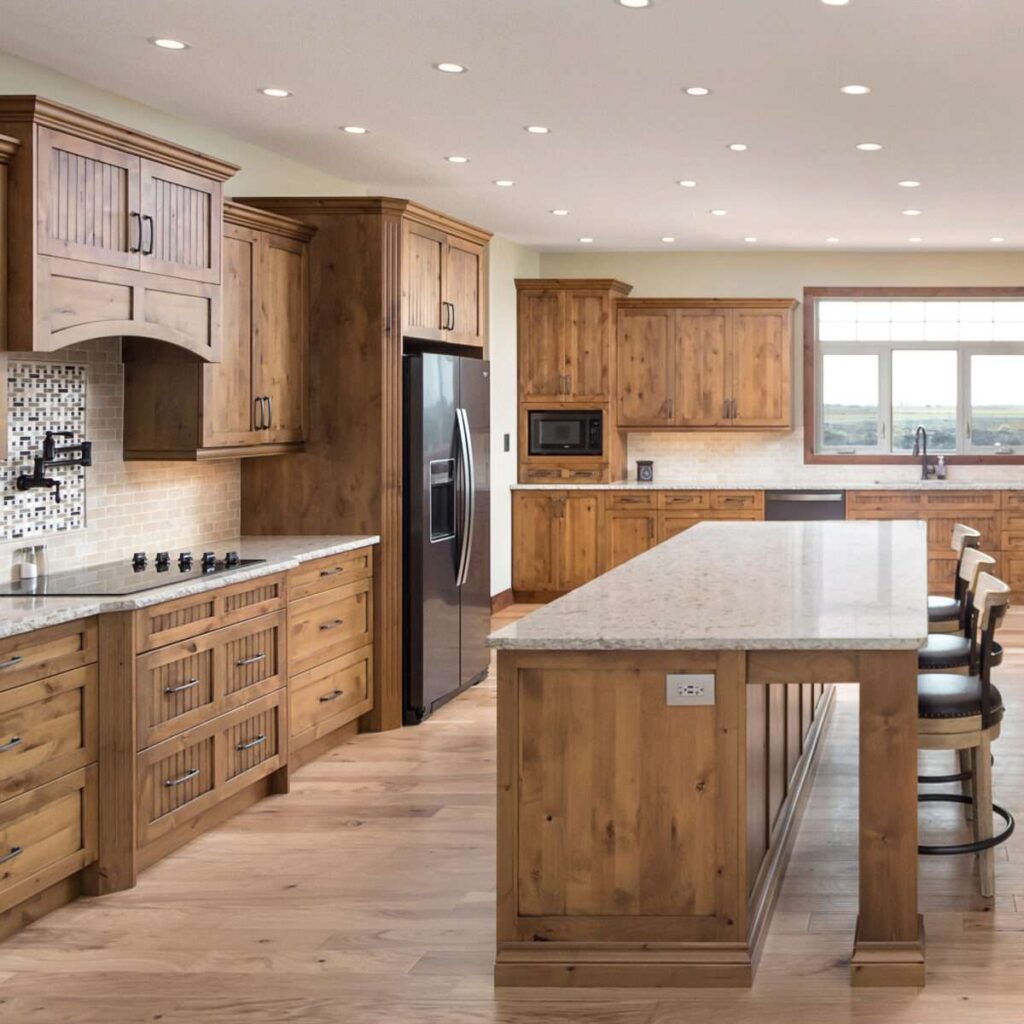
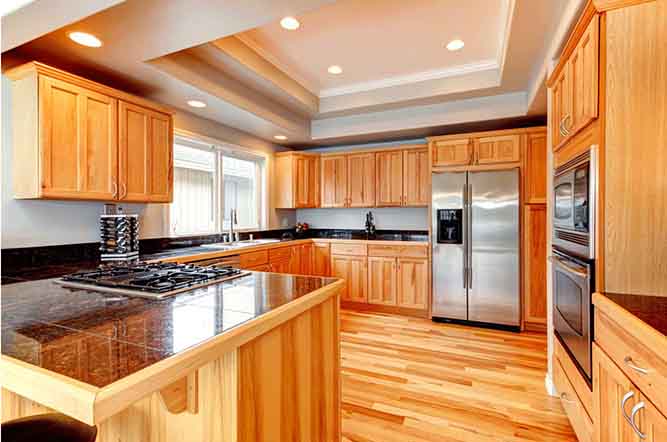
Solid wood is the gold standard of cabinetry — beautiful, long-lasting, and reputable. Species commonly used in Canadian kitchens include maple, oak, cherry, walnut, and birch, all of which are available domestically.
Durability: Exceptional — solid wood cabinets can last 50+ years when properly maintained. Dents and scratches can often be sanded and refinished, giving these cabinets a second (or third) life.
Moisture Resistance: This is where solid wood’s Achilles’ heel appears. Wood is hygroscopic — it absorbs and releases moisture with humidity changes. In a Canadian basement or poorly ventilated kitchen, solid wood doors can warp, swell, or crack within a few seasons. Proper sealing and finishing dramatically improves moisture performance but adds to upfront cost.
Cost in Canada: $900–$2,500+ per linear foot installed, depending on species and finish. Solid wood is a premium investment.
Best For: Main-floor condos, luxury renovations, dry above-grade spaces with good climate control. Not recommended for unfinished basements or budget rentals.
| Expert Tip from KASA Kitchens
If you love the look of solid wood but need moisture resistance, consider a plywood box with solid wood face frames and drawer fronts. You get the aesthetic appeal where it matters most, with structural performance where it counts. |
See More: Solid Wood vs. Plywood: Which Is Better for Your Kitchen Cabinets?
2. Plywood Cabinets
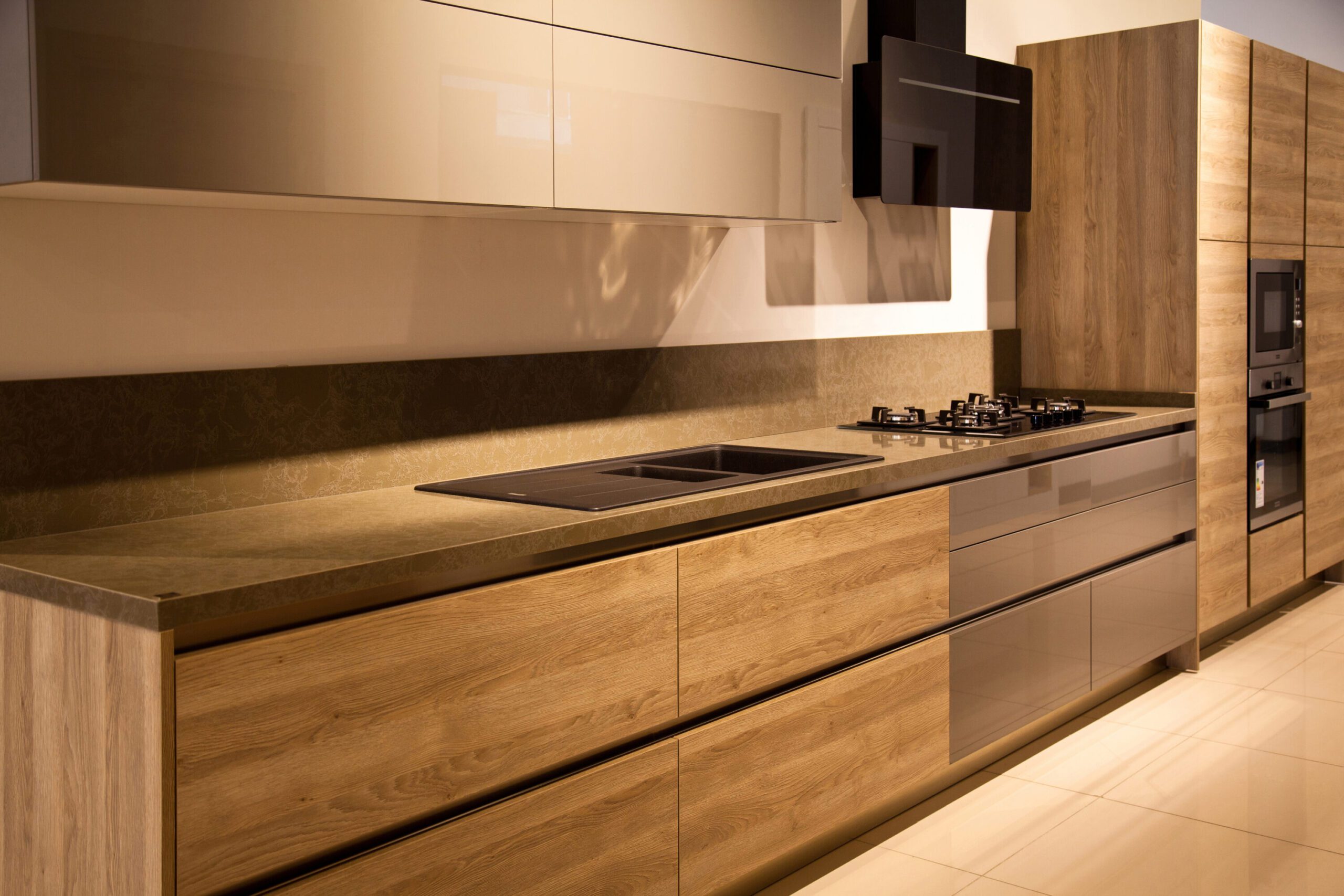
Plywood is widely regarded by cabinet professionals as the superior structural choice for Canadian homes, and for good reason. Made from cross-laminated wood veneers bonded under pressure, plywood resists warping, holds screws far better than particleboard, and manages moisture stress admirably.
Durability: Excellent — plywood cabinet boxes routinely outlast their door fronts. The cross-grain construction means it is structurally stable across seasonal humidity cycles. Hardware like hinges and drawer slides stay tight for decades.
Moisture Resistance: Good to excellent, depending on grade. Exterior-grade or marine-grade plywood (using waterproof PVA glue) is the best choice for basement and below-grade installations. Standard interior plywood grades (like BC or AC) still outperform MDF and particleboard in moisture situations.
Cost in Canada: $600–$1,800 per linear foot installed. More expensive than particleboard alternatives but significantly cheaper than solid wood.
Best For: Basements, condos, high-end rentals, anywhere longevity is prioritized over upfront cost savings.
See More: What Are Plywood Kitchen Cabinets? Are They Worth It?
3. MDF (Medium-Density Fibreboard)
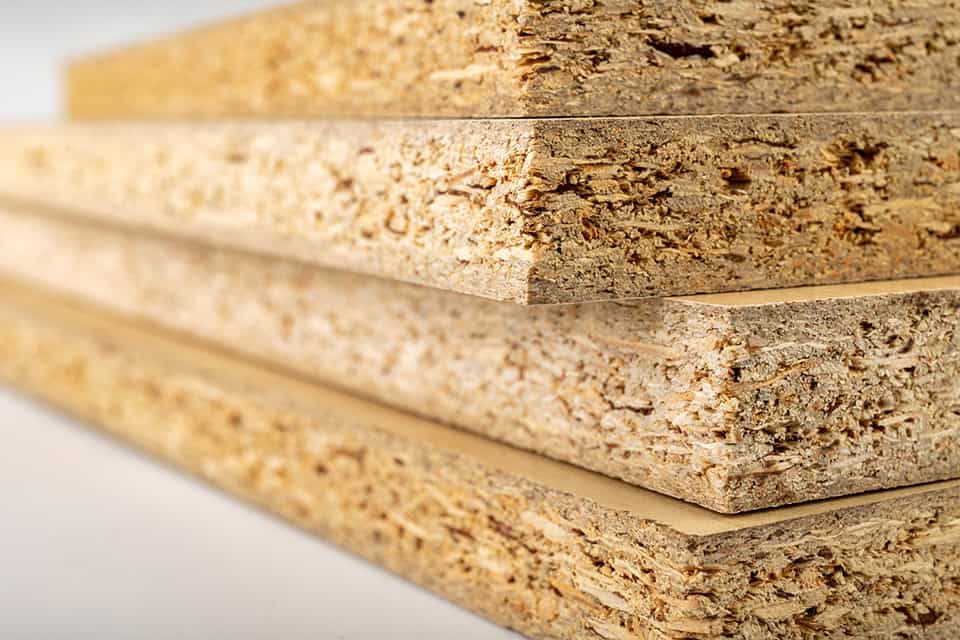
MDF is an engineered wood product made from compressed wood fibres bonded with resin. It has become increasingly popular for painted cabinet doors and interiors because it accepts paint extremely well, producing a glass-smooth finish impossible to achieve on real wood.
Durability: Moderate — MDF is heavy, stable, and resists denting well. However, it is not as impact-resistant as plywood. Edges are particularly vulnerable to chipping.
Moisture Resistance: Poor without adequate sealing. This is MDF’s critical weakness in Canadian applications. Standard MDF swells badly when exposed to moisture — a single flooding event can cause permanent deformation. Moisture-resistant MDF (MR-MDF) exists and performs considerably better but still trails plywood.
Cost in Canada: $400–$900 per linear foot installed. MDF provides great value in dry applications.
Best For: Main-floor condos, painted kitchens in dry climates, bedroom closets and built-ins. Avoid in basements or high-moisture environments.
See More: HDF vs MDF vs Solid Wood for Kitchen Doors: Which Material Is Best for Your Kitchen?
4. Thermofoil and PVC Wrap Cabinets
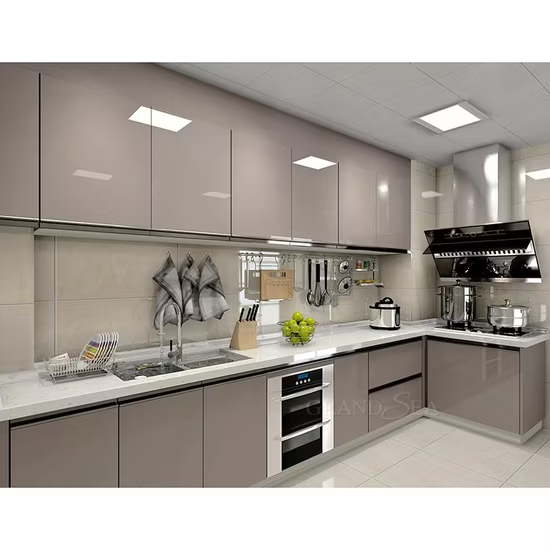 Thermofoil involves wrapping MDF or plywood substrate with a heat-bonded vinyl film. Modern PVC-wrapped and thermofoil cabinets have advanced significantly and now offer some of the best moisture resistance available in mid-range cabinetry.
Durability: Good — the substrate is protected from moisture by the vinyl wrap. However, the wrap itself can delaminate near heat sources (next to dishwashers or ovens) if not properly specified. Quality thermofoil from reputable suppliers lasts 15–20+ years.
Moisture Resistance: Excellent — the impermeable vinyl surface resists moisture penetration effectively. This makes thermofoil and PVC-wrapped cabinets among the best choices for bathrooms, laundry rooms, and basements.
Cost in Canada: $400–$900 per linear foot installed. An excellent value proposition for moisture-prone spaces.
Best For: Basement suites, laundry rooms, bathrooms, rental properties, any space where budget and moisture resistance are both priorities.
| KASA Kitchens Insight
In our experience fitting hundreds of Canadian basement suites, thermofoil cabinets on marine-grade plywood boxes consistently deliver 20+ year service life with minimal maintenance. This combination has become our go-to recommendation for below-grade rentals. |
View Full Kitchen Cabinet Collection
5. Melamine and Laminate Cabinets
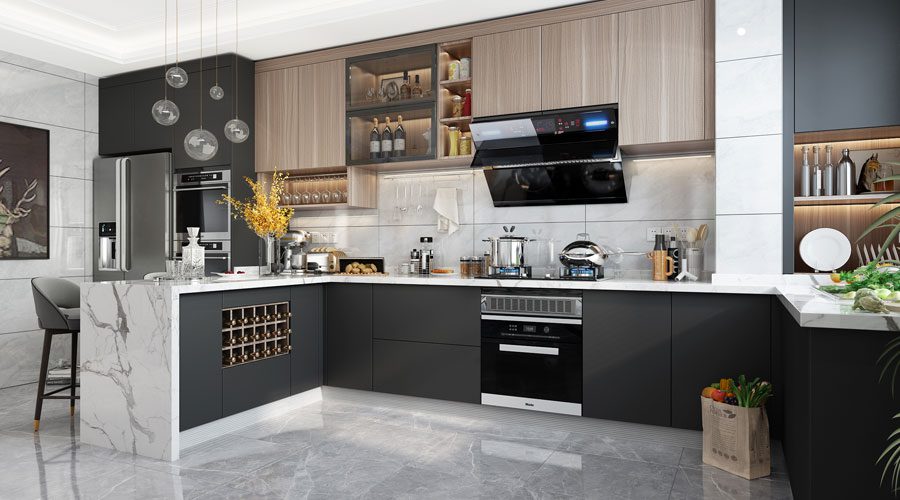
Melamine is a thermally fused paper-resin coating applied to particleboard or MDF. High-pressure laminate (HPL), like Formica, provides a thicker, tougher surface layer. Both offer clean, modern aesthetics at accessible price points.
Durability: Good for the surface coating, but the underlying particleboard substrate is the weak point. Particleboard does not hold screws as well as plywood, meaning hardware loosens over time — especially in high-use rental kitchens.
Moisture Resistance: Good on the surface but particleboard substrates are highly vulnerable to moisture penetration at edges and cut-outs. Proper edge-banding and sealing significantly extends lifespan.
Cost in Canada: $250–$700 per linear foot installed. The most accessible price point for full kitchen renovations.
Best For: Budget rental renovations, secondary storage spaces, areas with low humidity and light use.
See More White Slim Shaker Kitchens
6. Stainless Steel Cabinets
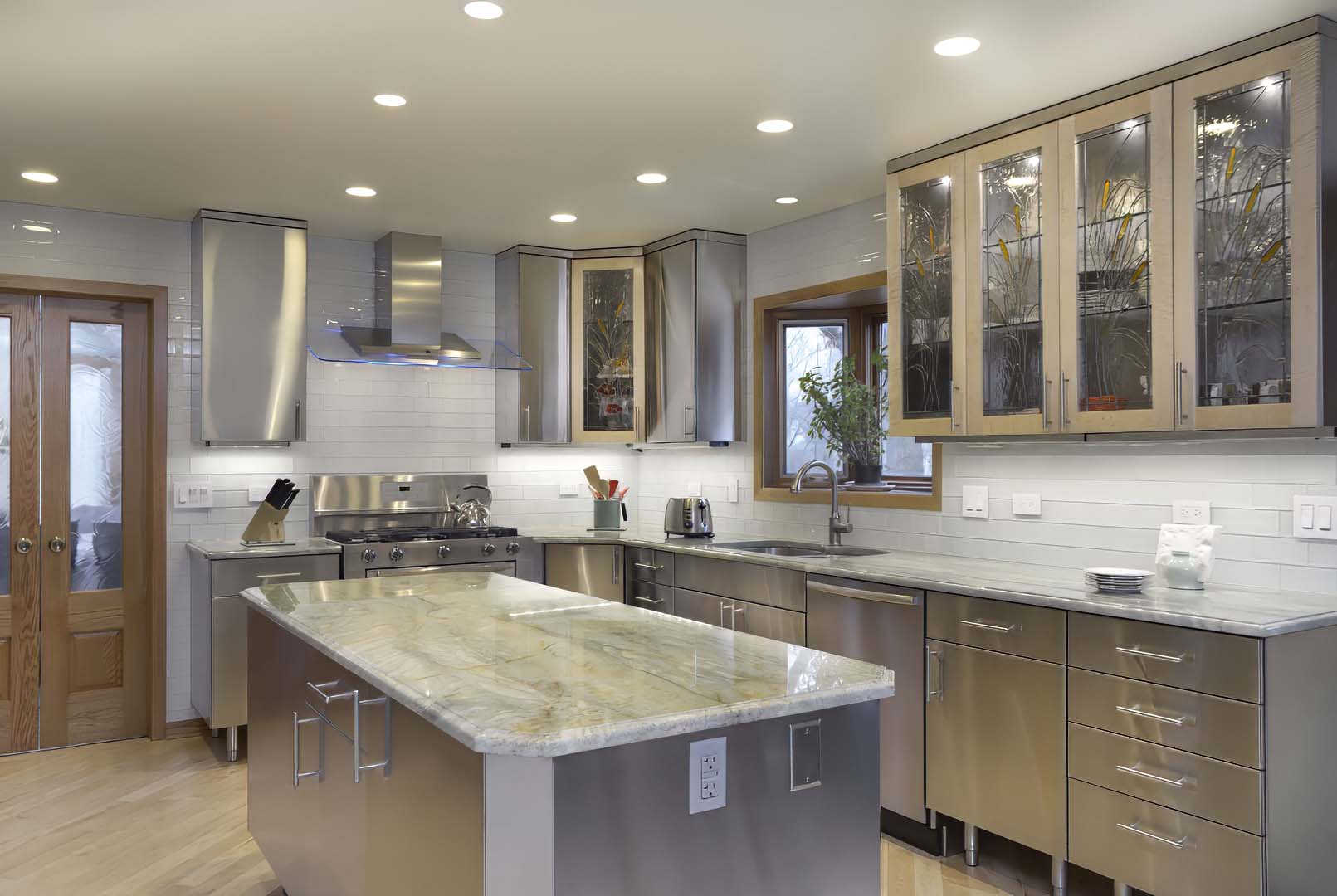
Stainless steel cabinets are not just for commercial kitchens — they are increasingly appearing in modern Canadian condos and high-value rental properties as a premium, ultra-durable option.
Durability: Exceptional — stainless steel does not rot, warp, swell, or delaminate. With proper care, stainless steel cabinets essentially last indefinitely.
Moisture Resistance: Excellent — completely impervious to moisture. The ideal material for any wet environment.
Cost in Canada: $1,500–$3,500+ per linear foot. A premium investment suited to high-end applications.
Best For: Commercial-grade rental units, luxury condos, wet bars, laundry rooms in premium properties.
See More Natural Wood Kitchens
Quick Comparison: Cabinet Materials at a Glance
| Material | Durability | Moisture Resistance | Cost (CAD) | Best For |
| Solid Wood | 9/10 | 4/10 (without treatment) | $$$–$$$$ | Luxury condos, dry spaces |
| Plywood | 9/10 | 7/10 | $$$ | Basements, all-purpose |
| MDF | 6/10 | 3/10 | $$ | Condos, low-humidity spaces |
| Thermofoil/PVC | 7/10 | 9/10 | $$ | Rentals, basements, laundry |
| Melamine/Laminate | 7/10 | 8/10 | $–$$ | Rentals, budget renovations |
| Stainless Steel | 10/10 | 10/10 | $$$$ | Commercial-grade rentals |
Canadian Condo Cabinets: What You Need to Know
Condominiums across Canadian cities — Toronto, Vancouver, Montreal, Calgary, Ottawa — present a specific set of challenges and opportunities for cabinet selection. Unlike single-family homes, condos typically feature:
- Limited square footage requiring efficient storage solutions
- Shared HVAC systems that may produce drier air than a standalone home
- Strata/condo board rules that may restrict renovation noise, timing, and materials
- Resale considerations — quality finishes improve resale value in competitive markets
- Above-grade locations that generally mean lower moisture risk (except bathrooms)
Recommended Materials for Condos: Plywood boxes with MDF or solid wood doors are the gold standard for condo kitchens. The stable structure handles the dry, climate-controlled condo environment well, while the premium door finish supports resale value. For bathrooms and laundry, upgrade to thermofoil or PVC doors.
In high-humidity condo spaces like ensuites and laundry closets, apply the same moisture-resistance logic as basements. The proximity to plumbing creates localized humidity that can damage standard MDF over time.
Basement Cabinet Selection: The Moisture Challenge
Canadian basements are among the most demanding environments for cabinetry in the world. Even finished, insulated basements experience:
- Seasonal humidity variations from 30% in winter to 70%+ in summer
- Occasional flooding events, particularly in older homes in flood-prone regions
- Condensation on cold surfaces during humid seasons
- Below-grade temperature swings that stress wood products
- Reduced ventilation compared to above-grade floors
The Non-Negotiable Rule for Basement Cabinets: Always use a plywood box. No exceptions. The cost savings of particleboard are completely erased after the first moisture event. Marine-grade or exterior-grade plywood provides a moisture-resistant box that can withstand occasional flooding and chronic humidity without deforming.
For doors and drawer fronts in basements, thermofoil or PVC-wrapped doors on plywood substrate are the professional recommendation from KASA Kitchens. The impermeable vinyl surface prevents moisture infiltration, and the plywood substrate behind the wrap maintains structural integrity far better than MDF.
If aesthetics are a priority and you want a natural wood look in a basement, consider wood-veneer doors with a high-quality moisture-resistant finish — available through specialty suppliers like KASA Kitchens — which provide the visual warmth of wood with meaningfully improved moisture performance.
| Basement Cabinet Checklist by KASA Kitchens
Use exterior-grade or marine plywood for all cabinet boxes. Seal all cut edges with waterproof edge tape or end-grain sealer. Choose thermofoil, PVC, or properly sealed wood-veneer for doors. Install cabinet feet at least 4 inches high to protect against minor flooding. Ensure a dehumidifier maintains basement RH below 55%. |
See More: Light vs Dark Cabinets – Which Makes Your Kitchen Look Bigger?
Rental Property Cabinets: Durability Meets Budget
Rental properties in Canada demand a completely different set of priorities than owner-occupied homes. Landlords need cabinets that:
- Withstand heavy daily use from tenants who may not treat the space gently
- Resist staining, scratching, and surface damage
- Are easy and inexpensive to clean between tenants
- Can survive minor water damage from spills, leaks, and dishwasher overflow
- Provide a professional appearance that justifies market-rate rent
- Are cost-effective enough to replace economically if badly damaged
The Rental Property Sweet Spot: Melamine or thermofoil doors on plywood boxes. This combination delivers the moisture resistance, impact resistance, easy cleanability, and cost-effectiveness that landlords need. Avoid MDF doors in rentals — they are the most vulnerable to the type of impact and moisture damage tenants inadvertently cause.
For multi-unit investment properties where you need to renovate many units cost-effectively, a consistent cabinet specification simplifies ordering, installation, and future repairs. Working with a dedicated cabinet supplier like KASA Kitchens allows landlords to negotiate volume pricing and maintain a consistent, professional look across a portfolio.
High-end rental properties targeting executive tenants can justify plywood boxes with solid wood or MDF painted doors, which command premium rent while still offering good durability. The key is pairing premium aesthetics with moisture-protective practices such as under-sink mats, quality fixtures, and dehumidifier maintenance.
See More: How to Upgrade Your Kitchen Without Overspending
The Impact of Canadian Climate Zones on Cabinet Choice
Canada spans multiple climate zones, each affecting cabinet material performance differently:
Coastal British Columbia (High Humidity)
Vancouver and the Lower Mainland experience the highest average humidity in Canada. Moisture resistance is paramount. Exterior-grade plywood boxes with thermofoil or painted wood-veneer doors with marine-grade finish are the professional standard here.
Prairie Provinces (Extreme Dry/Cold)
Calgary, Edmonton, Saskatoon, and Winnipeg experience the continent’s most extreme humidity swings — extremely dry winters (as low as 15% RH) followed by humid summers. Solid wood cabinets in these climates require careful humidity management with whole-home humidifiers. Plywood and MDF in well-conditioned spaces perform well.
Ontario and Quebec (Four Full Seasons)
Toronto, Ottawa, and Montreal see all four seasons at their most extreme. Basements are particularly vulnerable to humid summers. In these markets, KASA Kitchens recommends moisture-resistant materials for any below-grade or bathroom application, with standard plywood or solid wood appropriate for main-floor kitchens with quality HVAC.
Atlantic Canada (Salt Air and Humidity)
Halifax, Fredericton, and other Atlantic cities face salt air and persistent coastal humidity. Metal hardware and PVC-based cabinet materials perform best here, as both resist the salt-laden atmosphere that accelerates corrosion and moisture penetration on more porous materials.
Cabinet Box vs. Cabinet Door: Different Material, Different Priority
A critical insight that many homeowners miss: the cabinet box (the structural carcass) and the cabinet door (the visible face) can and often should be made from different materials.
The Box is the structural foundation. This is where moisture resistance and screw-holding strength matter most. Plywood is almost universally the best choice for boxes in any Canadian setting. The box is rarely seen and rarely needs to match the aesthetic of the door.
The Door is the visible element. Here, aesthetics, finish quality, and style matter enormously. Solid wood, MDF with high-quality paint, thermofoil, laminate, or veneer — the door choice should balance visual appeal with the specific moisture and wear demands of the space.
By separating these two decisions, you can maximize both structural longevity and aesthetic quality within your budget.
| KASA Kitchens Design Philosophy
We always specify plywood boxes — full stop. Then we work with each client to choose the right door material for their space, budget, and aesthetic vision. This approach delivers cabinets that look beautiful from day one and remain functional for decades. |
See More: How to Choose the Right Kitchen Cabinets for Canadian Kitchens
Cost vs. Longevity: The True Cost of Cabinet Materials Over Time
Upfront cost rarely tells the whole story. The true cost of cabinets is best measured over their full service life:
Melamine/Particleboard in a Rental (Poor Choice): $250/linear foot upfront, but replacement likely needed in 7–10 years. True 20-year cost: ~$500–$750/linear foot after one replacement cycle.
Thermofoil on Plywood in a Rental (Good Choice): $550/linear foot upfront, lasting 20–25+ years. True 20-year cost: ~$550/linear foot with no replacement needed.
MDF Painted in a Condo (Good Choice for Dry Spaces): $600/linear foot, lasting 15–20 years in dry conditions. Cost-effective when moisture risk is managed.
Plywood with Solid Wood Doors (Premium Choice): $1,200/linear foot upfront, 25–40 year service life. True 20-year cost is often less than two cycles of cheaper cabinetry.
The conclusion is clear: in Canadian settings where moisture, temperature swings, or heavy use are present, investing in quality upfront consistently reduces total lifetime cost.
How to Identify Quality Cabinet Construction
When shopping for cabinets in Canada — whether at a big-box store or a specialist like KASA Kitchens — use these criteria to evaluate quality:
- Ask for the box material specification. Demand plywood over particleboard.
- Check the door material: MDF, solid wood, thermofoil, or laminate — each has appropriate applications.
- Examine the edge banding: quality cabinets have tight, seamless edge banding that prevents moisture infiltration at cut edges.
- Test the drawer system: full-extension, soft-close drawer slides indicate a quality build.
- Inspect hinges: European-style adjustable hinges on solid mounting plates signal professional construction.
- Verify the finish: factory-applied lacquer or catalyzed varnish outperforms paint applied on-site.
- Ask about the warranty: reputable Canadian cabinet suppliers like KASA Kitchens offer meaningful warranties on materials and construction.
KASA Kitchens: Your Canadian Cabinet Partner
With years of experience designing and installing cabinetry across Canada’s most demanding spaces, KASA Kitchens has developed deep expertise in material performance across every Canadian climate zone and application.
Our team has helped hundreds of condo owners, landlords, and homeowners choose the right materials for their specific situation — not the most expensive option, not the cheapest, but the right one. We bring together:
- In-depth knowledge of Canadian building conditions and climate zones
- Relationships with premium domestic and international cabinet manufacturers
- On-site consultation to assess your specific moisture, use, and aesthetic requirements
- Transparent pricing with no hidden costs
- Industry-leading warranties that protect your investment
- Experience across condos, basement suites, rental portfolios, and custom homes
| Ready to Choose the Right Cabinets for Your Canadian Space?
KASA Kitchens specializes in durable, beautiful cabinet solutions designed for Canadian condos, basements, and rental properties. Our expert team helps you select the right material for your climate, budget, and lifestyle. Contact KASA Kitchens Today — Get Your Free Consultation |
Frequently Asked Questions
Q: Are IKEA cabinets good enough for Canadian basements?
IKEA’s SEKTION line uses a melamine-coated particleboard box, which is adequate for dry above-grade applications. For Canadian basements, we strongly recommend upgrading to a plywood-box system. IKEA door fronts can work reasonably well if properly maintained, but the particleboard box is a liability in moisture-prone environments.
Q: What cabinet material is best for a Vancouver rental?
Given Vancouver’s high ambient humidity, we recommend plywood boxes with thermofoil or PVC-wrapped doors for any Vancouver rental property. The combination resists the persistent moisture that accelerates deterioration of MDF and particleboard in coastal settings.
Q: How do I protect basement cabinets from flooding?
Use marine-grade plywood boxes, install toe kicks at least 4 inches high, seal all edges with waterproof tape, and ensure your basement has a functioning sump pump and dehumidifier. No cabinet material is flood-proof, but these steps dramatically reduce damage risk.
Q: Should I use the same cabinets throughout my rental unit?
Using consistent cabinet specifications throughout simplifies ordering, installation, and future repairs. KASA Kitchens can help landlords develop a standard specification that delivers professional quality across an entire portfolio.
Q: What is the most durable finish for rental cabinets?
Thermofoil (PVC wrap) and high-pressure laminate (HPL) offer the best resistance to the scuffs, stains, and impacts common in rental kitchens. For a painted look, a catalyzed lacquer finish applied in-factory outperforms latex paint by a significant margin.
Conclusion: Choose Smart, Choose Once
Cabinet material selection in Canada is not a one-size-fits-all decision. The right choice depends on your specific space, climate zone, use case, and budget — but the underlying principles are consistent:
- Always prioritize plywood for cabinet boxes, especially in moisture-prone spaces
- Match door material to the specific moisture and use demands of the space
- Calculate true lifetime cost, not just upfront price
- Work with a specialist who understands Canadian conditions
- Invest more in high-traffic, moisture-prone, or investment-grade spaces
Cabinets are one of the most significant components of any kitchen or storage space — both in terms of cost and daily impact on how a space functions and feels. Making the right material choice from the outset means decades of trouble-free service instead of costly, disruptive replacements.
KASA Kitchens has helped thousands of Canadians make this decision confidently. Whether you are finishing a basement suite in Winnipeg, renovating a Toronto condo for resale, or upgrading the kitchens across a rental portfolio in Calgary, we bring the expertise, product knowledge, and Canadian climate understanding to get it right the first time.
