


Blog
What Factors Affect the Cost of Kitchen Cabinets? A Comprehensive Guide to Budgeting & Valuation

Jan
In any kitchen renovation project, cabinetry is the undisputed heavyweight of the budget. Typically accounting for 30% to 50% of total renovation costs, cabinets define the aesthetic, functionality, and longevity of your kitchen.
However, pricing can be baffling for homeowners. Why does one kitchen quote come in at $5,000 while a visually similar one hits $25,000? The answer rarely lies on the surface; it is hidden in the construction methods, material grades, and finish details.
This deep-dive analysis dissects every variable that influences kitchen cabinet pricing, empowering you to make strategic decisions that balance design desires with financial reality.
1. Manufacturing Method: Stock vs. Semi-Custom vs. Custom
This is the single most significant factor in determining your price bracket.
Stock Cabinets (Entry-Level)
- Definition: Mass-produced in standard sizes (usually in 3-inch increments). You buy exactly what is on the shelf.
- Cost Impact: Lowest ($).
- Pros: Immediate availability; affordable; ideal for rental properties or quick flips.
- Cons: Limited sizes mean “filler strips” must be used to cover gaps, wasting space. Material quality is often lower (particle board).
Semi-Custom Cabinets (Mid-Range)
- Definition: Built to order based on standard sizes, but with the ability to modify dimensions (like depth or width) and a vast array of door styles and finishes.
- Cost Impact: Moderate ($$ – approx. 25-50% more than stock).
- Pros: The “sweet spot” for most homeowners. Offers a custom look without the bespoke price tag.
Custom Cabinets (High-End)
- Definition: Built from scratch to exact specifications. There are no standard sizes; the cabinets are built to fit your walls perfectly.
- Cost Impact: Highest ($$$$).
- Pros: Zero wasted space (even in odd corners); limitless design possibilities; superior craftsmanship and materials.
See More: How to Choose the Right Kitchen Cabinets for Canadian Kitchens
2. Cabinet Box Materials (The “Bones”)
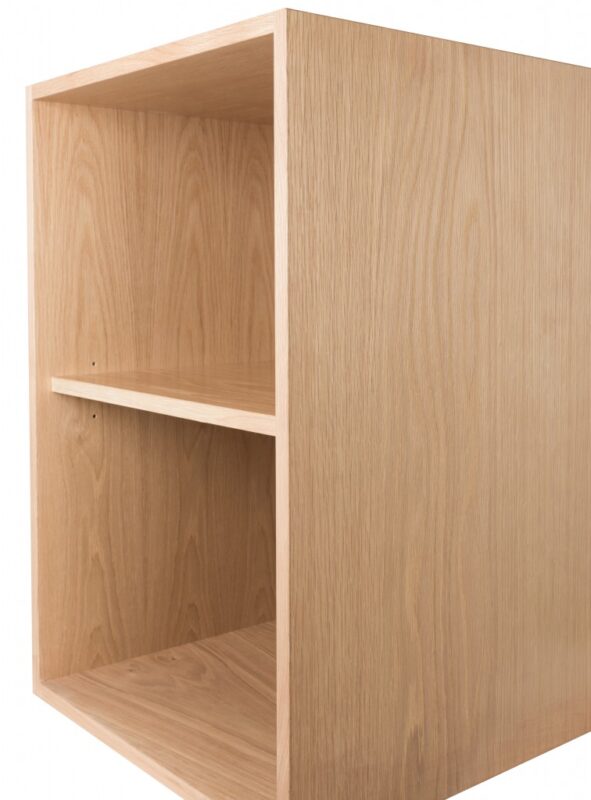
While the doors get all the attention, the cabinet box determines structural integrity.
| Material | Characteristics | Cost Impact |
| Particle Board | Wood chips bonded with resin. Prone to swelling if wet; holds screws poorly over time. | Low |
| MDF (Medium Density Fiberboard) | Denser than particle board. Smooth, but heavy. Vulnerable to water damage if not sealed well. | Medium |
| Plywood | Thin layers of wood veneer glued in alternating grains. Highly resistant to warping and moisture; holds screws tightly. | High |
Pro Tip: For a long-lasting kitchen, always upgrade to Plywood construction, especially for the sink base and base cabinets, which bear the weight of stone countertops.
3. Wood Species & Door Materials
The material you choose for your cabinet doors sets the tone for the entire room and the budget.
Solid Wood
- Oak & Hickory: Durable, distinct grain patterns. Generally the most affordable solid woods.
- Maple: Hard, smooth grain, paints beautifully. Mid-range pricing.
- Cherry: Rich, warm, darkens with age. Premium pricing.
- Walnut: Luxurious, sophisticated grain. One of the most expensive domestic woods.
Engineered & Alternative Materials
- Laminate/Melamine: Fused to a particle board core. Extremely durable and cheap, but can look “plastic” if low quality.
- Thermofoil: Vinyl film heat-wrapped around MDF. Inexpensive but difficult to repair if it peels or melts near heat.
- Acrylic: High-gloss, glass-like finish. Modern aesthetic. Costs more than laminate but less than premium solid wood.
- Wood Veneer: Thin slices of real wood glued to an engineered core. Provides the look of solid wood (like Walnut or Rift White Oak) with better stability and a slightly lower cost.
See More: Top 99+ Most Beautiful and Modern Kitchen Cabinet Designs
4. Door Styles (Design Complexity)
The amount of labor required to manufacture the door profile directly affects the price.
- Slab (Flat Panel): Minimalist. Often the most affordable (depending on material) because there is no intricate routing or joinery.
- Shaker: The universal standard. A simple frame-and-panel design. Mid-range pricing and timeless appeal.
- Raised Panel: The center panel is raised and contoured. Requires significant machining and sanding time. Traditional and expensive.
- Inset Cabinetry: The most expensive option. The door sits flush inside the face frame rather than overlaying it. This requires extreme precision during installation and manufacturing, often adding 15-20% to the cost.
5. Finishes: Paint vs. Stain vs. Glaze
- Stain: Soaks into the wood. Generally cheaper because it requires fewer coats and is more forgiving of imperfections.
- Paint: Opaque finishes are trending but costly. They require a perfect surface (extensive sanding), multiple coats of primer, and paint. Painted cabinets are typically 10-15% more expensive than stained ones.
- Glazing & Distressing: Hand-applied techniques to add depth or an “antique” look. This is labor-intensive artisan work and commands a premium.
6. Hardware & Mechanics
Never underestimate the hardware; it determines the “feel” of luxury.
- Standard Runners: Noisy, friction-based, partial extension. Cheap.
- Soft-Close: Hydraulic mechanisms that dampen the closing force. Now a standard expectation in quality kitchens.
- Full-Extension: Allows the drawer to pull out completely, granting access to the back.
- Brand Matter: Hardware from reputable European brands like Blum, Hettich, or Hafele costs significantly more than generic Chinese knock-offs but offers lifetime warranties and superior motion.
7. Interior Accessories & Custom Storage
A cabinet is just a box until you add functionality. Every “cool” feature adds to the bottom line.
- Standard: Fixed shelves (Cheapest).
- Upgrades: Pull-out trash recycling centers, Magic Corners (for blind corners), spice pull-outs, tray dividers, and roll-out trays (ROTS). These internal mechanisms can add thousands to a project.
View Full Kitchen Cabinet Collection
8. Installation & Geographic Location
- Labor: Skilled finish carpentry is expensive. Installing cabinets requires laser leveling, scribing to uneven walls, and complex crown molding cuts. Installation typically costs 15-20% of the cabinet materials.
- Location: Labor rates in major metropolitan areas (like Toronto, New York, or Vancouver) are significantly higher than in rural areas.
Are RTA (Ready-To-Assemble) cabinets always lower quality?
No. While RTA cabinets are cheaper (saving you 20-30% on assembly labor and shipping), the quality varies. High-end RTA cabinets now feature plywood boxes, solid wood doors, and soft-close Blum hardware. If you are handy or hire a contractor, buying high-spec RTA cabinets is the best “value hack” in the industry.
Why are Painted cabinets more expensive than Stained ones?
It comes down to labor and materials. A high-quality paint job requires the wood to be free of knots and texture. It involves multiple rounds of sanding, priming, painting, and curing. Additionally, manufacturers often charge a premium for paint because they must warranty against hairline cracks that inevitably appear at joints due to humidity changes—a problem stained wood hides better.
How can I get a “Custom Look” on a budget?
Use “Semi-Custom” or stock cabinets but invest heavily in the trim and finishing details.
- Install Crown Molding to the ceiling.
- Use Light Rails under the upper cabinets.
- Upgrade to designer Handles and Knobs.
- Use finished end panels (doors) on the exposed sides of cabinets rather than flat skins.
These details make a $10,000 kitchen look like a $20,000 kitchen.
Is MDF a bad material for cabinets?
Not necessarily. For painted cabinet doors, MDF is actually superior to solid wood. Because MDF is an engineered material, it does not expand and contract with temperature changes. This means the paint won’t crack at the joints (which happens with solid wood). However, MDF should never be used for the sink base cabinet or to hold heavy countertops without reinforcement.
What is the average cost for a 10×10 kitchen?
While prices vary wildly:
- Stock/RTA: $3,000 – $7,000
- Semi-Custom: $12,000 – $25,000
- Custom: $30,000+
Keep in mind this is for the cabinets only, excluding countertops and installation.
Framed vs. Frameless (European Style) – Which costs more?
Historically, Frameless (Full Access) cabinets were slightly more expensive because the box construction needs to be thicker (3/4″) to maintain stability without a face frame. However, today the prices are comparable. Frameless is preferred for modern looks and provides slightly more storage space, while Framed is preferred for traditional American aesthetics.
See More White Slim Shaker Kitchens
Does taking cabinets to the ceiling (Full Height) cost a lot more?
Yes. Standard upper cabinets are 30 or 36 inches tall. To reach an 8 or 9-foot ceiling, you need 42-inch cabinets or “stacked” cabinets (a second row of small cabinets on top). This requires more material and significantly more labor for installation and molding, often increasing the cabinetry cost by 20-25%.
Where should I compromise if my budget is tight?
Compromise on the Door Style and Interior Accessories, but do not compromise on the Hardware or Box Construction.
- Do: Choose a simple door style and standard shelving.
- Don’t: Buy particle board boxes with cheap drawer glides. You can always add fancy organizers later, but you can’t easily replace a sagging cabinet box or a broken drawer runner.
Conclusion: Strategic Budgeting for Your Renovation
Understanding what factors affect the cost of kitchen cabinets allows you to manipulate the quote to fit your wallet.
If the initial quote is too high, don’t just walk away. Ask your designer to:
- Switch from a glazed/custom paint finish to a standard color.
- Change the door style from Raised Panel to Shaker.
- Remove the “nice-to-have” internal organizers (like spice pull-outs) which can be added later via aftermarket solutions.
A successful kitchen renovation isn’t about buying the most expensive options; it’s about allocating your budget where it matters most: Durability and Functionality.
You can contact Kasa Kitchens for advice and detailed pricing
