


Blog
Solid Wood vs. Plywood: Which Is Better for Your Kitchen Cabinets?
Feb
When planning a kitchen renovation, one of the most important decisions homeowners face is choosing the right cabinet material. Among all options available today, solid wood and plywood are consistently the top two choices for kitchen cabinets. But which one is actually better?
This comprehensive guide will help you understand the differences between solid wood and plywood cabinets, their durability, cost, performance in humid climates, and which option delivers the best long-term value for your kitchen.
1. What Are Solid Wood Kitchen Cabinets?


Solid wood kitchen cabinets are cabinetry components crafted entirely from natural hardwood lumber such as oak, maple, cherry, or walnut. Unlike engineered materials (like plywood or MDF), solid wood is milled directly from timber, cut into boards, and shaped into cabinet doors, drawer fronts, face frames, and occasionally cabinet boxes.
Because each board comes from a real tree, no two pieces are exactly alike. The natural grain, knots, mineral streaks, and tonal variations create a distinctive character that cannot be perfectly replicated by synthetic materials. This uniqueness is one of the primary reasons homeowners associate solid wood cabinets with luxury and craftsmanship.
How Solid Wood Cabinets Are Constructed
Solid wood cabinetry typically involves:
-
Stile-and-rail door construction (frame with center panel)
-
Mortise-and-tenon or dowel joinery for strength
-
Glued and clamped hardwood panels
-
Optional raised, recessed, or shaker-style profiles
-
Sanded and stained or painted finishing process
In many premium kitchens, solid wood is primarily used for cabinet doors, drawer fronts, and face frames, while the cabinet box may be constructed from plywood for enhanced stability.
Key Characteristics of Solid Wood Cabinets
• 100% Natural Material
Made entirely from hardwood species without engineered core layers.
• Distinctive Wood Grain Patterns
Each cabinet has unique visual depth and organic beauty.
• High-End, Timeless Appearance
Solid wood delivers a warm, authentic look that elevates kitchen design.
• Refinishable Surface
Unlike laminate or thermofoil, solid wood can be sanded, stained, or repainted multiple times over decades.
• Strong Structural Integrity
Hardwoods like maple and oak are dense and durable, capable of withstanding long-term use.
• Long Lifespan
With proper care, solid wood cabinets can last 20–30+ years or more.
Popular Hardwood Species for Kitchen Cabinets
Different wood species offer different aesthetics and performance:
-
Oak – Strong, prominent grain, traditional appeal
-
Maple – Smooth grain, ideal for painted finishes
-
Cherry – Rich color that deepens over time
-
Walnut – Dark, luxurious tone with elegant grain
Each species varies in hardness, grain pattern, and price point, allowing homeowners to choose based on both budget and design preference.
Advantages of Solid Wood in Premium Cabinetry
-
Natural Beauty & Warmth
Solid wood adds depth and authenticity that engineered materials cannot fully duplicate. -
Customization Flexibility
It can be carved, routed, or detailed into intricate door profiles. -
Increased Home Value
Solid wood cabinetry is often seen as a premium upgrade in real estate markets. -
Repair & Restoration Potential
Minor dents or scratches can often be repaired without replacing the entire door.
Important Considerations
While solid wood is highly durable, it is still a natural material that responds to environmental conditions:
-
It may expand and contract with humidity changes.
-
Requires proper sealing and finishing.
-
Generally more expensive than engineered alternatives.
-
Heavier than plywood or MDF.
For this reason, many cabinet professionals recommend using solid wood where aesthetics matter most (doors and visible elements) and pairing it with stable engineered materials for internal structures.
Who Should Choose Solid Wood Cabinets?
Solid wood kitchen cabinets are ideal for homeowners who:
-
Want a classic or luxury kitchen aesthetic
-
Appreciate natural materials and craftsmanship
-
Plan to stay in their home long-term
-
Value refinishability and long-term durability
If your priority is timeless design, premium appearance, and authentic wood character, solid wood remains one of the most prestigious choices in kitchen cabinetry.
See More: What Are the Best Kitchen Cabinet Materials for Basement Kitchens in Canada?
2. What Are Plywood Kitchen Cabinets?
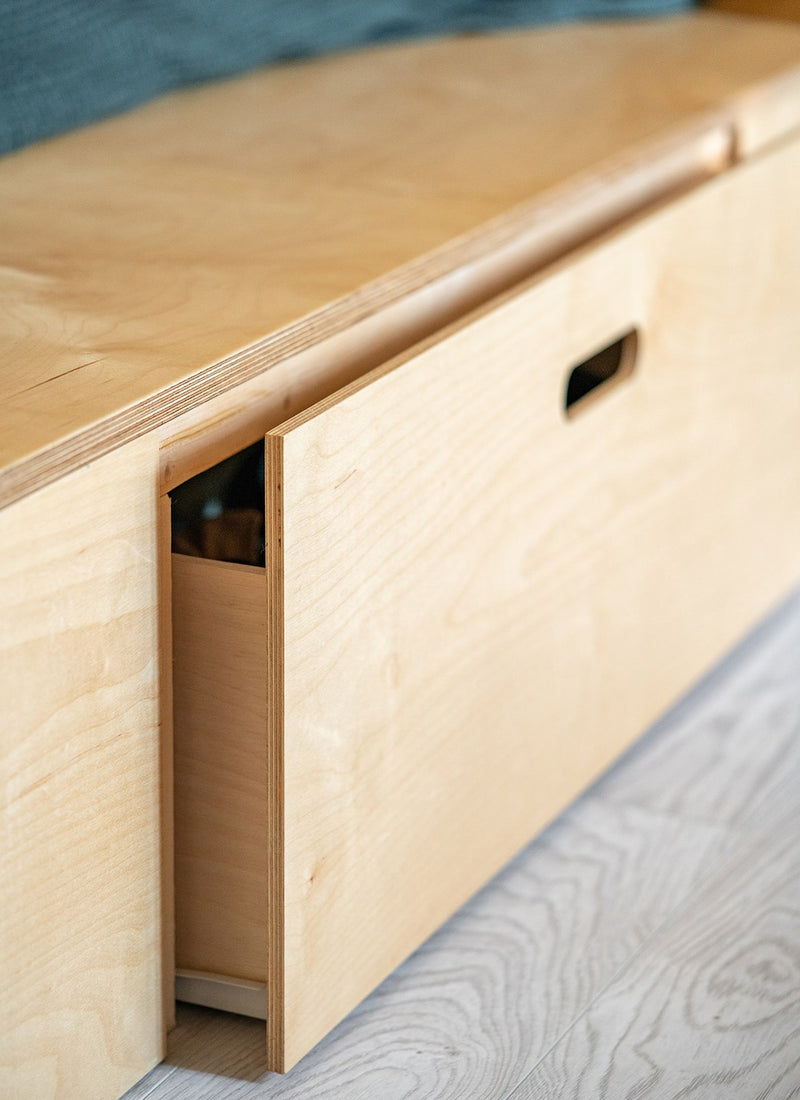
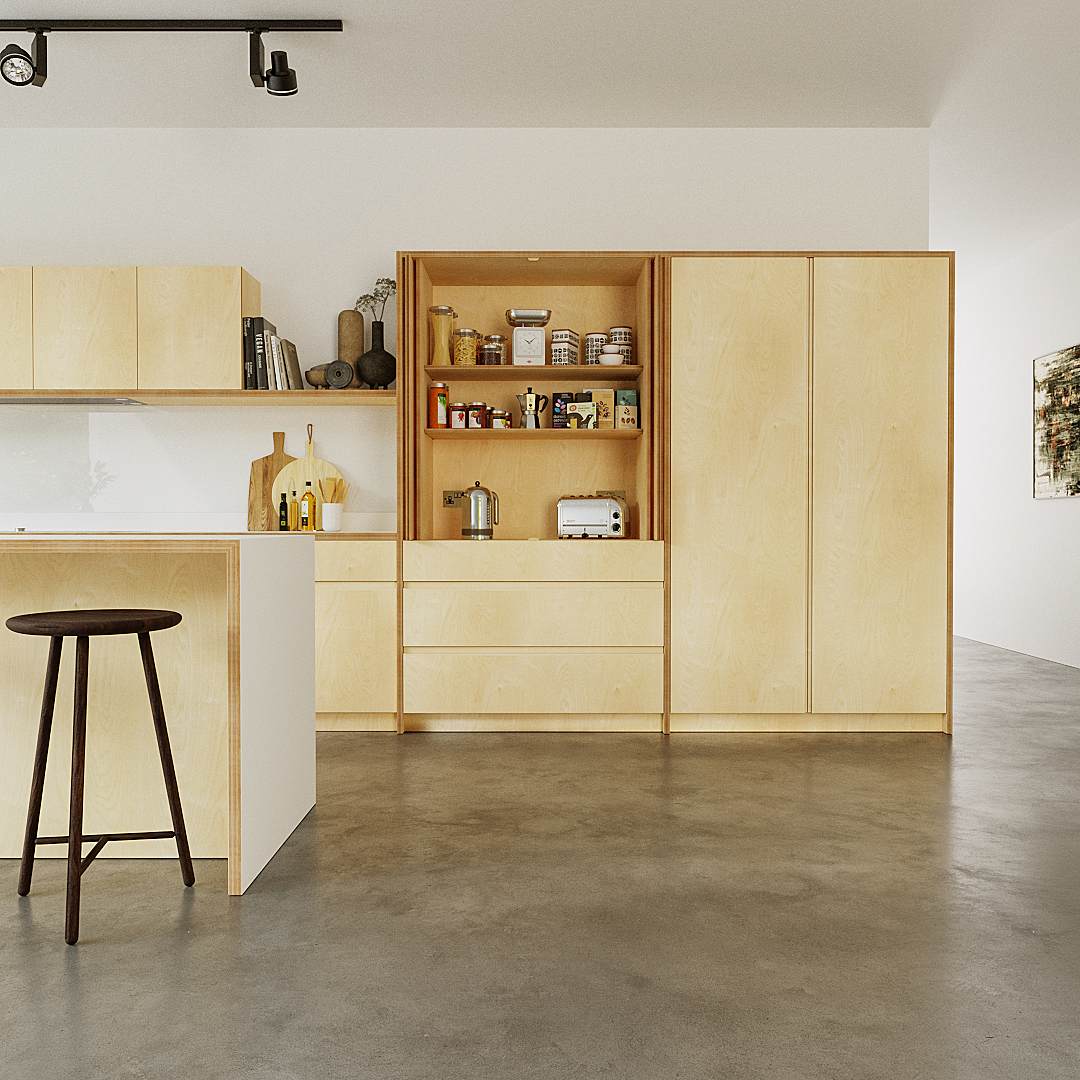
Plywood kitchen cabinets are cabinetry structures manufactured from engineered wood panels made by bonding multiple thin layers of natural wood veneer together using high-strength adhesives under heat and pressure. Each veneer layer is arranged with its grain direction alternating (cross-laminated), which significantly enhances the panel’s strength, rigidity, and resistance to environmental changes.
Unlike particle board or MDF, plywood retains the structural benefits of real wood while minimizing its natural weaknesses, such as excessive expansion, cracking, or warping. Because of this, high-quality plywood — especially 3/4” (18–19mm) thickness — has become the industry standard material for cabinet boxes (carcasses) in modern kitchen construction.
The Engineering Behind Plywood: Why It Is Structurally Superior
The defining feature of plywood is its cross-grain layering technology. By stacking wood veneers in alternating directions, internal stress is distributed evenly across the panel. This engineering approach provides several structural advantages:
-
Increased load-bearing capacity
-
Reduced risk of panel deformation
-
Higher screw and hardware holding strength
-
Greater resistance to bending and sagging
In kitchen cabinetry, where cabinets must support heavy countertops (granite, quartz, marble) and daily usage, this internal stability is critical for long-term performance.
Core Structural Role in Kitchen Cabinet Construction
In professional cabinetry, plywood is primarily used for:
-
Cabinet boxes (carcass)
-
Side panels
-
Shelves
-
Bottom and back panels
-
Drawer box construction (in premium builds)
These are the structural components that determine the cabinet’s lifespan more than the exterior finish. Even luxury kitchens often rely on plywood internally because it performs better under stress than solid wood panels of similar thickness.
Key Characteristics of Plywood Cabinets (In Depth)
• Multi-Layer Engineered Composition
Plywood typically consists of 5–13 layers depending on grade and thickness. More layers generally indicate better strength, fewer internal voids, and higher durability.
• High Strength-to-Weight Ratio
Plywood is lighter than solid hardwood but maintains excellent structural integrity, making installation easier without compromising durability.
• Exceptional Dimensional Stability
Due to cross-lamination, plywood expands and contracts far less than solid wood when exposed to temperature and humidity fluctuations — a major advantage in kitchens.
• Moisture and Humidity Resistance
While not fully waterproof, quality plywood resists moisture significantly better than particle board. Marine-grade or BWP (Boiling Water Proof) plywood offers even higher resistance in wet zones like sink cabinets.
• Strong Fastener Holding Capacity
Plywood grips screws, hinges, and drawer slides more securely, reducing long-term loosening or hardware failure.
• Cost-Efficient Durability
It delivers near-premium durability at a lower cost than full solid wood construction, making it one of the best value materials in cabinetry.
Types of Plywood Used in Kitchen Cabinets
Not all plywood is equal. The performance of cabinets depends heavily on the plywood grade and core quality.
1. Furniture-Grade Plywood
-
Smooth surface
-
Minimal internal voids
-
Ideal for high-end cabinetry
2. Hardwood Plywood (Birch, Maple, Oak Veneer)
-
Strong core layers
-
Excellent screw holding
-
Premium structural stability
3. Marine-Grade Plywood
-
Waterproof adhesive bonding
-
Superior resistance to humidity and water exposure
-
Recommended for sink base cabinets and humid climates
Choosing low-grade plywood with voids or thin layers can significantly reduce cabinet lifespan, which is why reputable manufacturers prioritize high-density, furniture-grade panels.
Why Plywood Performs Better Than Solid Wood in Kitchen Environments
Kitchens are high-stress environments with constant exposure to:
-
Steam and heat from cooking
-
Water splashes and plumbing humidity
-
Daily opening and closing of doors and drawers
-
Heavy storage loads
Solid wood, being a natural material, expands and contracts significantly with moisture changes. Over time, this movement can lead to:
-
Warping panels
-
Joint separation
-
Door misalignment
Plywood, by contrast, remains more dimensionally stable, which helps maintain cabinet alignment, structural integrity, and smooth operation over many years of use.
The Importance of 3/4” Thickness in Plywood Cabinets
Thickness is a key indicator of cabinet quality. Premium cabinet makers typically use:
-
3/4” plywood for cabinet boxes
-
3/4” shelves to prevent sagging
-
Full plywood backs for structural reinforcement
Thicker plywood panels:
-
Support heavier loads without bending
-
Increase cabinet lifespan
-
Improve overall rigidity
-
Provide better anchoring to walls during installation
Thin panels (1/2” or less) are often found in budget cabinets and may compromise durability over time.
See More: Are ¾” Plywood Cabinets Really Worth the Upgrade?
3. Solid Wood vs. Plywood: Key Differences Explained (In-Depth Analysis)
Choosing between solid wood and plywood for kitchen cabinets is not simply a matter of preference — it involves understanding structural behavior, environmental performance, aesthetics, and long-term value. Below is a comprehensive breakdown of the most critical differences based on real-world cabinet construction standards and long-term usage in modern kitchens.
3.1 Durability & Strength
Solid Wood: Natural Strength with Organic Movement
Solid wood is inherently strong due to its dense fiber structure, especially when using hardwood species like maple, oak, or walnut. High-quality solid wood cabinet doors and frames can withstand decades of daily use, impact, and refinishing.
However, solid wood is a hygroscopic material, meaning it naturally absorbs and releases moisture from the air. This causes:
- Expansion in humid conditions
- Shrinkage in dry environments
- Potential joint stress over time
While this movement is normal, it requires proper sealing, finishing, and professional construction techniques (such as floating panels) to prevent warping or cracking.
Plywood: Engineered Strength and Structural Reliability
Plywood is specifically engineered to overcome the natural weaknesses of solid wood panels. Its cross-laminated layers distribute stress evenly, making it:
- Highly resistant to bending and sagging
- Less likely to split under screw pressure
- Structurally stable under heavy loads (countertops, appliances, storage)
Because cabinet boxes carry the majority of structural weight, plywood often outperforms solid wood in functional durability, especially in large cabinet systems.
Expert Verdict:
Plywood offers superior structural stability for cabinet boxes, while solid wood excels in surface durability and refinishing capability.
3.2 Moisture Resistance (Critical for Kitchen Environments)
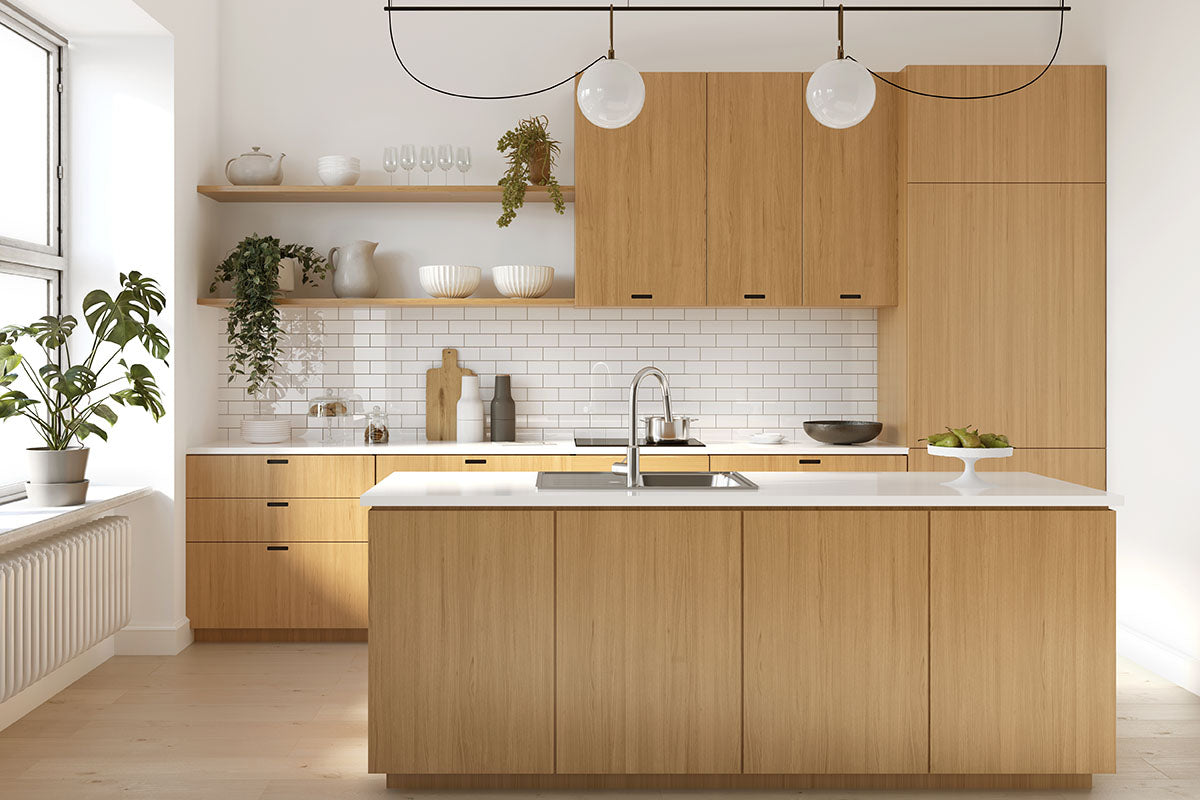
Kitchens are among the most demanding interior spaces due to constant exposure to:
- Steam from cooking
- Water splashes near sinks and dishwashers
- Temperature fluctuations
- High humidity levels
Solid Wood and Moisture Behavior
Because solid wood is a natural material, it reacts noticeably to humidity changes. Over time, repeated moisture exposure can cause:
- Swelling of panels
- Hairline cracks
- Door misalignment
- Finish degradation if not properly sealed
Even premium hardwood can deform if installed in poorly ventilated or high-humidity kitchens.
Plywood and Moisture Performance
Plywood’s layered construction significantly limits expansion and contraction. Additionally:
- Exterior-grade and marine plywood use water-resistant adhesives
- Fewer dimensional changes under humidity shifts
- Better performance in sink base cabinets and coastal climates
Professional Insight:
In tropical, coastal, or high-humidity regions, plywood cabinet boxes consistently outperform solid wood in maintaining structural alignment and long-term stability.
See More: Top 99+ Most Beautiful and Modern Kitchen Cabinet Designs
3.3 Appearance & Aesthetic Value
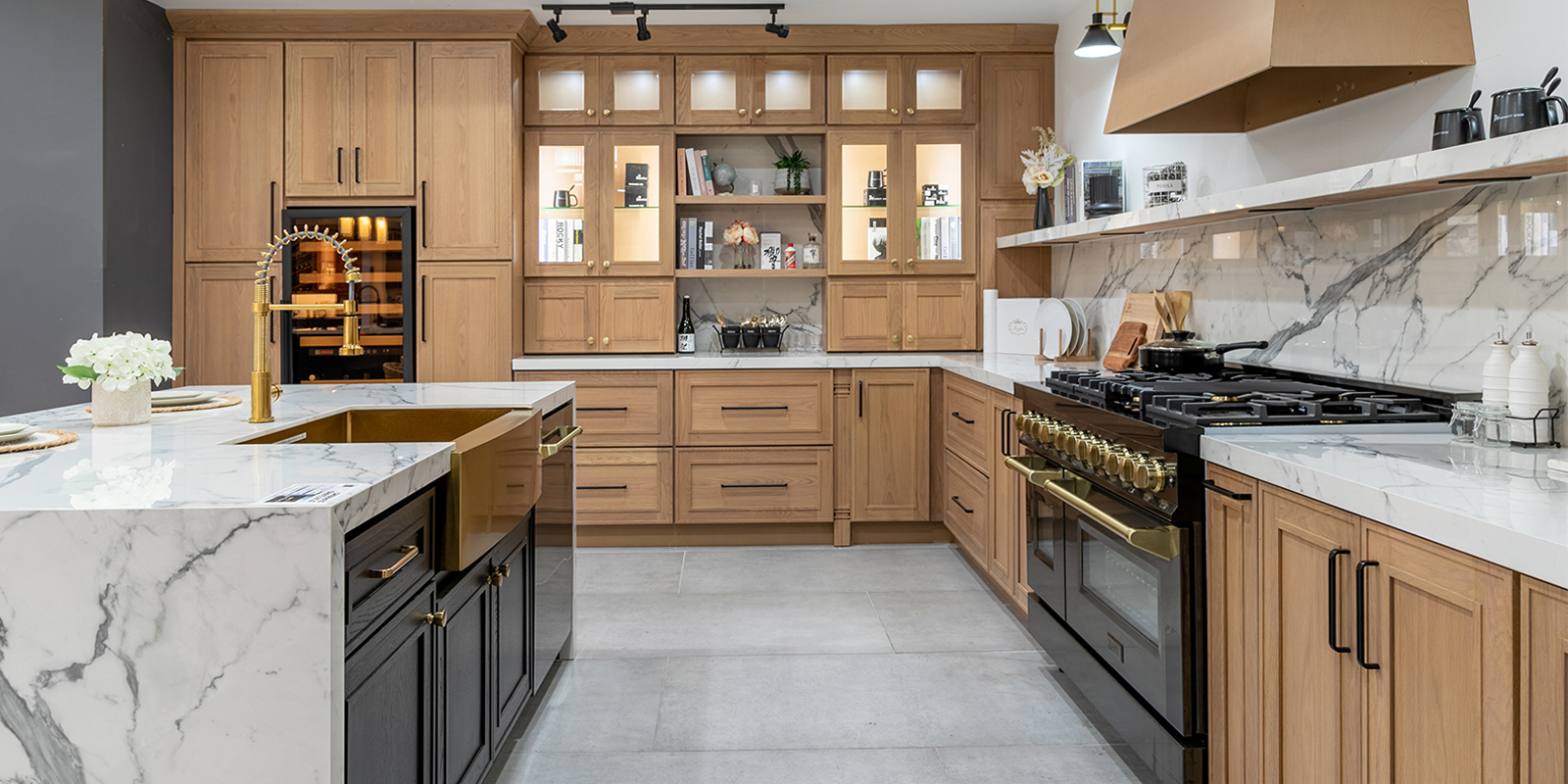
Solid Wood: Premium and Timeless Beauty
Solid wood is widely regarded as the gold standard for luxury cabinetry because of its:
- Authentic grain patterns
- Natural color depth
- Warm, organic texture
- Ability to age gracefully over time
Each cabinet door is unique, adding character and exclusivity to the kitchen design. This makes solid wood especially desirable for classic, transitional, and high-end interiors.
Plywood: Versatile Modern Finishes
Plywood is rarely left exposed in cabinetry. Instead, it is typically finished with:
- Natural wood veneer (oak, walnut, maple)
- Laminate surfaces
- Painted coatings
- Acrylic or high-gloss finishes
- Thermofoil or lacquer systems
This versatility allows plywood cabinets to achieve both modern and luxury aesthetics, even though the core material is engineered.
Design Verdict:
If your priority is natural elegance and authentic wood texture, solid wood doors are unmatched. If you prefer sleek, contemporary finishes, plywood-based cabinetry offers greater flexibility.
3.4 Cost Comparison & Budget Efficiency
| Material | Initial Cost | Installation Cost | Long-Term Value |
|---|---|---|---|
| Solid Wood Cabinets | High $$$ | Higher (heavier & labor-intensive) | Premium investment |
| Plywood Cabinets | Medium $$ | Moderate | Excellent cost-to-durability ratio |
Solid wood cabinetry typically costs 20–50% more than plywood due to:
- Higher raw material cost
- Longer manufacturing time
- Skilled craftsmanship requirements
- Finishing and treatment processes
Plywood, while still a high-quality material, is more resource-efficient and easier to fabricate, making it a cost-effective solution without sacrificing structural integrity.
Cost Efficiency Insight:
For large kitchen projects, using plywood cabinet boxes with solid wood doors can significantly reduce total costs while maintaining a high-end appearance.
See More: How to Choose the Right Kitchen Cabinets for Canadian Kitchens
3.5 Lifespan & Long-Term Value
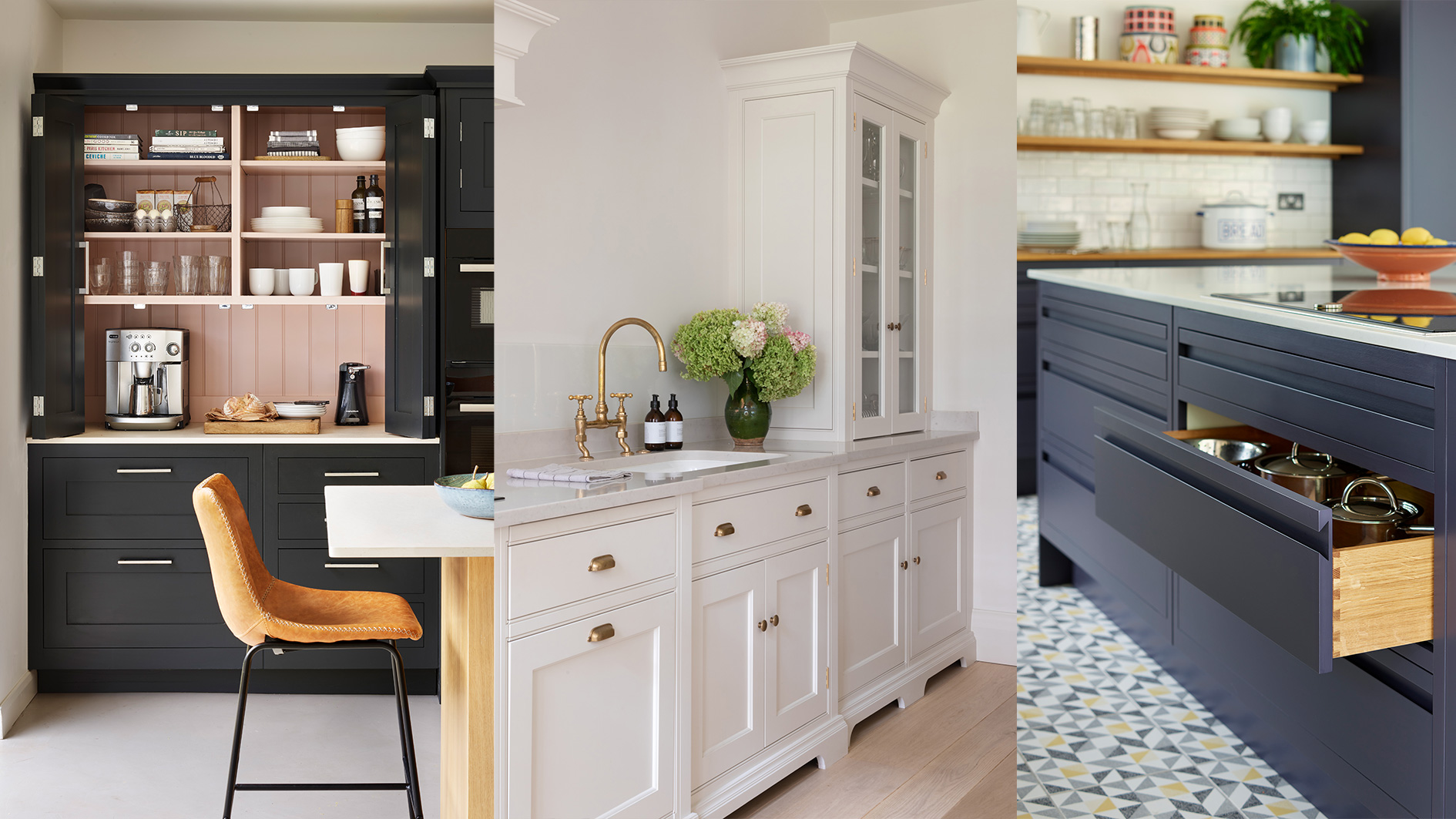
Both solid wood and plywood cabinets can last for decades when constructed with quality hardware, proper joinery, and professional installation.
Solid Wood Lifespan
- Average lifespan: 20–30+ years
- Can be sanded and refinished multiple times
- Maintains aesthetic value over decades
- Higher resale appeal in luxury homes
Plywood Lifespan
- Average lifespan: 15–25+ years
- Excellent structural consistency over time
- Less maintenance required in humid environments
- Lower risk of structural deformation
For comparison:
- Particle board cabinets: 5–10 years (prone to moisture damage)
- Low-grade MDF cabinets: moderate lifespan but weaker screw holding
Long-Term ROI Perspective:
Professionally built 3/4” plywood cabinet boxes combined with soft-close hinges, premium drawer slides, and solid wood fronts often deliver the best return on investment. They provide structural durability, aesthetic flexibility, and reduced maintenance costs over the cabinet’s lifecycle.
View Full Kitchen Cabinet Collection
4. Which Material Is Better for Kitchen Cabinet Boxes?

Most professional cabinet manufacturers recommend:
Plywood for cabinet boxes + Solid wood for doors and drawer fronts
Why?
- Plywood resists warping
- Strong screw holding capacity
- Better performance under heavy daily use
- More cost-efficient than full solid wood construction
Using solid wood for the entire cabinet box is often unnecessary and significantly more expensive.
5. Climate Consideration: Solid Wood vs. Plywood in Humid Environments
In tropical or high-humidity areas, this decision becomes even more critical.
Solid Wood Risks:
- Expansion and contraction
- Potential cracking over time
- Higher maintenance required
Plywood Advantages:
- Dimensional stability
- Less movement in temperature changes
- Lower risk of structural deformation
This is why many modern luxury kitchens use plywood carcasses even in high-end projects.
6. Pros and Cons Summary
Solid Wood Cabinets
Pros:
- Premium luxury look
- Long lifespan
- Refinishable surface
- High resale value
Cons:
- Expensive
- Sensitive to humidity
- Heavier material
- Requires more maintenance
Plywood Cabinets
Pros:
- Strong and stable
- Moisture-resistant
- Cost-effective
- Ideal for modern kitchens
Cons:
- Not as luxurious in raw appearance
- Quality varies by plywood grade
7. Final Verdict: Which Is Better for Your Kitchen Cabinets?
There is no one-size-fits-all answer — the best choice depends on your budget, climate, and design goals.
- Choose solid wood if you want a luxury, natural, and timeless kitchen aesthetic.
- Choose plywood if you prioritize durability, moisture resistance, and long-term value.
- Choose a hybrid solution (recommended):
Plywood cabinet boxes + Solid wood doors = Best performance + best aesthetics.
This combination is widely considered the industry standard for premium yet practical kitchen cabinetry in modern homes.
Are plywood cabinets strong enough for a heavy-use kitchen?
Yes, plywood cabinets are generally strong enough for heavy-use kitchens. Their cross-layered construction provides excellent load-bearing capacity and resistance to sagging under weights like dishes, pots, and appliances. High-quality plywood, such as 3/4-inch thick panels, can support heavy loads without deforming and lasts 15-30 years or more with proper care.
Key Strengths
-
Superior tensile strength from alternating wood layers prevents warping and handles countertop loads effectively.
-
Better screw-holding than particleboard or MDF, ensuring hinges and hardware stay secure over thousands of openings.
-
Moisture-resistant grades (e.g., BWP or marine-grade) suit humid kitchens, outperforming MDF in damp conditions.
Potential Limitations
Plywood can suffer veneer peeling from prolonged water exposure if unsealed, so choose sealed or moisture-resistant types. Very long shelves (>24-30 inches) may need supports to avoid minor sagging under extreme loads, unlike shorter spans.
Material Comparison
| Material | Durability (Years) | Strength for Heavy Use | Moisture Resistance | Cost |
|---|---|---|---|---|
| Plywood | 15-30+ | High (no sagging) | Good (sealed grades) | Medium-High |
| Solid Wood | 50+ | Highest | Variable | High |
| MDF/Particleboard | 5-15 | Low (sags easily) | Poor | Low |
Do solid wood cabinets last longer than plywood?
Solid wood cabinets typically outlast plywood ones in lifespan, often enduring 50+ years with proper maintenance compared to plywood’s 20-30 years. However, plywood’s engineered stability often makes it more reliable in humid kitchens by resisting warping better than solid wood.
Lifespan Factors
Solid wood excels in heirloom durability and repairability, as it can be sanded, refinished, or repaired over generations. Plywood holds up well for heavy loads without sagging but may degrade faster if lower-grade or exposed to excess moisture.
Key Trade-offs
| Aspect | Solid Wood | Plywood |
|---|---|---|
| Lifespan | 50+ years | 20-30 years |
| Warping Risk | Higher (humidity changes) | Low (cross-layers) |
| Maintenance | Regular oiling needed | Minimal |
| Cost | High | Medium |
Is plywood cheaper than solid wood cabinets?
Yes, plywood cabinets are consistently cheaper than solid wood ones, often costing 30-50% less due to material efficiency and simpler manufacturing. For example, plywood cabinets average around $300 per linear foot, while solid wood ranges from $300-$500 or more for premium species like cherry or oak.
Price Breakdown
Plywood offers strong value for budget renovations, with full sets for entry-level kitchens at $5,000-$15,000 versus $15,000-$30,000+ for solid wood. Solid wood’s premium stems from scarce lumber, craftsmanship, and heavier weight increasing labor costs.
Cost Comparison Table
| Cabinet Type | Cost per Linear Foot | Full Kitchen Example | Best For |
|---|---|---|---|
| Plywood | $200-$300 | $5k-$15k | Budget, modern |
| Solid Wood | $300-$500+ | $15k-$30k+ | Luxury, heirloom |
| Hybrid (Doors Solid, Boxes Plywood) | $300-$400 | Mid-range | Balance |
Can plywood cabinets look as premium as solid wood?
Yes, plywood cabinets can achieve a premium look comparable to solid wood through high-quality veneers, finishes, and craftsmanship. Thin layers of real wood veneer on plywood mimic authentic grain and texture, allowing stains or paints to yield a high-end appearance at lower cost.
Aesthetic Techniques
Premium plywood uses furniture-grade veneer-core panels with smooth A-grade surfaces for doors and frames, enabling glossy, painted, or stained finishes that rival solid wood’s depth. Modern designs leverage plywood’s uniformity for sleek, contemporary styles where solid wood’s natural variations might seem inconsistent.
Visual Comparison
| Feature | Plywood with Veneer | Solid Wood |
|---|---|---|
| Grain Appearance | Realistic imitation | Natural, unique |
| Finish Options | Paint, stain, high-gloss | Stain, oil highlights |
| Premium Potential | High (custom builds) | Highest (heirloom) |
| Common Pitfall | Visible seams if low-grade | Expansion gaps |
What is the best material combination for modern kitchen cabinets?
Yes, plywood cabinets can look as premium as solid wood. High-quality veneers over plywood cores deliver authentic wood grain and texture, while expert finishing techniques like staining or lacquering create a luxurious sheen indistinguishable from solid wood at close range.
Plywood’s smooth, stable surface accepts paints, stains, and high-gloss finishes beautifully, enabling modern matte or semi-gloss looks that feel upscale in contemporary kitchens. Custom millwork hides seams, and edge banding ensures a seamless appearance matching solid wood’s heft.
Visual Comparison
| Aspect | Plywood (Premium Veneer) | Solid Wood |
|---|---|---|
| Grain Depth | Convincing replication | Natural variation |
| Finish Quality | Glossy/satin perfection | Hand-oiled warmth |
| Sleek Modern Fit | Excellent uniformity | Variable with humidity |
| Upkeep for Looks | Low (sealed) | Regular refinishing |
