


Blog
What Are the Best Kitchen Cabinet Materials for Basement Kitchens in Canada?

Feb
Basement kitchens are becoming increasingly popular across Canada. Homeowners are transforming basements into secondary living spaces, rental suites, in-law units, or entertainment areas with fully functional kitchens. However, designing a basement kitchen comes with unique challenges—especially when it comes to choosing the right kitchen cabinet materials.
Canada’s climate is known for cold winters, fluctuating temperatures, and seasonal humidity. Basements, in particular, are more prone to moisture, condensation, and limited natural light. These conditions can significantly affect the durability, appearance, and lifespan of kitchen cabinets if the wrong materials are used.
This comprehensive guide explores the best kitchen cabinet materials for basement kitchens in Canada, comparing their performance, durability, cost, maintenance needs, and suitability for basement environments. By the end, you’ll have a clear understanding of which materials work best—and why.
Why Choosing the Right Cabinet Material for Basement Kitchens in Canada Matters
Before selecting specific cabinet materials, it is essential to understand the unique environmental challenges that basement kitchens face in Canada. Unlike above-ground kitchens, basement spaces are directly affected by soil conditions, seasonal climate shifts, and limited exposure to natural airflow and sunlight. These factors place greater stress on cabinet materials, making material selection a critical long-term decision rather than a purely aesthetic one.
1. Persistently Higher Humidity Levels
Basements are naturally more humid because they are surrounded by soil, which constantly releases moisture. In Canadian homes, this issue becomes more pronounced due to:
- Cold winters, where heated indoor air meets cooler basement walls, creating condensation
- Spring snowmelt, which increases groundwater levels around foundations
- Limited natural ventilation, especially in finished basements
Over time, excessive humidity can penetrate cabinet materials, leading to:
- Swelling of cabinet panels
- Separation of layers in composite materials
- Mold or mildew growth in enclosed spaces
Cabinet materials that are not specifically designed to resist moisture can deteriorate much faster in basement kitchens than in main-floor kitchens.
2. Seasonal Temperature Fluctuations and Material Stress
Canada experiences some of the most extreme seasonal temperature variations in the world. Basement kitchens are not immune to these changes, especially in older homes or homes with inconsistent insulation.
Temperature shifts can cause cabinet materials to:
- Expand and contract repeatedly
- Lose structural stability over time
- Develop cracks, warping, or surface delamination
Low-quality materials often fail under these conditions, resulting in misaligned doors, sticking drawers, and visible surface damage. In contrast, well-engineered cabinet materials are designed to maintain dimensional stability despite thermal changes, ensuring smooth operation and a longer service life.
See More: Solid Wood vs. Plywood Kitchen Cabinets: Which Is Better for Canadian Kitchens?
3. Increased Risk of Water Exposure and Moisture Intrusion
Even basements with modern waterproofing systems face a higher risk of water exposure compared to other levels of the home. Common causes include:
- Minor foundation leaks
- Plumbing failures
- Improper drainage around the home
- Temporary flooding during heavy rainfall
When cabinets come into contact with moisture, the damage can be severe and irreversible—particularly for untreated wood or low-grade MDF. Once water penetrates cabinet cores, it can cause:
- Permanent swelling
- Loss of structural integrity
- Unpleasant odors and mold growth
Choosing cabinet materials with strong water resistance—and ensuring proper edge sealing and raised installation—can significantly reduce long-term risk and repair costs.
4. Limited Natural Light and Visual Comfort
Most basement kitchens receive little to no direct sunlight. As a result, cabinet materials play a crucial role in shaping how the space feels.
Poor material choices can:
- Make the kitchen feel darker and more confined
- Absorb light rather than reflect it
- Highlight moisture stains or surface imperfections
Well-chosen cabinet finishes—such as light-coloured, matte, or high-gloss surfaces—can:
- Reflect artificial light more effectively
- Create a sense of openness
- Improve the overall comfort and usability of the kitchen
In basement kitchens, visual performance is just as important as physical durability.
View Full Kitchen Cabinet Collection
5. Long-Term Durability and Cost Efficiency
Choosing the wrong cabinet material often leads to:
- Premature wear and damage
- Frequent repairs or replacement
- Higher long-term renovation costs
While moisture-resistant materials may have a higher upfront cost, they typically offer:
- Longer lifespan
- Lower maintenance requirements
- Better resale value for the home
In the Canadian market—where basement apartments and secondary suites are increasingly common—durable cabinet materials can also improve rental appeal and property value.
6. Health, Hygiene, and Indoor Air Quality
Basement environments are more vulnerable to poor air circulation. Cabinet materials that absorb moisture can contribute to:
- Mold growth
- Unpleasant odors
- Compromised indoor air quality
Selecting non-porous, easy-to-clean cabinet surfaces helps maintain a healthier indoor environment, especially in basement kitchens used daily or rented to tenants.
See More White Slim Shaker Kitchens
Top Kitchen Cabinet Materials for Basement Kitchens in Canada
Choosing cabinet materials for a basement kitchen in Canada requires more than following trends or aesthetics. Because basements are exposed to higher humidity, temperature fluctuations, and potential water intrusion, cabinet materials must be carefully selected to ensure long-term durability, functionality, and visual appeal. Below are the most reliable and widely used cabinet materials for basement kitchens across Canada, analyzed in depth.
1. Melamine Cabinets (Moisture-Resistant MDF or Particleboard)
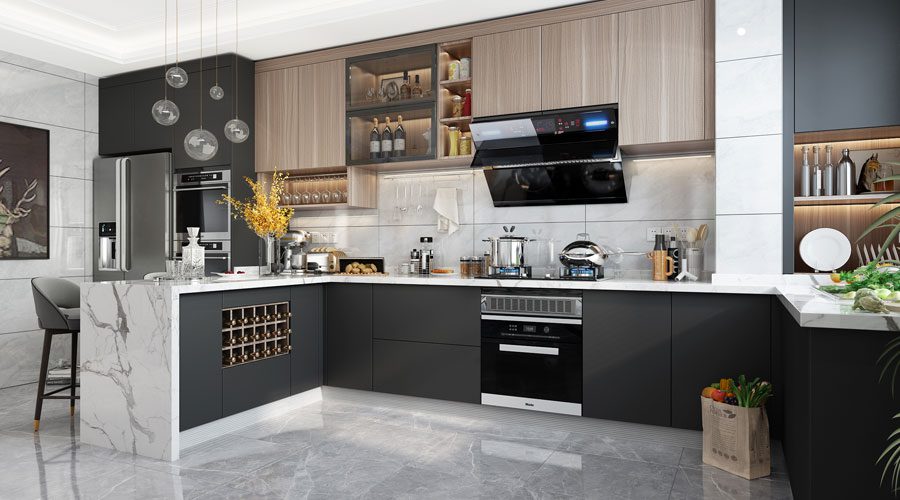

Melamine cabinets are one of the most commonly chosen options for basement kitchens in Canada, largely due to their balance of affordability, moisture resistance, and design versatility.
What Is Melamine?
Melamine is a resin-based decorative surface that is thermally fused onto moisture-resistant MDF or particleboard. This fusion process creates a sealed, non-porous surface that protects the cabinet core from humidity and minor water exposure—conditions frequently found in basement environments.
Why Melamine Works Well in Basements
Melamine’s sealed surface prevents moisture from easily penetrating the cabinet face, making it far more stable than untreated wood-based materials. Modern moisture-resistant MDF cores further enhance its performance in humid spaces.
Advantages
- Good resistance to humidity and light water exposure
- Smooth, non-porous surface that resists stains
- Very easy to clean and maintain
- Cost-effective for large basement kitchen projects
- Available in a wide variety of colours, textures, and realistic wood-grain finishes
Disadvantages
- Less impact-resistant compared to solid wood or metal
- Vulnerable to swelling if water penetrates unsealed or damaged edges
Best For
Homeowners looking for a budget-friendly, low-maintenance, and moisture-resistant cabinet solution that performs well in Canadian basement kitchens.
See More: Top 99+ Most Beautiful and Modern Kitchen Cabinet Designs
2. High-Pressure Laminate (HPL) Cabinets

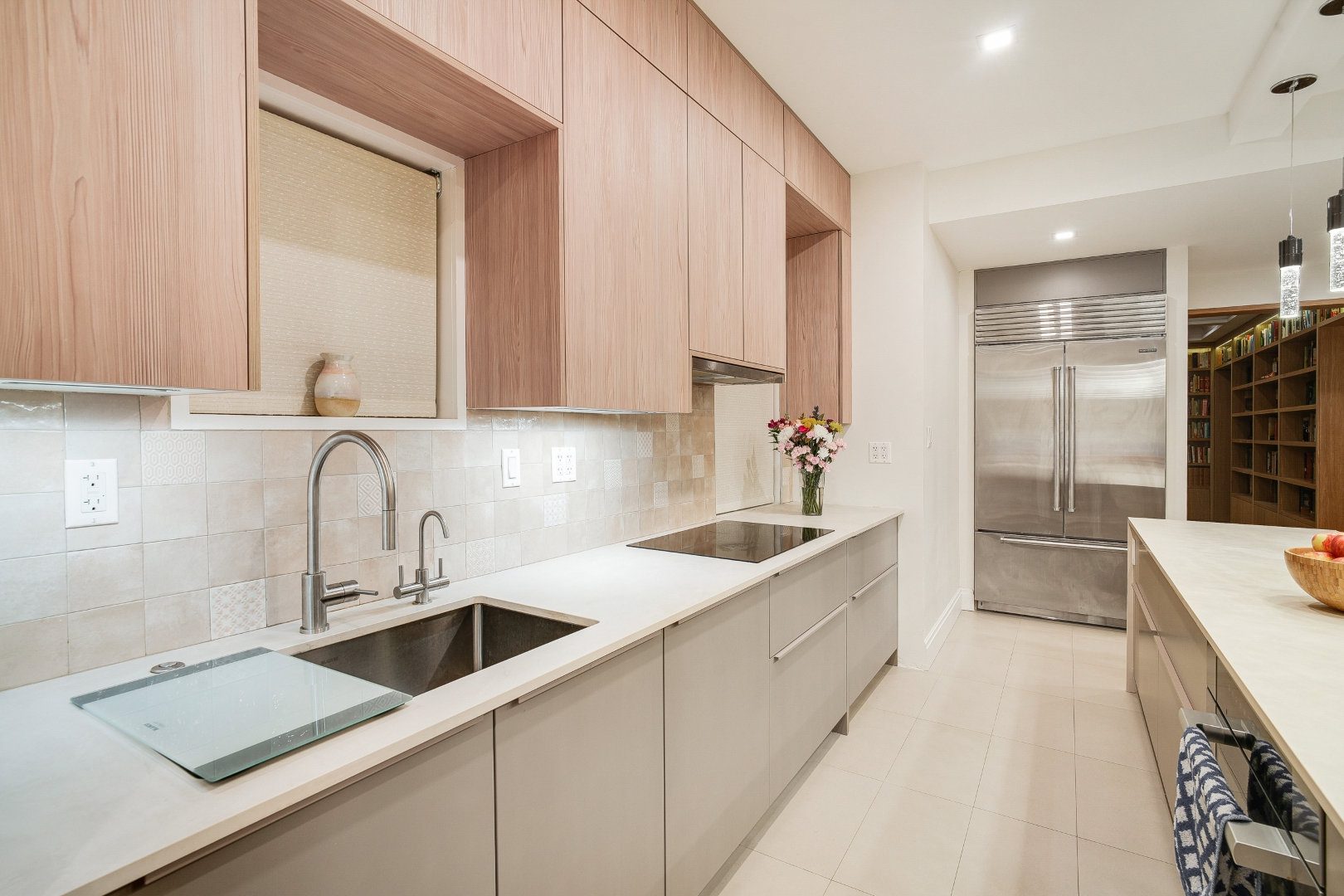
High-pressure laminate (HPL) cabinets are considered an upgraded alternative to standard melamine and are especially popular in high-use basement kitchens and rental units.
What Makes HPL Different?
HPL is manufactured by bonding multiple layers of kraft paper and decorative sheets under extremely high heat and pressure. This process creates a dense, durable surface that is significantly stronger than melamine.
Performance in Basement Environments
HPL’s thickness and density make it highly resistant to moisture, surface wear, and impact—key factors for basement kitchens that may experience frequent use.
Advantages
- Excellent moisture and humidity resistance
- Highly resistant to scratches, dents, and everyday wear
- Wide selection of colours, textures, and patterns
- Hygienic, non-porous surface
- Easy to clean and maintain
Disadvantages
- Higher cost compared to standard melamine
- Difficult to repair if the surface is damaged
Best For
Basement kitchens with heavy daily use, rental properties, or families who want long-term durability without investing in premium materials.
3. Acrylic Kitchen Cabinets
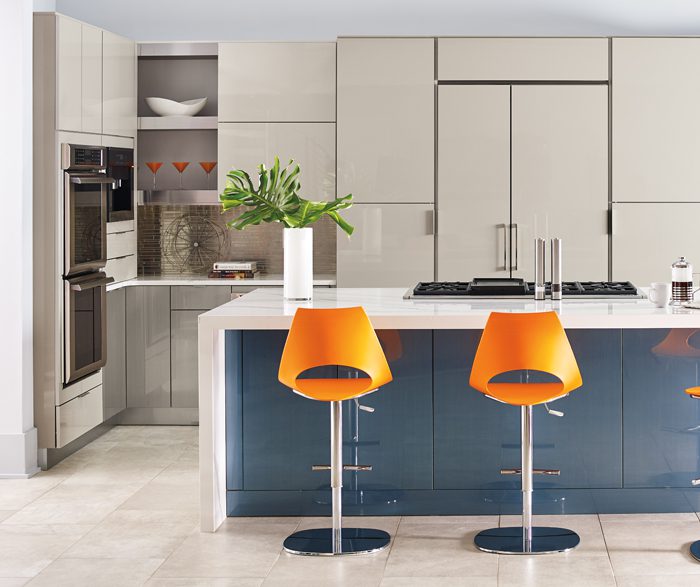
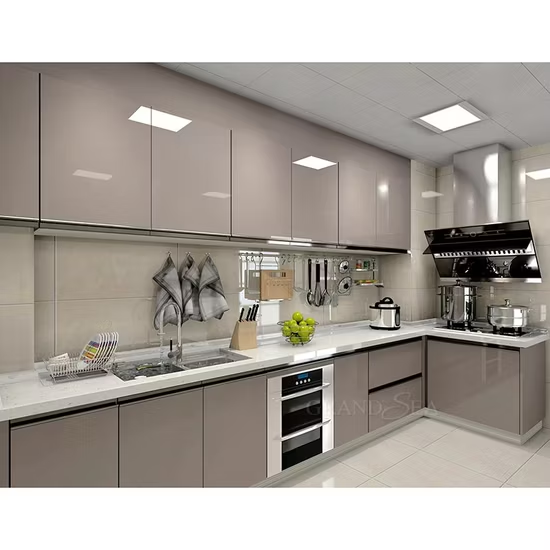
Acrylic cabinets are widely chosen for modern basement kitchens due to their sleek appearance and light-reflective properties.
Key Characteristics
Acrylic cabinets consist of high-gloss acrylic sheets bonded to moisture-resistant MDF cores. The surface has a mirror-like finish that reflects both natural and artificial light.
Why Acrylic Is Popular for Basements
Basement kitchens often lack natural daylight. Acrylic’s reflective surface helps brighten the space, making it feel larger, cleaner, and more modern.
Advantages
- Enhances brightness in low-light basement kitchens
- Smooth, non-porous surface resists stains and moisture
- Easy to wipe clean
- High-end, contemporary appearance
Disadvantages
- Surface can scratch if not handled carefully
- Higher cost than melamine or laminate options
Best For
Modern basement kitchens where visual impact, brightness, and contemporary design are top priorities.
See More Natural Wood Kitchens
4. Engineered Wood Cabinets (Moisture-Treated Hardwood)

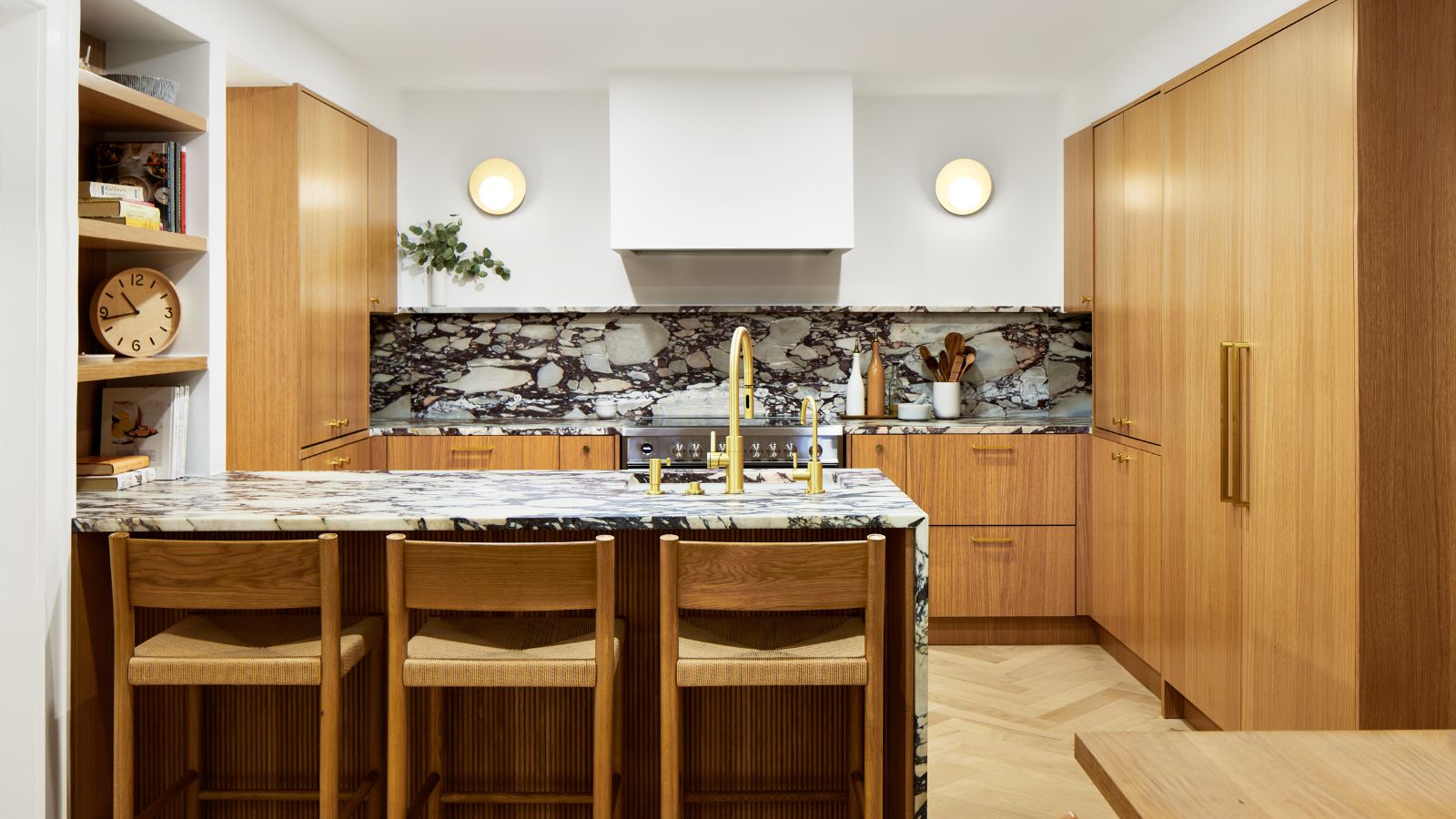

Engineered wood cabinets offer the warmth and authenticity of real wood while providing improved stability for basement environments.
How Engineered Wood Works
Thin layers of natural wood veneer are bonded over engineered cores that are specifically designed to resist warping, cracking, and moisture-related movement.
Why Engineered Wood Is Safer Than Solid Wood
Unlike solid wood, engineered wood is less likely to expand or contract in response to humidity changes, making it a more reliable option for basements.
Advantages
- Authentic wood appearance and texture
- Greater dimensional stability than solid hardwood
- Can be repainted or refinished over time
- Adds warmth and value to the space
Disadvantages
- Higher cost than synthetic materials
- Requires proper sealing and regular maintenance
Best For
Homeowners who want the look of real wood while minimizing the risks associated with basement humidity.
5. UV-Painted MDF Cabinets

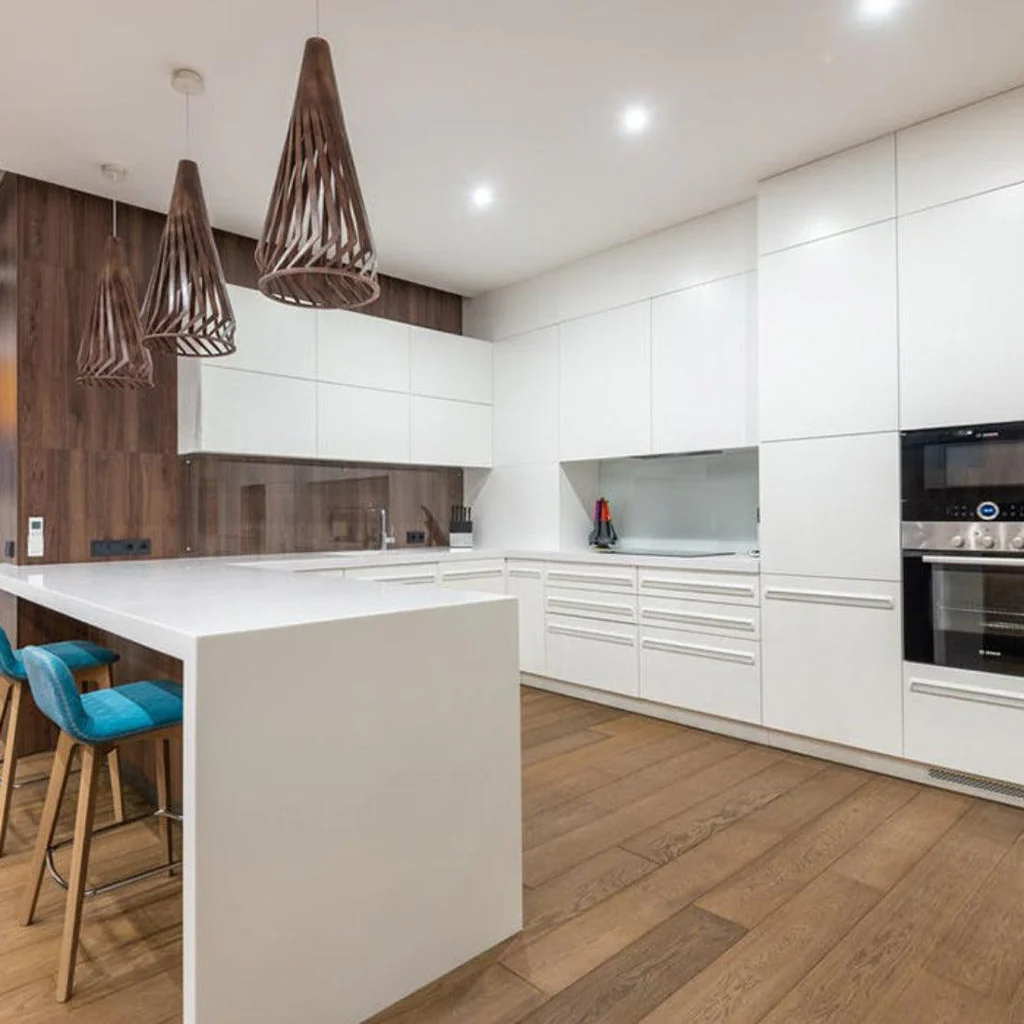
UV-painted cabinets are a popular choice for custom basement kitchens that require a clean, seamless, and refined appearance.
What Is UV Paint?
UV paint is cured using ultraviolet light, resulting in a hard, smooth, and consistent finish applied over moisture-resistant MDF panels.
Performance in Basements
When properly sealed, UV-painted cabinets provide good moisture resistance and maintain colour consistency over time.
Advantages
- Seamless, elegant finish with no visible joints
- Good moisture resistance with proper sealing
- Wide range of custom colour options
- Durable and uniform surface
Disadvantages
- Final quality depends heavily on manufacturing standards
- Surface repairs can be challenging
Best For
Basement kitchens aiming for a custom, refined, and contemporary look without using high-gloss acrylic.
See More: How to Choose the Right Kitchen Cabinets for Canadian Kitchens
6. Aluminum Frame Cabinets
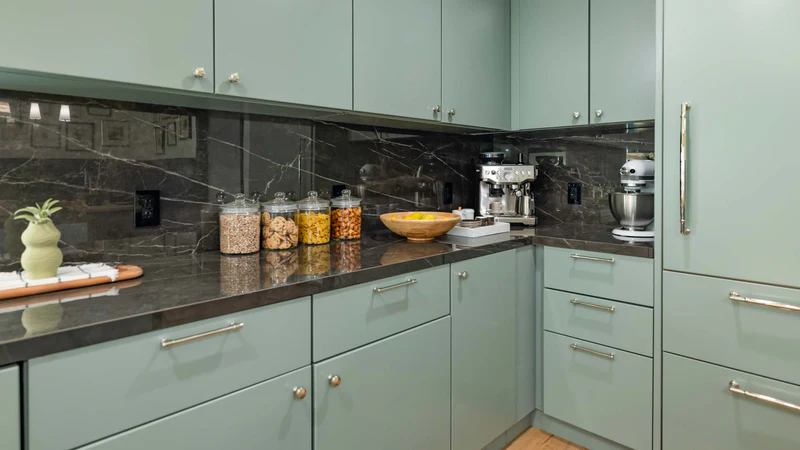
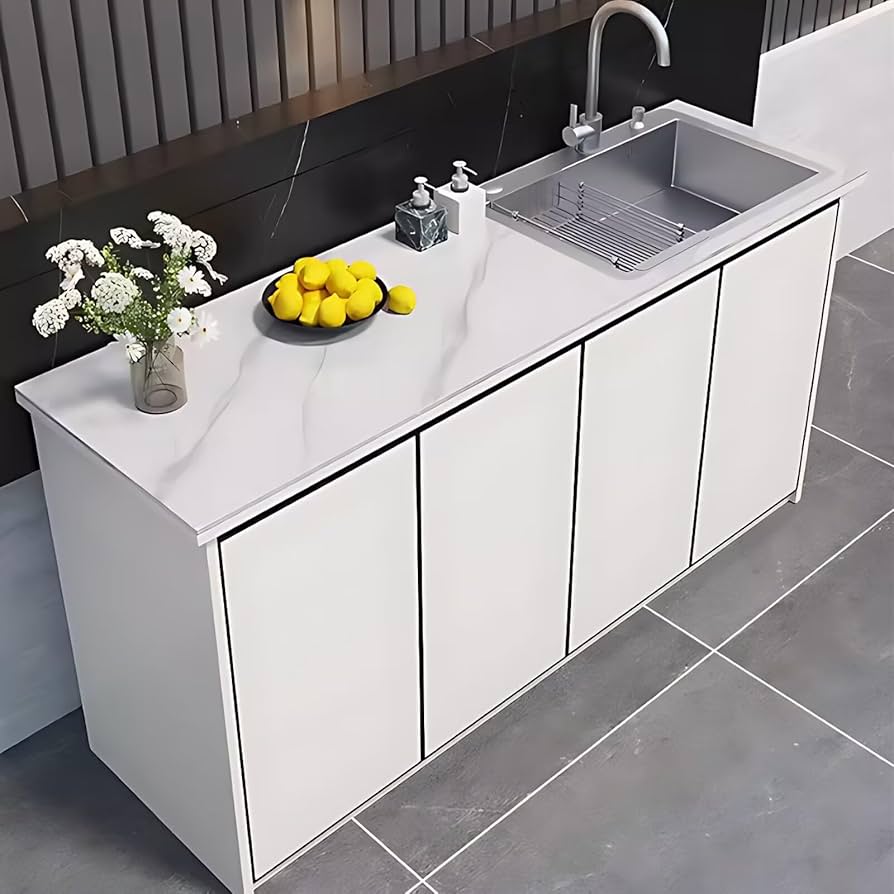

Aluminum frame cabinets are increasingly used in modern Canadian basement kitchens, particularly in homes with contemporary or industrial design styles.
Structure and Design
These cabinets feature aluminum frames paired with glass, acrylic, or composite panel inserts, offering both strength and flexibility in design.
Why Aluminum Excels in Basements
Aluminum is naturally resistant to moisture, corrosion, and warping, making it one of the most reliable materials for humid environments.
Advantages
- Completely moisture- and corrosion-resistant
- Lightweight yet structurally strong
- Easy to clean and maintain
- Sleek, modern aesthetic
Disadvantages
- Higher initial investment
- Limited traditional or classic design options
Best For
Basement kitchens in modern, minimalist, or industrial-style homes, especially where humidity control is a concern.
7. Stainless Steel Cabinets
Traditionally used in commercial kitchens, stainless steel cabinets are now appearing more frequently in residential basement kitchens across Canada.
Why Stainless Steel Performs Exceptionally Well
Stainless steel is completely non-porous and unaffected by moisture, mold, or pests—making it one of the most durable cabinet materials available.
Advantages
- 100% waterproof and mold-resistant
- Extremely durable and long-lasting
- Highly hygienic and easy to sanitize
- Fire-resistant and pest-resistant
Disadvantages
- Premium cost
- Industrial appearance may feel cold in residential spaces
- Fingerprints and scratches can be visible
Best For
High-performance basement kitchens, rental properties, or homeowners who prioritize maximum durability, hygiene, and longevity over traditional aesthetics.
Quick Comparison Table
| Material | Moisture Resistance | Durability | Cost | Maintenance | Style |
| Melamine | Medium | Medium | Low | Easy | Modern |
| HPL Laminate | High | High | Medium | Easy | Versatile |
| Acrylic | Medium | Medium | Medium–High | Moderate | Modern |
| Engineered Wood | Medium | High | High | Moderate | Classic |
| UV-Painted MDF | Medium | Medium | Medium | Moderate | Custom |
| Aluminum | High | High | High | Easy | Modern |
| Stainless Steel | Very High | Very High | Very High | Very Easy | Industrial |
Key Factors to Consider When Choosing Basement Kitchen Cabinets in Canada
Selecting kitchen cabinets for a basement kitchen in Canada requires a strategic approach. Unlike main-floor kitchens, basement environments place greater physical demands on materials due to moisture, temperature variation, and limited airflow. Understanding these key factors will help homeowners make informed decisions that protect both their investment and long-term functionality.
1. Moisture Resistance: The Most Critical Factor
Moisture resistance is the single most important consideration for basement kitchen cabinets in Canada. Basements are naturally exposed to higher humidity levels caused by underground soil moisture, condensation during winter months, and seasonal snowmelt.
Cabinet materials that lack moisture resistance may:
- Swell or warp over time
- Delaminate at joints and edges
- Encourage mold or mildew growth
Materials designed specifically to resist moisture—such as high-pressure laminate (HPL), aluminum, stainless steel, or moisture-resistant MDF—maintain their shape and performance far longer in basement conditions.
Key takeaway: Always prioritize materials with sealed surfaces and moisture-resistant cores when designing a basement kitchen.
2. Water Protection and Installation Strategy
Even well-built Canadian basements are not immune to occasional water exposure. Plumbing leaks, foundation seepage, or heavy rainfall can all pose risks.
Effective water protection goes beyond material choice and includes proper installation methods:
- Cabinets should be raised slightly off the floor using adjustable legs or plinths
- All exposed edges, especially at the cabinet base, must be fully sealed
- Silicone or waterproof barriers should be applied where cabinets meet floors and walls
Failure to address these details can allow water to enter cabinet cores, leading to permanent damage—even in high-quality materials.
Key takeaway: A moisture-resistant cabinet can still fail without proper sealing and elevation.
3. Maintenance and Cleaning Requirements
Basement kitchens often have reduced ventilation, making hygiene and maintenance especially important. Cabinet materials should be easy to clean and resistant to stains, grease, and moisture absorption.
The best-performing materials typically feature:
- Smooth, non-porous surfaces
- Minimal grooves or decorative detailing
- Resistance to chemical cleaners and disinfectants
Laminate, acrylic, aluminum, and stainless steel cabinets are particularly well-suited for basement kitchens because they require minimal upkeep and maintain a clean appearance over time.
Key takeaway: Low-maintenance materials reduce long-term effort and prevent moisture-related deterioration.
4. Lighting Conditions and Colour Selection
Natural light is often limited in basement kitchens, which makes cabinet colour and finish far more important than in above-ground spaces.
Cabinet choices can either enhance or diminish the sense of space:
- Light colours reflect artificial light and improve visibility
- Glossy or satin finishes amplify brightness
- Dark or matte finishes can make small basements feel enclosed if not balanced properly
Many Canadian homeowners opt for white, light grey, or beige cabinets paired with strategic LED lighting to create a brighter and more inviting basement kitchen.
Key takeaway: Cabinet colour and finish directly affect how spacious and comfortable a basement kitchen feels.
5. Budget Versus Long-Term Longevity
While budget is always a consideration, focusing solely on upfront cost can be misleading—especially for basement kitchens.
Lower-cost materials may:
- Require frequent repairs
- Suffer early moisture damage
- Need replacement within a few years
Investing in higher-quality, moisture-resistant materials typically results in:
- Longer lifespan
- Lower maintenance costs
- Better resale and rental value
For many Canadian homeowners, mid-range materials such as HPL laminate provide the best balance between cost and durability.
Key takeaway: Long-term value matters more than short-term savings in basement environments.
Are solid wood cabinets suitable for basement kitchens in Canada?
Yes, solid wood cabinets can be suitable for basement kitchens in Canada, but with caveats you’ll want to plan for moisture, humidity, and basement-specific conditions.
Key considerations
- Humidity and moisture: Basements are prone to higher humidity and occasional dampness. Solid wood is classic and durable, but it can warp or swell if exposed to persistent moisture. Use cabinets with proper sealing, moisture-resistant finishes, and solid-wood species known for stability (e.g., maple, oak) to mitigate movement. Regular ventilation and a dehumidifier can help maintain stable conditions.
- Cabinet construction and hardware: Opt for solid wood doors and faces with moisture-resistant finishes, and chooseHardware designed for damp environments (soft-close hinges, corrosion-resistant pulls). This reduces wear and maintenance needs in a basement setting.
- Installation details: Ensure walls are properly prepared, and consider using moisture barriers and sealed baseplates. Proper anchoring and spacing help accommodate any minor shifts in the structure without cracking or misalignment.
- Alternatives and hybrids: If basement conditions are variable, you may prefer plywood boxes with solid wood doors or a solid wood face frame with a moisture-resistant plywood interior. These hybrids offer a balance of stability and appearance while often being more cost- and moisture-tolerant.
- Finishes and upkeep: Use finishes with strong moisture resistance and follow manufacturer care guidelines. Regularly check for any signs of moisture intrusion, finish wear, or joint gaps, and address promptly.
Practical steps to maximize suitability
- Measure humidity levels and aim to keep relative humidity around 30–50% in the kitchen area. Pair with a dehumidifier if needed.
- Select high-quality, well-sealed solid wood doors and frames with durable finishes designed for kitchens.
- Use waterproof or water-resistant backing, and consider raised toe kicks to allow air flow beneath cabinets.
- Plan for proper air circulation, especially if the basement kitchen lacks natural ventilation.
What to ask suppliers
- Do you offer moisture-resistant finishes or treatments specifically rated for basements?
- Are there warranty conditions for cabinets installed in low-lying or high-humidity spaces?
- Can you provide stability data for the wood species you use and recommended maintenance intervals?
Illustration: A basement kitchen with solid wood cabinetry can look warm and timeless, but you’ll want moisture control and proper finishes to keep it looking pristine over time.
If you’d like, I can tailor these recommendations to your exact basement conditions (basement humidity levels, sump pump presence, and ventilation) and suggest specific solid wood species and finish options common in Canada. I can also help compare solid wood with moisture-resistant plywood or MDF options within your budget.
Which cabinet material is most resistant to moisture?
PVC and stainless steel cabinet materials are the most resistant to moisture, outperforming wood and engineered options in high-humidity environments like basements.
Top Materials
PVC (polyvinyl chloride) stands out for its fully waterproof, non-porous nature, preventing swelling, warping, mold, or mildew even in constant dampness. It’s lightweight, affordable, and ideal for basements without natural ventilation.
Stainless steel offers unmatched durability as a non-porous metal, immune to water absorption and perfect for extreme conditions, though it’s pricier and more industrial-looking.
Strong Alternatives
Thermofoil (vinyl-wrapped MDF) provides a seamless, moisture-proof barrier that’s easy to clean and mold-resistant, balancing cost and performance.
Marine-grade plywood or HDPE polymer excel with layered or fully synthetic construction that resists delamination in wet areas.
Context for Basements
For Canadian basement kitchens, prioritize PVC or stainless steel over solid wood to avoid warping from humidity fluctuations. Pair with dehumidifiers for longevity, as even top materials benefit from stable conditions below 50% RH.
Are acrylic cabinets a good choice for basements?
Yes, acrylic cabinets are a good choice for basements due to their high moisture resistance and non-porous surface that repels water, mold, and humidity better than wood or laminate.
Key Advantages
Acrylic surfaces are waterproof, easy to clean, and resist warping in damp conditions like basements, making them suitable for Canadian humidity challenges. They offer a modern, glossy look with UV resistance to prevent fading.
Limitations
While the acrylic finish is highly protective, the underlying core (often MDF or plywood) can swell with prolonged water exposure, so avoid direct flooding and use dehumidifiers. Scratches can show on the glossy surface, requiring careful maintenance.
Basement Tips
Elevate cabinets off concrete floors with adjustable legs or barriers for airflow, and seal edges to enhance longevity in variable basement moisture. Acrylic outperforms solid wood here but consider PVC for ultimate waterproofing if flooding is a risk
See More: What Are Plywood Kitchen Cabinets? Are They Worth It?
Do cabinet hardware and fittings matter in basement kitchens?
Yes, cabinet hardware and fittings are crucial in basement kitchens, where moisture can accelerate corrosion, rust, and operational failures if not chosen carefully.
Why They Matter
Moisture in basements promotes rust on standard metal hardware like zinc or brass pulls, hinges, and slides, leading to sticking drawers, sagging doors, and premature wear. Corrosion-resistant options ensure smooth function and longevity, preventing costly replacements in damp conditions.
Recommended Choices
Opt for solid stainless steel (grade 304 or 316 marine-grade) hardware, which resists rust and humidity without pitting. Soft-close hinges and full-extension glides with nylon rollers or ball bearings coated for damp environments minimize friction and moisture damage.
Installation Tips
Apply anti-corrosion sealants to screw holes and mounting points during install. Elevate hardware slightly off cabinet edges for airflow, and pair with moisture-barrier cabinet materials like PVC or acrylic for best results in Canadian basements. Regular wiping prevents buildup.
How much do basement kitchen cabinets cost in Canada?
Basement kitchen cabinets in Canada typically cost $150–$1,000+ per linear foot, with moisture-resistant options like PVC or acrylic adding 10–20% over standard stock due to specialized materials.
Cost Ranges
Stock or ready-to-assemble cabinets range from $85–$400 per linear foot (e.g., IKEA SEKTION at $150–$250), suitable for basic basements with installation adding $50–$150 per foot.
Semi-custom or plywood moisture-resistant cabinets cost $400–$800 per linear foot, ideal for humid conditions in places like Vancouver or Ontario basements.
Custom moisture-resistant cabinets run $700–$1,500+ per linear foot, including premium hardware and finishes for high-end durability.
Total Project Estimates
For a typical 15–20 linear foot basement kitchen, expect $3,000–$10,000 for budget stock cabinets installed, $8,000–$20,000 for semi-custom, or $15,000–$40,000+ for fully custom with basement adaptations like elevated bases.
Factors Affecting Price
Regional variations push costs higher in Ontario or BC (up to 20% more labor), while moisture features like stainless hardware or sealed plywood add $50–$100 per foot. Shop RTA from Canadian suppliers or big-box stores for savings, but factor in pro install ($2,000–$6,000 total).
